 Clinic
Research Article | DOI: https://doi.org/10.31579/2835-785X/109
Enhancing Females’ Knowledge regarding Oocyte Cryopreservation: Effect of an Educational Program.
1 Assistant. Professor of Maternal & Newborn Health Nursing, Faculty of Nursing, Beni-Suef University, Egypt.
2 Demonstrator of Maternal & Newborn Health Nursing, Faculty of Nursing, Beni-Suef University, Egypt.
3 Professor of Maternal and Newborn Health Nursing, Faculty of Nursing, Beni-Suef University, Egypt.
*Corresponding Author: Dr. Hanan Elzeblawy Hassan, Professor of Maternal and Newborn Health Nursing, Faculty of Nursing, Beni-Suef University, Egypt.
Citation: Noha Hassan Abd-Elfattah, Aya Shehata Abd-Elfattah Mohamed, Hanan Elzeblawy Hassan, (2025), Enhancing Females’ Knowledge regarding Oocyte Cryopreservation: Effect of an Educational Program, International Journal of Clinical Research and Reports. 4(6); DOI: 10.31579/2835-785X/109.
Copyright: © 2025, Dr. Hanan Elzeblawy Hassan. This is an open-access article distributed under the terms of the Creative Commons Attribution License, which permits unrestricted use, distribution, and reproduction in any medium, provided the original author and source are credited.
Received: 12 September 2025 | Accepted: 21 October 2025 | Published: 06 November 2025
Keywords: knowledge; oocyte cryopreservation; educational program
Abstract
Background: Cryopreservation refers to the process of freezing and storing biological materials, including live cells, tissue, and reproductive materials like human gametes, embryos, and/or ovarian or testicular tissue, in order to halt all biological activity and maintain their viability.
Aim: The current study was conducted to enhancing females’ knowledge regarding oocyte cryopreservation via an educational program.
Subjects and Methods: Design: A quasi-experimental design was used.
Sample and Settings: A study from Beni-Suef University on a purposive sample consisted of 334 working females at Beni-Suef University.
Tools: (I): A Structured Interviewing Questionnaire Sheet; (II): Females' knowledge regarding oocyte cryopreservation.
Results: After the program implementation, 89.8% of females correctly answered the definition and types of egg freezing (OC) compared to 52.1% pre-program, 0.3% of studied females aged 20 to less than 30 years had a good knowledge score pre-program, which improved to 45.5% post-program. Also, 0.3% of single females had a good knowledge score pre-program, which increased to 48.2% post-program.
Conclusion: Based on the findings of the present study, it can be concluded that after program implementation, the studied female workers at Beni-Suef University had marked improvement in knowledge regarding oocyte cryopreservation.
Recommendations: Structured educational and counseling programs regarding oocyte cryopreservation should be provided by maternity nurses to females of reproductive age to make informed and timely decisions aligned with their future reproductive life.
Introduction
Cryopreservation refers to the process of freezing and storing biological materials, including live cells, tissue, and reproductive materials like human gametes, embryos, and/or ovarian or testicular tissue, in order to halt all biological activity and maintain their viability. The goal is to thaw the harvested and/or fertilized cells during a single treatment cycle. Cryopreservation is crucial to assisted reproduction, as it reduces the cost and burden of individuals involved while improving the effectiveness of infertility treatments (Loyal, 2024).
Recent studies show that up to 75% of cancer patients who are young females want to establish a family after receiving cancer detection and treatment. Young females may lose the opportunity to preserve their fertility before beginning cancer treatment if they not instructed about hazards posed to their fertility by chemotherapy or radiotherapy (Ibrahim et al., 2022).
As a result, cancer treatments usually cause longstanding fertility complications, the statistical values with estimated that about 30% to 75% of male cancer patients and 40% to 80% of female cancer patients becoming infertile due to effect of chemotherapy and radiotherapy (Mansour & Hassan, 2021).
The potential loss of fertility due to cancer treatment leads to high levels of psychological distress in young female cancer patients and is perceived as almost as painful as confronting cancer itself (Ehrbar et al., 2022). Treatments for these tumors also significant effect sexuality and fertility, altering women’s psychosexual balance and perception of their bodies (Gabr et al., 2025, Hassan, 2020).
Despite the fact that Egypt and other Islamic countries in the Middle East regions have one of the most robust ART industries in the world, there is a scarcity of studies and a lack of data in this field (Akhondi et al., 2023, Hassan, 2019). Islam has been much more permissive regarding ARTs; in 1980, the first pro-IVF fatwa issued by the Grand Shaykh of Egypt's famed religious Al-Azhar University. Since then, ARTs have been practiced across the Muslim-world, reflecting both Islamic pronatalism and explicit encouragement of medical and scientific advancements (Harzif et al., 2020).
Aim of the study
The current study was conducted to enhancing females’ knowledge regarding oocyte cryopreservation via an educational program.
Research Hypothesis
Following the implementation of an educational program, females’ knowledge regarding oocyte cryopreservation will be improved.
Materials and Methods
Research design:
Quasi-experimental research design (pre/post-test) was utilized to achieve the aim of the current study.
Subjects and Settings:
A study from Beni-Suef University on a purposive sample consisted of 334 working females at Beni-Suef University.
Tools of data collection:
Tool I: An Arabic-structured interview questionnaire sheet:
The tool consists of closed-ended questions about female socio-demographic characteristics, including age, education, marital status, occupation, residence area, and monthly income.
Tool (II): Females' knowledge regarding oocyte cryopreservation
This tool was intended to evaluate the level of knowledge that females possess regarding oocyte cryopreservation. It consisted of 23 items.
Scoring system:
Each question received a score of one point if it was answered correctly and zero points if the answer wasn't correct or the participant didn’t know, with a total score ranging from 0 to 23. The distribution of the overall knowledge scores is categorized as follows:
§ Good knowledge: for scores of ≥75% (≥17 degrees)
§ Average knowledge: for scores of 50%– <75>
§ Poor knowledge: for scores of <50>
Tools Reliability:
When the Cronbach's Alpha test was used to evaluate the study tool's reliability, the reliability coefficient for total knowledge was found to be 0.906.
Preparatory phase:
The researcher conducted a literature review and designed an educational program on oocyte cryopreservation, including an Arabic handbook and brochure, with a QR code for easy access to additional information.
Pilot study:
A pilot study on 10% of the sample to assessed tool applicability, efficiency, and clarity, identifying obstacles and making necessary modifications, excluding the pilot study from the main study.
Fieldwork
The study, conducted from September 2024 to March 2025, involved assessment, planning, implementation, and evaluation. It involved interviewing females, conducting a pre-test, and developing an educational program. The implementation phase involved interactive sessions at Beni-Suef University, covering topics like oocyte cryopreservation, preparation, and storage temperature. A post-test evaluated the program's effectiveness one month after intervention.
Ethical Consideration
The study, approved by the Beni-Suef Scientific Ethical Committee, ensured anonymity and confidentiality for all female participants, who were informed about their right to choose or withdraw at any time.
Statistical Design:
The data was analyzed using SPSS 22.0 for descriptive statistics, Pearson correlation coefficient, Chi-square tests, and paired sample t-tests for categorical variables, with a significance level of P<0>
Results
Figure (1) Summarizes the distribution of studied working females’ socio-demographic characteristics. It reveals that, 60.2% were aged between 20 and 30 years. Also, 60.5% were single. Regarding their occupation and educational levels, 59.3% and 56.6%, respectively. Concerning their monthly income from their point of view, results revealed that 48.8% had insufficient income. For their residence, 59.3% were rural residents.
Table (1) reveals the comparison of the studied working females’ knowledge regarding oocyte preservation through program phases. After the program implementation, 89.8% of females correctly answered the definition and types of egg freezing (OC) compared to 52.1% pre-program. They also correctly answered questions about egg freezing longevity, preparation, laboratory tests, and hormonal therapy. Most females correctly answered questions about oocyte retrieval, cryopreservation, and complications of OC. They also correctly answered the main purpose of OC for women undergoing cancer treatment.
Figure (3) Illustrates the relation between studied working females’ socio-demographic characteristics and their knowledge levels through program phases. It clarifies that there is a post-program. 0.3% of studied females aged 20 to less than 30 years had a good knowledge score pre-program, which improved to 45.5% post-program. Also, 0.3% of single females had a good knowledge score pre-program, which increased to 48.2% post-program.
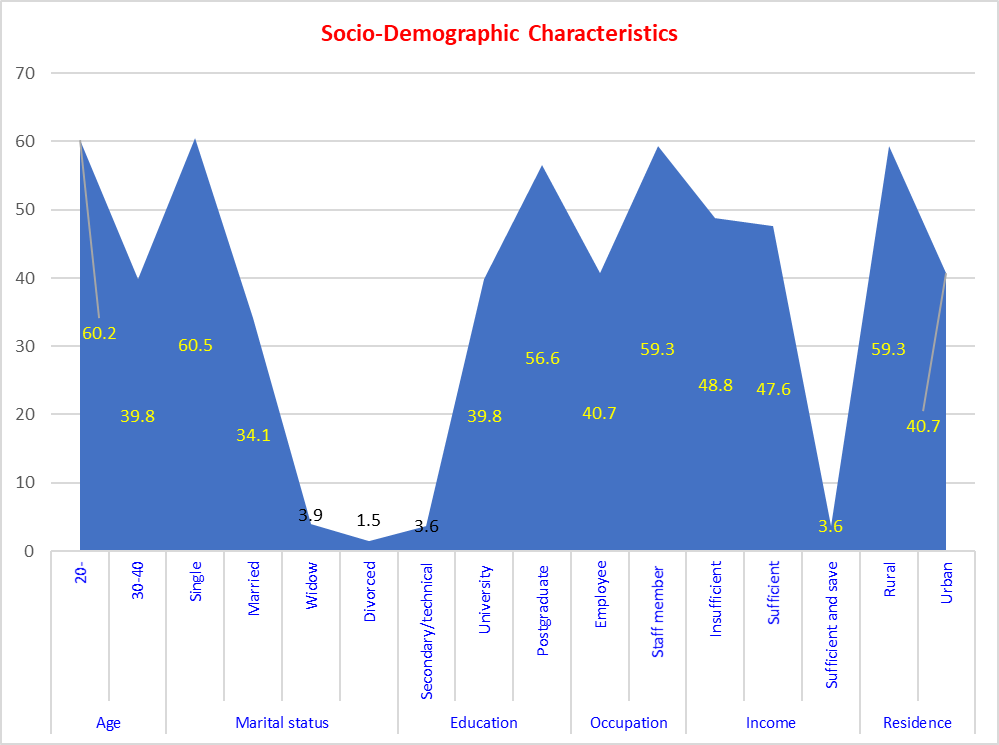
Figure 1: Frequency and percentage distribution of studied working females’ socio-demographic characteristics.
+ This variable is not mutually exclusive
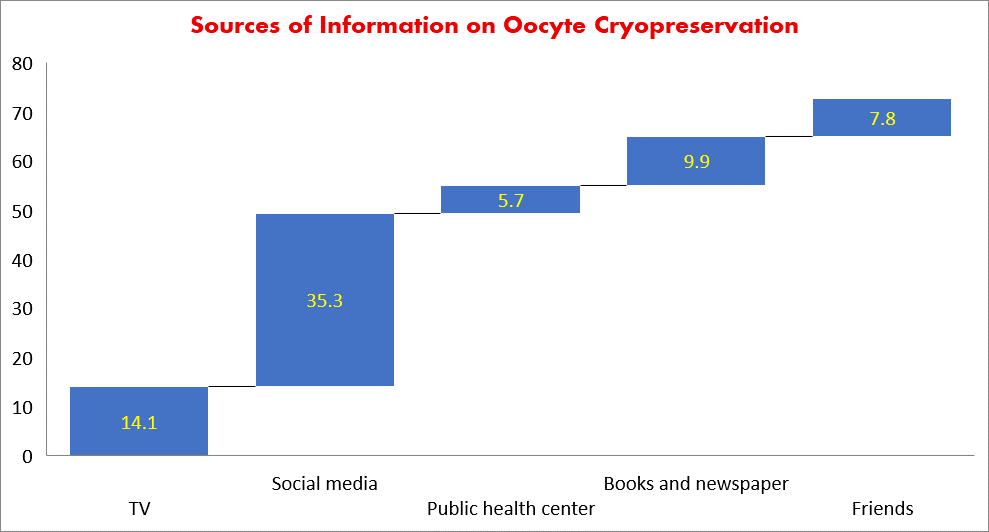
Figure 2: Percentage distribution of studied working females regarding their sources of background on oocyte cryopreservation.
Table 1: Percentage distribution of the Studied working females’ knowledge regarding oocyte preservation through program phases (n=334).
** Highly statistical difference at P<0>
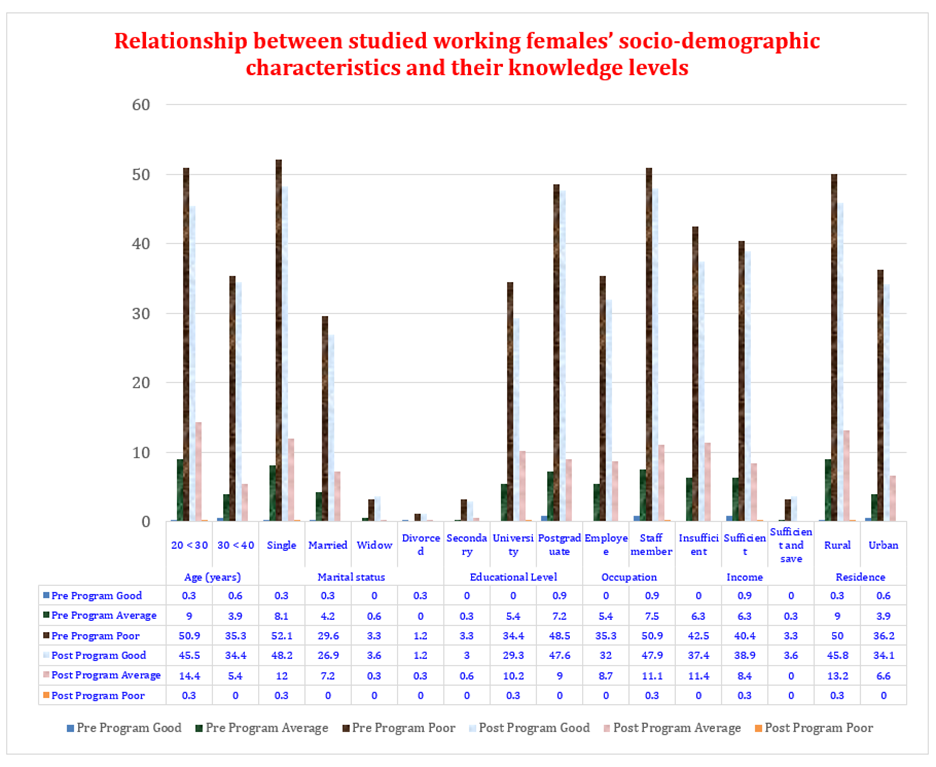
Figure 3: Relation between studied working females’ socio-demographic characteristics and their knowledge levels through program phases.
Discussion
Recently, there have been increasing numbers of females who postpone marriage and childbirth until their thirties and forties, with an average age of 35 years old. It is thought that a woman’s fertility decline happens throughout the course of her lifetime, starting in her early 30s and becoming more pronounced by the age of 37. The reproductive capacity declines in a woman’s oocyte quantity and quality as she gets older, which has a big impact on her ability to conceive naturally and increases the risk of “involuntary childlessness” (El-Adham & Shaban, 2023; Lazzari et al., 2023).
According to the socio-demographic characteristics of the studied working females; the finding of the present study revealed that, related to the monthly income of the family, the current study presented that nearly half of the studied females had insufficient income from their point of view. This finding is in line with Araby et al. (2025), who implemented a recent study entitled “Effect of Nano-Educational Sessions on Awareness, Willingness, and Barriers toward Elective Oocyte Cryopreservation among Unmarried Females,” and El-Adham & Shaban (2023). They mentioned that nearly half of the studied females had insufficient income.
Regarding sources of information about OC, the study’s findings highlighted that social media and TV were the most common sources of background on OC it presents (35.3% and 14.1%), respectively. This finding is consistent with Mohamed et al. (2023), who studied the “Effect of Educational Program on Knowledge and Attitude of Female Students Regarding Oocyte Cryopreservation” and showed that the primary sources were the internet and television (30.8% and 31.1%), respectively.
As regard the studied working females’ knowledge regarding oocyte preservation through program phases: Firstly, females’ knowledge regarding OC showed a statistically significant improvement in all knowledge items following implementation of an educational program. The study’s finding revealed that half and more than two-fifths of the studied females correctly answered the meaning and types of OC, respectively, pre-program, which improved to the vast majority of them correctly answering these items post-program. On the contrary, the finding of the current study was inconsistent with Fahmy & Mohamed (2021), who conducted a study entitled “Knowledge, Attitude and Barriers of Unmarried Female Bridging Program Nurses Regarding Egg Freezing at South Valley University” and found that more than two-thirds of studied bridging program nursing students had inadequate knowledge about the meaning and indication of egg freezing.
The disagreement between the current study and the above-mentioned studies may be related to the fact that OC is still a new trend and most female students are unfamiliar with it. In addition, differences in educational level and occupation, while most of the current study sample were postgraduate staff members, motivate them to know new trends.
Concerning the age when female fertility starts to decline, the current study revealed that there is a rise in awareness of working females about the increasing age when a woman’s fertility dramatically declines; the majority of the studied females were aware of the age when female fertility starts to decline post-program compared to one-fifth of them pre-program.
This finding is congruent with a study conducted by Ikhena-Abel et al. (2017), in their study entitled “Is employer coverage of elective egg freezing coercive? a survey of medical students’ knowledge, intentions, and attitudes towards elective egg freezing and employer coverage,” and suggested that three-quarters of participants believed that fertility is dramatically decreased after 35 years.
Also, the study’s finding is aligned with Argyle et al. (2016), who carried out a study entitled “Oocyte Cryopreservation: Where Are We Now?” and discovered that the fertility drop accelerated after the age of 35 years. Moreover, another study conducted by Fotopoulou et al. (2015), entitled “Greek medical student’s knowledge and attitudes towards infertility and assisted reproductive technologies, revealed the majority of participants considered that the fertility of women begins to decline after 35 years.
Relating to the suitable age of OC, the finding of the current study suggested that less than one-quarter of the studied females correctly answered the suitable age of OC pre-program, which improved to about three-quarters of them correctly answering the suitable age of OC post-program. The finding of the study was consistent with Demir O et al.'s (2020) study entitled “Investigation of the Knowledge of Family Physicians Regarding Oocyte Cryopreservation” and revealed that three-quarters of the respondents recommended age of oocyte cryopreservation before 35 years.
In the same line, the study’s finding is in agreement with Wennberg’s (2020) study entitled “Social freezing of oocytes: a means to take control of your fertility,” which suggested that women consider egg freezing if they have not yet found a partner or are not planning a pregnancy when approaching the age of 35 years.
On the contrary, the finding of the current study is in contrast with Tozzo et al. (2019), who assessed “Understanding social oocyte freezing in Italy: a scoping survey on university female students’ awareness and attitudes” and showed that most respondents felt that they would consider egg freezing at the age of 26-30 years.
Also, the study’s finding is incongruent with Rudick et al.’s (2010) study entitled “The status of oocyte cryopreservation in the United States,” which declared that the majority of participants consider the age of oocyte freezing, 38-40 years, as acceptable.
From the researcher’s perspective, this disagreement might be due to the fact that most females do not make decisions before the age of 30, as they may not yet feel the pressure of their ticking biological clock and still have time to find a suitable partner. In addition, females who make the decision after the age of 35 may lead to reduced oocyte quality and a higher risk of genetic abnormalities.
Related to the longevity of OC, the result of the current study illustrated that the majority of the studied working females correctly answered the longevity of OC post-program compared to one-fifth of them correctly answering this item pre-program. This finding was supported by Blakemore et al. (2021), who evaluated the outcomes of planned OCs that returned to use them 10-15 years later.
Also, another study agreed with Ngan et al. (2025), who assessed “Planned oocyte cryopreservation in Hong Kong: a potential prototype for mainland China” and mentioned that Hong Kong’s current policy dictates a maximum storage period of 10 years or until the woman reaches 55 years.
According to the researcher’s point of view, this congruence may be attributed to the cautious approach regarding the longevity of OC, which is essential to ensure the safety and well-being of both mother and potential offspring and eliminate heightened risks of obstetric complications in elderly pregnant females. This includes an increased risk of operational delivery, PIH, GDM, and perinatal mortality.
The result of the current study indicated that hormonal therapy is commonly required for ovarian stimulation in most cases; the majority of the studied females correctly answered that hormonal therapy is required for induction as compared to one-quarter of them who correctly answered this item pre-program implementation. This finding is aligned with Miquel et al.'s (2023) study on 129 women who participated in the trial, which aimed to evaluate the feasibility and efficacy of ovarian stimulation, independent of the main condition and oocyte banking for fertility preservation after fertility-impairing treatments. This may be attributed to the purpose of ovarian stimulation prior to OC, which is to obtain an adequate number of mature oocytes in a single cycle to increase the likelihood of a live birth in the future.
This finding was unsupported by Sayegh et al.’s (2023) study entitled “Knowledge and attitude of reproductive-aged women towards planned oocyte cryopreservation in the United Arab Emirates” and suggested that more than half of the studied participants lack knowledge regarding the hormonal injection needed for ovulation. This disparity may be due to differences in sample age and education level; thus, older working females are more concerned about their fertility than young females.
In relation to the most common (standardized) method of cryopreservation, the finding of the current study showed that more than one-tenth of the studied females correctly answered the most common method of oocyte freezing pre-program, which improved to about three-quarters of them post-program implementation. This finding is in alignment with Abbass et al. (2023), who reported that less than one-third of the studied subjects probably identified vitrification as essential for ova cryopreservation before program implementation, which improved to almost all of them post-program.
Also, the study’s finding is supported by Nizharadze (2024), in a study entitled “Innovation in Oocyte Preservation Techniques,” which revealed that vitrification is the standard method of cryopreservation. From the researcher’s perspective, the finding of the current study was consistent with previous studies indicating that vitrification is more effective than slow freezing. This consistency may be attributed to the ability of vitrification to increase the life span of oocyte freezing, and it’s considered a standardized procedure.
Pertaining to the benefits of OC, the findings of the current study revealed the vast majority of the studied females identified benefits of OC post-program implementation compared to only half of them pre-program. This finding is in line with Tan et al. (2014), who studied “Social oocyte freezing: A survey among Singaporean female medical students” and suggested that Singaporean female students look favorably on oocyte cryopreservation to focus on their careers.
Also, the study’s finding is consistent with Lewis et al. (2016), who conducted a study entitled “Public Support in the United States for elective oocyte cryopreservation” and mentioned that the vast majority of women favored oocyte freezing if they would have cancer treatments affecting their reproductive life, and about three-quarters of them prefer oocyte freezing to postpone childbearing for career advancement.
According to the researcher's point of view, this agreement of the current study and the above-mentioned studies might be due to offering women flexibility in balancing their reproductive goals with their professional and personal aspirations.
Regarding Dar Al-Ifta’s statement permitting OC, the study’s finding declared that the majority of the studied females identified permission of Dar Al-Ifta’s statement of using OC as compared to more than one-quarter of them pre-program implementation. This finding came in agreement with a study in Egypt conducted by Abbass et al. (2023), who reported that more than one-third of the studies’ females correctly answered the permission of Dar-Al-Ifta for using the OC pre-program, which improved to almost all of them correctly answering this item post-program implementation.
Also, the study’s finding is supported by Eltelt (2021), who conducted a study entitled “Empowering Perspective: Assessing the Effect of an Instructional Program on Female Students’ Knowledge, Attitudes, and Challenges Towards Egg Freezing” and revealed that the majority of the studied females agreed that religion is considered a barrier to EF pre-program, which decreased to less than one-third of them agreeing that religion is considered a barrier to EF post-program implementation.
From the researcher’s point of view, this agreement may be due to OC being allowed in Egypt according to a 2019 statement from Dar Al-Iftaa (Dar Al-Ifta, 2019), the country’s Islamic institution responsible for issuing religious edicts, permissible if four conditions are met: the frozen eggs are only to be used within the context of marriage using the husband’s sperm; they must be securely stored to avoid unintentional mixing with other frozen eggs; the egg should not be fertilized in another woman’s womb; and the procedure should not negatively affect or cause any birth defects to the embryo.
The study reveals a significant correlation between sociodemographic traits and knowledge levels among working women, with marital status and age playing a significant role. Previously, less than 1% of 20-30-year-old single females had decent knowledge. This in line with Ashour et al. (2023) and Mohamed et al. (2023), who stated that older, single women's motivation to learn about OC and openness to new information may be related to their age, married status, and awareness level about OC.
The study found no significant correlation between female participants' occupation and educational attainment before and after a postgraduate program. However, postgraduate-educated female staff showed increased expertise, possibly due to advanced training and work experience. This conclusion is supported by previous studies by Ghazeeri et al. (2023). The study by El-Adham & Shaban (2023) found no significant correlation between monthly income and the improvement of females, suggesting that having money provides access to other information sources, thereby broadening their expertise.
Conclusion
Based on the findings of the present study, it can be concluded that after program implementation, the studied female workers at Beni-Suef University had marked improvement in knowledge regarding oocyte cryopreservation.
Recommendations
Ø Structured educational and counseling programs regarding oocyte cryopreservation should be provided by maternity nurses to females of reproductive age to make informed and timely decisions aligned with their future reproductive life.
Ø Oocyte cryopreservation should be integrated into premarital counseling in different maternal and child health (MCH) centers to raise awareness about fertility preservation and its potential benefits for future quality of life.
References
- Abass, EE., Mohammed, HA., Gad, AH., Attia, NM., & Hussein, AA. (2023). Effect of Educational Program on Nursing Students’ Knowledge regarding Ova Cryopreservation Technology. Zagazig Nursing Journal, V,19 (2): 39 -56.
View at Publisher | View at Google Scholar - Akhondi, M. M., Ardakani, Z. B., Warmelink, J. C., Haghani, S., & Ranjbar, F. (2023). Knowledge and beliefs about oocyte cryopreservation for medical and social reasons in female students: a cross-sectional survey. BMC Women's Health, 23(1): 336.
View at Publisher | View at Google Scholar - Araby, A. O, El-said, G.G, Abd-Ewhab ,A. R& Elsalous, H. S. (2025). Effect of Nano-Educational Sessions on Awareness, Willingness and Barriers toward Elective Oocyte Cryopreservation among Unmarried Females. Journal of Nursing Science Benha University, 6(1): 100-131.
View at Publisher | View at Google Scholar - Argyle, C. E., Harper, J. C., & Davies, M. C. (2016). Oocyte cryopreservation: where are we now?. Human reproduction update, 22(4): 440-449.
View at Publisher | View at Google Scholar - Ashour, E.S, Khalil, A.K, Soliman, E.A., Abd-El salam, A.A & Abu seta, S. (2023). Effect of an Educational Intervention on Knowledge, Attitude, and Beliefs of Unmarried Healthy Females regarding Oocyte Cryopreservation. Egyptian Journal of Health Care, 14(1):1420-1433.
View at Publisher | View at Google Scholar - Blakemore, J. K., Grifo, J. A., DeVore, S. M., Hodes-Wertz, B., & Berkeley, A. S. (2021). Planned oocyte cryopreservation—10–15-year follow-up: return rates and cycle outcomes. Fertility and Sterility,115(6): 1511-1520.
View at Publisher | View at Google Scholar - Demir, Ö., Kurt, A. K., Ozalp, M., & Karateke, Y. F. (2020). Investigation of the knowledge of family physicians regarding oocyte cryopreservation. Konuralp Medical Journal, 12(2): 253-260.
View at Publisher | View at Google Scholar - Egypt’s Dar al-Iftaa (2019). Egypt’s Dar al-Iftaa approves the process of egg-freezing in accordance to religious regulations, available at:
View at Publisher | View at Google Scholar - Ehrbar, V., Roos, S., Denzinger, A., Bingisser, M. B., Scherer, S., Gaab, J., & Urech, C. (2022). Managing Cancer as a Family Disease-Feasibility, Satisfaction and Family Functioning after Short-Time Counselling for Families with Parental Cancer. The Family Journal, 30(2): 200-208.
View at Publisher | View at Google Scholar - El-Adham, A. F. M., & Shaban, R. S. E. S. (2023). Effect of Educational Program on Knowledge, Attitudes, and Intention of Unmarried Healthy Females regarding Oocyte Cryopreservation. International Egyptian Journal of Nursing Sciences and Research, 4(1): 65-84.
View at Publisher | View at Google Scholar - Eltelt, R. M. H.(2021). Empowering Perspectives: Assessing the Effect of an Instructional Program on Female Students' Knowledge, Attitudes, and Challenges Towards Egg-Freezing. Egyptian Journal of Health Care, 12(3):1-4.
View at Publisher | View at Google Scholar - Fahmy, S.G & Mohamed, M.H. (2021). Knowledge, Attitude and Barriers of unmarried female bridging program Nurse regarding Egg Frozen at South Valley University. Egyptian Journal of Health Care, 12(3): 1304-1319.
View at Publisher | View at Google Scholar - Fotopoulou, V., Chasiakou, A., Gryparis, A., & Baka, S. (2015). Greek medical student’s knowledge and attitudes towards infertility and assisted reproductive technologies (Greek medical students and ART). Womens Health Care: 4-7.
View at Publisher | View at Google Scholar - Gabr, E. M. M., El-leithy, W. I., Ahmed, H. M. M., Ayed, M. M. A., Elshafiae, E. M. H., Deyab, B. A., & Ragab, A. S. A. (2025). Effectiveness of Social Media Platforms Based Nursing Education Regarding Cryopreservation on Knowledge, Attitude, and Practice Among Women Having Cancer. American Journal of Psychiatric Rehabilitation, 28(2): 68-82.
View at Publisher | View at Google Scholar - Ghazeeri, G., Beyrouthy, C., El-Taha, L., Abiad, M., & Fahs, D. (2023). Knowledge & attitudes toward fertility preservation (Medical and social freezing) among Lebanese women between the ages of 18 and 39 years. Plos one, 18(9): e0291249.
View at Publisher | View at Google Scholar - Harzif, A. K., Maidarti, M., Silvia, M., Mariana, A., Mutia, H. D., & Wiweko, B. (2020). Knowledge, attitude, intention, and religion aspect toward fertility preservation among obstetrics and gynecology residents in Indonesia: A cross-sectional study. International Journal of Reproductive Bio-Medicine, 18(1): 47-56.
View at Publisher | View at Google Scholar - Hassan H. Evidence-Based Practice in Midwifery and Maternity Nursing for Excellent Quality of Care Outcomes. American Journal of Nursing Research, 2020; 8(6): 606-607.
View at Publisher | View at Google Scholar - Hassan H. The Impact of Evidence-Based Nursing as The Foundation for Professional Maternity Nursing Practices. Open Access Journal of Reproductive System and Sexual Disorder, 2019; 2(2): 195-197. OAJRSD.MS.ID.000135.
View at Publisher | View at Google Scholar - Ibrahim, A.E.A., Mostafa, E., El-Sayed El-Shabory, N. E. M., Mohamed Shehata, A. A. F., & Ahmad Mohammad, A. M. (2023). Efficacy of Educational Package regarding Oocyte Cryopreservation on knowledge and Attitude of Gynecological Cancer Females. Assiut Scientific Nursing Journal, 11(39):145-155.
View at Publisher | View at Google Scholar - Ikhena-Abel, D. E., Confino, R., Shah, N. J., Lawson, A. K., Klock, S. C., Robins, J. C., & Pavone, M. E. (2017). Is employer coverage of elective egg freezing coercive? a survey of medical students’ knowledge, intentions, and attitudes towards elective egg freezing and employer coverage. Journal of assisted reproduction and genetics, 34: 1035-1041.
View at Publisher | View at Google Scholar - Lazzari, E., Potančoková, M., Sobotka, T., Gray, E., & Chambers, G. M. (2023). Projecting the contribution of assisted reproductive technology to completed cohort fertility. Population Research and Policy Review, 42(1): 6.
View at Publisher | View at Google Scholar - Lewis, E. I., Missmer, S. A., Farland, L. V., & Ginsburg, E. S. (2016). Public support in the United States for elective oocyte cryopreservation. Fertility and Sterility, 106(5):1183-1189.
View at Publisher | View at Google Scholar - Loyal, S. (2024). Reproductive timing and social egg freezing within British South Asian communities: a qualitative study. Journal of Reproductive and Infant Psychology:1-14.
View at Publisher | View at Google Scholar - Mansour, E, S., & Hassan, S, I., (2021). An Educational package for oncology nurses regarding fertility preservation among female cancer patients. Egyptian Journal of Health Care, 12(3):1320-1329.
View at Publisher | View at Google Scholar - Miquel, L., Liotta, J., Hours, A., Bottin, P., Castel, P., Perrin, J., ... & Courbiere, B. (2023). Feasibility and efficiency of delayed ovarian stimulation and metaphase II oocyte banking for fertility preservation and childbearing desire after fertility-impairing treatment. Scientific Reports, 13(1):15661.
View at Publisher | View at Google Scholar - Mohamed, N. S., Mohamed, H. A., & Ahmed, N. M. E. (2023). Effect of Educational Program on Knowledge and Attitude of Female Students' Regarding Oocyte Cryopreservation. Tanta Scientific Nursing Journal, 29(2): 265-280.
View at Publisher | View at Google Scholar - Ngan, O. M., Ng, E. H., Yue, Y., & Li, R. H. (2025). Planned oocyte cryopreservation in Hong Kong: a potential prototype for mainland China. Sexual and Reproductive Health Matters, 33(1): 2485547.
View at Publisher | View at Google Scholar - Nizharadze, N. (2024). Innovations in Oocyte Preservation Techniques. Medical Times, 2(1): 50-58.
View at Publisher | View at Google Scholar - Rudick, B., Opper, N., Paulson, R., Bendikson, K., & Chung, K. (2010). The status of oocyte cryopreservation in the United States. Fertility and sterility, 94(7): 2642-2646.
View at Publisher | View at Google Scholar - Sayegh, L., Coussa, A., Kadhom, M., Neinavaei, N., & Hasan, H. (2023). Knowledge and attitude of reproductive-aged women towards planned oocyte cryopreservation in the United Arab Emirates. Journal of Assisted Reproduction and Genetics, 40(3): 609-616.
View at Publisher | View at Google Scholar - Tan, S. Q., Tan, A. W. K., Lau, M. S. K., Tan, H. H., & Nadarajah, S. (2014). Social oocyte freezing: A survey among S ingaporean female medical students. Journal of Obstetrics and Gynaecology Research, 40(5):1345-1352.
View at Publisher | View at Google Scholar - Tozzo, P., Fassina, A., Nespeca, P., Spigarolo, G., & Caenazzo, L. (2019). Understanding social oocyte freezing in Italy: a scoping survey on university female students’ awareness and attitudes. Life sciences, society and policy, 15(3):1-14. https://doi.org/10.1186/s40504-019-0092-7.
View at Publisher | View at Google Scholar - Wennberg, A. L. (2020). Social freezing of oocytes: a means to take control of your fertility. Upsala journal of medical sciences, 125(2), PP.95-98.
View at Publisher | View at Google Scholar