 Clinic
Review Article | DOI: https://doi.org/10.31579/2834-5029/82
The Ontogenetics of Consciousness in Mocombeian Consciousness Field Theory*
*Corresponding Author: Paul C. Mocombe, West Virginia State University, The Mocombeian Foundation, Inc.
Citation: Paul C. Mocombe, (2025). The Ontogenetics of Consciousness in Mocombeian Consciousness Field Theory., International Journal of Biomed Research, 4(3); DOI: 10.31579/2834-5029/82
Copyright: © 2025, Paul C. Mocombe. This is an open access article distributed under the Creative Commons Attribution License, which permits unrestricted use, distribution, and reproduction in any medium, provided the original work is properly cited.
Received: 04 June 2025 | Accepted: 16 June 2025 | Published: 27 June 2025
Keywords: structuration theory; phenomenological structuralism; structure/agency; mythopraxis; quantum mechanics; social class language game; Haitian Epistemology; haitian/vilokan Idealism; consciousness field theory
Abstract
This work explores the ontogeny of consciousness in Mocombe’s consciousness field in the material world. The paper critically assesses Mocombe’s consciousness field theory within the larger body of contemporary ontological debates regarding the nature, origin, and constitution of consciousness in the universe. The work goes on to highlight the ontogenetic manifestation of consciousness from the absolute vacuum to and in the material resource framework that is the earth.
Introduction
Phylogeny, ontogeny, and sociogeny are biological (and sociological vis-à-vis the latter) terms that refer to the development and evolution of organisms and species. In keeping with the biological implications of the terms, this work explores the ontogeny of consciousness in Mocombe’s consciousness field in the material world. For Mocombe, consciousness is an emergent and evolutionary force of the multiverse that gives species their practical consciousness, and therefore can, and must, be explored phylogenetically, ontogenetically, and sociogenetically. The paper critically assesses Mocombe’s consciousness field theory within the larger body of contemporary ontological debates regarding the nature, origin, and constitution of consciousness in the universe. The work goes on to highlight the ontogenetic manifestation of consciousness, in the human species, from the absolute vacuum to and in the material resource framework that is the earth.
Background of the Problem
In biology, ontogeny refers to the entire developmental cycle of an organism. Phylogeny emphasizes the species’ evolutionary process, and sociogeny is applicable to the human species and highlights the role played by social relations in the development of selfhood (Hudis, 2015, p. 35). This work seeks to highlight the ontogenetic evolution and manifestation of consciousness, and the role it plays in determining selfhood in the human species from the absolute vacuum to, and in, the material resource framework that is the earth.
The literature on the ontological nature and origins of consciousness suggests a reliance on material and post-material theorizations regarding the nature and origins of consciousness; those perspectives that view consciousness as emerging primarily as an emergent property of complex brain neuronal computation (A), (B) as spiritual quality of the universe, distinct from purely physical actions, and (C) as composed of discrete ‘proto-conscious’ events acting in accordance with physical laws not yet fully understood. The former, (A), is a materialist perspective, which emphasizes the laws of classical physics to posit consciousness as the by-product of the neural correlates of the physical substrates of the material brain (Chalmers, 1996). The latter two (B and C) are post-materialist approaches to understanding consciousness, which emphasize the emergence of consciousness as an external phenomenon that exists outside of the physical substrates of the brain either in the form of panpsychism or cosmopsychism/panspiritism. Both post-materialist perspectives use the concepts and theories of quantum mechanics (i.e., superposition, entanglement, multiverse, etc.) to either complete the materialism of the (A) camp, i.e., the (C) camp, or to ground fourteen paranormal and parapsychological (near-death experiences, telepathy, telekinesis, out-of-body experiences, physic mediumship, etc.) empirical data as proof for the external nature of consciousness, i.e., the (B) camp, which is received and facilitated by the brain (Chalmers, 1996; van Lommel, 2010; Mocombe, 2021, 2021a).
All three positions are problematic in that they are unable to resolve the quantum decoherence and hard and binding problems of consciousness, however (Chalmers, 1996). In the materialist camp (A), they are unable to account for how the neural correlates of the physical substrates of the material brain bind to give us the phenomenal subjective experience of consciousness. Just the same, in the post-materialist camps, (B and C), they are unable to account for the quantum decoherence problematic; that is, the latter position is unable to account for either how consciousness in everything, panpsychism, emerges/combines, or decombines from a god or the cosmos, panspiritism and cosmopsychism, respectively, in the material brain to give rise to consciousness (van Lommel, 2010). Hence, what remains missing in the academic literature is a detailed examination of how consciousness emerges in the world from its ontological basis to its social psychological (phenomenal subjective) manifestation in human social interactions, social structure, while resolving the problematics of the two approaches. Mocombe’s consciousness field theory, which serves as a materialist theoretical framework for his overall theory of phenomenological structuralism, attempts to do just that.
Theory and Method
Mocombe’s (2019, 2021a, 2021b) consciousness field theory, which is part of his larger theory of phenomenological structuralism, resolves the quantum decoherence and hard and binding problematics of all three camps by positing the origins and nature of consciousness to be an emergent fifth force of nature that is cycled and recycled throughout the multiverse as a resonating channel or station of, and on, a frequency wavelength via its embodied elementary particle, psychion, which has spin, mass, charge, and phenomenal properties, i.e., qualia (see Figures 1, 2, 3, 4, 5, 6, 7; and Table 1). In Mocombe’s (2016, 2019, 2021, 2021a) theory of phenomenological structuralism consciousness is an emergent (fifth) force of the universe, composed of an elementary particle, psychion, with mass, charge, spin (a boson with spin S=1), and phenomenal properties, qualia, that is received by the brain, from, or in, multiple, entangled, and superimposed local consciousness fields, Schumann waves, and integrated by its (the Brain’s) electromagnetic field as psychon to constitute mind, practical consciousness, and the self, as resonating channels or stations of, or on, frequency wavelengths, in material worlds of the multiverse (see Figure 5 and Table 1 for the elementary value of quantum energy for brain and Schumann waves, and their mapping, respectively; and the frequency of the psychonic wave) (Kozlowska and Kozlowski, 2016, p. 795).
The phenomenal properties, qualia, of the psychions of a consciousness field, following matter disaggregation, disconnection as psychon from the Schumann waves, throughout the multiverse, either collapse, as a resonating channel or station of a frequency wavelength, upon other superimposed and entangled versions (wavelengths) of themselves throughout the multiverse, or are integrated, along with the other four forces (gravity, electromagnetism, and the weak and strong nuclear forces), in the absolute vacuum of a superverse to create (via quantum fluctuation, tunneling, and inflation) future beings with consciousness (the phenomenal properties of lived-experience in the form of qualia, informational content of subatomic particles, i.e., psychions) (see Figure 7). As such, the psychions of the consciousness field as psychons they are local and connected to (entangled) multiple superimposed worlds with, and through, Schumann waves (see Figure 3); once assimilated in the absolute vacuum, they are psychions, the elementary particle of consciousness, an interconnected, endless, and nonlocal fifth force of nature, with qualia or phenomenal properties, which, initially, emerges following matter aggregation and disaggregation, disconnection from Schumann waves, in the multiverse.
It (the psychions of the consciousness field) is an endless assimilation of all past, present, and future information (practical activities and memories) of beings of the multiverse cycled and recycled via the absolute vacuum (empty nonspatial and nontemporal phenomenon in which elementary particles, quarks, and constituents of matter and forces of nature have become one), which fluctuates as a probability wave function, to give rise to entangled and superimposed worlds, each with their own Schumann waves and consciousness fields, which produce future beings with consciousness, an individualized resonating channel or station, psychion, on the frequency wavelength of the Schumann wave and the absolute vacuum (Mocombe, 2021, 2021a).
As highlighted in Figure 7, the absolute vacuum is a fifth dimensional superverse or cosmic soup where all the elementary particles are one, and fluctuate, as a probability wavefunction, tunnel, and inflate to produce four dimensional spacetimes (multiverses) where consciousness emerges as individuated psychonic fields or resonating channels/stations produced by the firing of neurons in the brain where the elementary particle, psychion, of consciousness are embodied and tied to the frequency wavelength of Schumann waves of entangled and superimposed worlds, which are tied to the oscillating frequency wavelength of the absolute vacuum, which transmits the signal of phenomenal subjective consciousness to the psychions.
Each individual consciousness has their own resonating psychionic channel or station (which is measurable on EEG machines) on the frequency wavelength of the earth’s Schumann wave, which is tied to the frequency wavelength of the absolute vacuum, which transmits phenomenal consciousness to the psychionic channel (see Figure 4). Figure 6, the Garyian equation, the first evidence for the consciousness field, represents the equation of, and for, individual consciousness: phi Φ is the symbol for consciousness; 10⁻15 eV₍₄₎, adopted from Kozlowska and Kozlowski, the formula represents the elementary value of quantum energy for brain and Schumann waves (see Figure 5); f (0), represents the resonating psychionic channel or station of individual phenomenal consciousness received from the absolute vacuum. The absolute vacuum houses and incorporates, as phenomenal property, qualia, all of the past, present, and future, lived experiences of all individual consciousnesses as a fifth force of nature and resonating frequency wavelength, which is transmitted to, Schumann waves of entangled and superimposed multiworlds, and received and facilitated by, in human beings, the material brain, brainstem, and central nervous system. Table 1 highlights the Hz level range of the psychonic wave, the second evidence for the existence of the consciousness field, in relation to other human brain waves. Finally, the third evidence for the existence of the consciousness field are parapsychological proofs of near-death experiences and reincarnation highlighted by post-materialist researchers.
For Mocombe, one of, or all, three things occur to the phenomenal properties, qualia, of the psychions of a consciousness field, following matter disaggregation (death) throughout the multiverse, 1) they are recycled/reincarnated to give rise to future beings with the same consciousness; 2) collapse upon other superimposed and entangled versions (resonances) of themselves throughout the multiverse, 3) and or are integrated, along with the subatomic particles of the other four forces (gravity, electromagnetism, and the weak and strong nuclear forces), in the absolute vacuum of a superverse to create (via quantum fluctuation and tunneling) future beings with consciousness. In terms of the latter, the psychions of the consciousness field, once assimilated in the absolute vacuum, is an interconnected, endless, and nonlocal fifth force of nature, which, initially, emerges following matter aggregation and disaggregation in the multiverse. It is an endless assimilation of all past, present, and future information (practical activities and memories) of beings of the multiverse recycled via the absolute vacuum (empty space in which elementary particles, quarks, and constituents of matter and forces of nature have become one), which fluctuates as a probability wave function, to give rise to entangled and superimposed worlds, each with their own consciousness fields, which produce future things and beings with consciousness, based (sociogenetically speaking) on two (ontological) forms of system or social integration, i.e., how the species, collectively, satisfy their embodiment, which is equated with the nature of reality as such.
Discussion and Conclusion
On this physics, Mocombe builds his systemic philosophy, sociology, and psychology called phenomenological structuralism by tying the emergence and evolution of the field of consciousness, the consciousness field, composed of psychions to human biological, sociological, and psychological development and experiences, which constitute the phenomenal properties (qualia) of the psychions, which form the tripartite structure (ego, personal and collective unconscious) of the emerging human mind manifested as their practical activities. Psychologically and sociologically speaking, in other words, the field of consciousness or consciousness field is the basis for psychological and sociological developments.
The field is an emergent fifth force of nature composed of the psychion, which is the energy substance that constitutes and transmits, as a wave, the ego essence (subjective experiences of material realities) of an individual person to the neurons of brains (see Figures 3 and 4). The ego essence, psychion, is composed of all of the personal and collective sense experiences (personal and collective unconscious of the ego), the phenomenal properties or qualia, of the individual person, which becomes embodied in the neurons in the brain as a result of matter aggregation across multiple simultaneous existing past/present/future worlds/universes. The structure of the mind, in the end, is composed of the ego and the personal and collective unconscious, which becomes embodied, as the qualia of psychions, via the neurons of the aggregated brain and its EM field across replicated simultaneous past/present/future worlds of the multiverse. The EM field’s “source is the electrical dipoles within the neuronal membranes caused by the motion of ions in and out of those membranes during action potentials and synaptic potentials.
The periodic discharge of neurons—firing or action potentials—generates EMF waves that propagate out of the neuron and into the surrounding inter-neuronal spaces where they overlap and combine to generate the brain’s global EM field that is routinely measured by brain scanning techniques such as electroencephalography (EEG) and magnetoencephalography (MEG)” (McFadden, 2020, pg. 5). The EM field integrates and holds together, like a glue, the ego essence, individuated consciousness of being, their psychion, which emerges out of its own (emergent) force, the consciousness field, from the absolute vacuum. The ego, in other words, is the (material) essence, psychion, of the individual being. It is a composite of their past/present/future experiences, which emerge as the personal and collective unconscious, i.e., qualia, of the ego.
The latter two as such are the past/present/future biological, psychological, and sociological sense experiences of the ego over all of its lived-experiences across the multiverse. Following matter disaggregation, the psychion, either collapses onto other versions (wave patterns) of itself still in existence in the multiverse or returns to the consciousness field of the absolute vacuum. The individual, doing embodiment, only becomes aware of itself as an ego with personal and collective tastes that individuates them from other objects and persons when they encounter conflict, or not, throughout their lifespan, in becoming and being-in-worlds constituted via five (sociological) systems, i.e., mode of production, language, ideology, ideological apparatuses, and communicative discourse, in relation to three other structuring structures, i.e., the impulse of their psychion, the (biological) drives of the body and brain, and actions associated with structural actions tied to their ability to defer meaning in ego-centered communicative discourse, enframed by two (ontological and sociological) forms of organizing the material resource framework that is the earth, i.e., the Vodou Ethic and the spirit of communism and the Protestant Ethic and the spirit of capitalism.
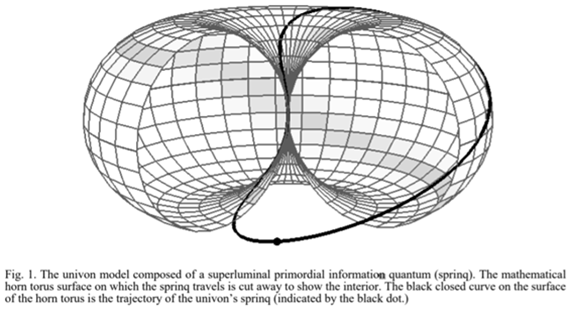
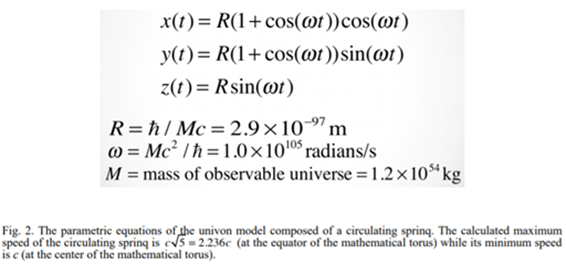
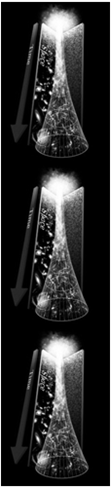
Figure 3: For Mocombe, building on BHBBT, the superverses with entangled and superimposed (via black holes) multiverses share the same informational content. So, the hypothesis here is that one superverse created (from the absolute vacuum) a universe, and its informational content is entangled and superimposed on top of another superverse with the informational content of the previous universe emerging in it via black holes. Hence what you have are a layer of multiverses and superverses, superimposed and entangled, whose informational content are shared or recycled via black holes, which organize and structure the multiverses similarly. As such, quantum fluctuation and big bangs are constantly occurring and producing the same worlds, ad infinitum. So, when physicists look out to the cosmic microwave background (CMB), they are looking at the remnant from an early stage of our universe, which came forth from its older version a layer above it, and so on ad infinitum. Put more concretely, the physicists are in a superverse, of our universe, in our milky-way galaxy, looking out to the black hole of a milky-way galaxy from the superverse/multiverse above us with its own consciousness field.
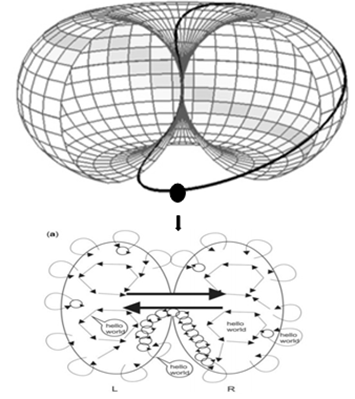
Figure 4: This figure represents how the psychions are embodied, as psychons, from the consciousness field (CF) in the neurons of brains (figure a, adopted from McFadden, 2020, represents the human brain—left (L) and right (R) hemispheres—and its EM field, which holds together and integrates the qualia of psychions, informational content of the superverse/multiverses, which becomes individuated consciousness recursively organized and reproduced as practical consciousness), which produces an EM field that holds together and integrates the qualia of the psychions as individuated consciousness on channels or stations of frequency wavelengths from the absolute vacuum. For Mocombe, building on BHBBT, the superverses with entangled and superimposed (via black holes) multiverses share the same informational content. So, the hypothesis here is that one superverse created (from the absolute vacuum) a universe, and its informational content is entangled and superimposed on top of another superverse with the informational content of the previous universe emerging in it via black holes. Hence what you have are a layer of multiverses and superverses, superimposed and entangled, whose informational contents are shared or recycled via black holes, which organize and structure the multiverses similarly. As such, quantum fluctuation and big bangs are constantly occurring and producing the same worlds, ad infinitum. The informational content, qualia, of these multiverses and worlds are encoded and transmitted as psychions (channel frequency of wavelengths) and embodied in the neurons of brains, which create an EM field that holds and integrates the psychions as individuated consciousness.
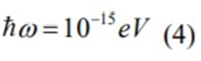
Figure 5: Adopted from Kozlowska and Kozlowski. The formula represents the elementary value of quantum energy for brain and Schumann waves.

Figure 6: Garyian consciousness wave equation for individual consciousness. The formula represents the elementary value of quantum energy for brain and Schumann waves plus or minus the resonating frequency channel or station of subjective phenomenal consciousness.
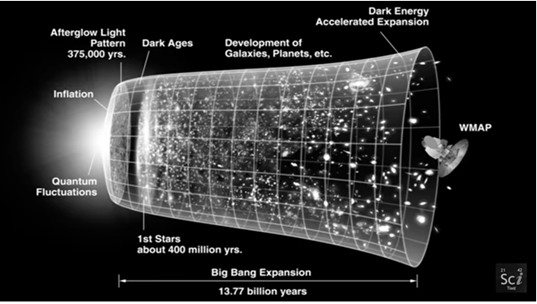
Figure 7: For Mocombe, one superverse created (from the absolute vacuum) a universe, via quantum fluctuation, tunneling, and inflation, and its informational content is entangled and superimposed on top of another universe with the informational content of the previous universe emerging in it via black holes as highlighted in Figure 3. Figure 7 highlights the stages by which these multiverses emerge and unfold from the absolute vacuum. Hence what you have are a layer of multiverses, superimposed and entangled, whose informational contents are shared or recycled via black holes, which organize and structure the multiverses similarly. As such, quantum fluctuation and big bangs are constantly occurring and producing the same worlds, ad infinitum. So, when physicists look out to the cosmic microwave background (CMB), they are looking at the remnant from an early stage of our universe, which came forth from its older version a layer above it, and so on ad infinitum. Put more concretely, the physicists are in a superverse, of our universe, in our milky-way galaxy, looking out to the black hole of a milky-way galaxy from the superverse/multiverse above us with its own consciousness field.
| Frequency Band | Frequency | Brain States |
| Gamma (γ) | 35 Hz | Concentration, problem solving |
| Beta (β) | 12-35 HZ | Anxiety dominant, active mind, external attention, relaxed |
| Alpha (α) | 8-12 Hz | Very relaxed, passive attention |
| Theta (θ) | 4-8 Hz | Deeply relaxed, inward focused |
| Delta (δ) | 0.5-4 Hz | Sleep, dreaming |
| Psychionic / psychonic (Φ) | 0-0.5 HZ | Transmission from the absolute vacuum to Schumann wave |
Table 1: Characteristics of Brain Waves.
Hence, evolutionarily speaking, there was no consciousness in the early multiverse; consciousness emerged as a result of aggregated matter, with sense perceiving apparatuses, affectively, perceptively, and cognitively, the dimensions of consciousness, experiencing aggregated material realities with Schumann waves where they, initially, sought pleasure and unpleasure between themselves and the material reality through, in the human species as far as we know, three (ready-to-hand, unready-to-hand, and present-at-hand) phenomenal stances of the (human) brain/mind, i.e., what Heidegger calls the analytics of Dasein, which would give rise to the contents (qualia) of consciousness. Ready-to-hand refers to the unconscious experience of material reality as it appears to the human actor; unready-to-hand refers to the contemplative problem-solving aspect of the human actor when experiencing material reality; and the present-at-hand structural stance refers to self-awareness of the human actor. From these three stances, consciousness in the human species, biologically speaking, emerged phylogenetically, sociogenetically, and ontogenetically.
Within one of the two social relations, ontogenetically, the individual being is initially constituted as superimposed, entangled, recycled, and embodied subatomic particles, psychion, of multiple worlds of the multiverse, which have their own predetermined form of understanding and cognition, phenomenal properties, qualia, based on previous or simultaneous experiences as aggregated matter (this is akin to what the Greek philosopher Plato refers to when he posits knowledge as recollection of the Soul; and Nietzsche’s idea of eternal recurrence) experiencing Schumann waves whose informational content is transmitted from the absolute vacuum. Again, the aggregated individual’s actions are not necessarily determined by the embodiment and drives of these recycled (replicated)/entangled/superimposed subatomic particles, which are psychon once embodied. It is conflict/tension and an individual’s stance, ready-to-hand, unready-to-hand, and present-at-hand, when the subatomic particles become aggregated matter or embodied, which determines whether or not they become aware, present-at-hand, of the qualia of the subatomic particle drives (stemming from the absolute vacuum) and choose to recursively reorganize and reproduce the content of the drives as their practical consciousness.
This desire to reproduce the cognition and understanding of the (chemical, biological, and physiological) drives of the recycled/replicated/entangled/superimposed subatomic particles stemming from the absolute vacuum as a wave, however, may be limited by the structuring structure of the aggregated body and brain of the individual subject. That is to say, the second origins and basis of an individual’s actions are the structuring drives and desires, for food, clothing, shelter, social interaction, and sex, of the aggregated body and brain, which the subatomic particles constitute and embody. In other words, the aggregated body and brain is preprogrammed with its own (biological, chemical, and physiological) forms of sensibility, understanding, and cognition, structuring structure, by which it experiences being-in-the-world as aggregated embodied subatomic particles. These bodily forms of sensibility, understanding, and cognition, such as the drive and desire for food, clothing, shelter, social interaction, linguistic communication, and sex, are tied to the material embodiment and survival of the embodied individual actor, and may or may not supersede or conflict with the desire and drive of an individual to recursively (re) organize and reproduce the structuring structure of the superimposed, entangled, and recycled (phenomenal properties of) subatomic particles.
If these two initial structuring structures are in conflict, the individual moves from the ready-to-hand to the unready-to-hand stance or analytics where they may begin to reflect upon and question their being-in-the-world prior to acting. Hence just as in the case of the structuring structure of the subatomic particles it is an individual being’s analytics vis-à-vis the drives of its body and brain in relation to the impulses of the subatomic particles, which determines whether or not they become driven by the desire to solely fulfill the material needs of their body and brain at the expense of the drives/desires of the subatomic particles or the social class language game of the material resource framework they find their existence unfolding in The social class language game, i.e., social structure, and its differentiating effects, an individual find their existence unfolding in is the third structuring structure, which attempts to determine the actions of individual beings as they experience being-in-the-world as embodied subatomic particles irrespective of the aforementioned two.
The aggregated individual finds themselves objectified and unfolding within a material resource framework controlled by the actions of other bodies, which presuppose their existence, via the actions of their bodies (practical consciousness), language, communicative discourse, ideology, and ideological apparatuses stemming from how (two forms of system and social integration, the Protestant Ethic and the spirit of capitalism or the Vodou Ethic and the spirit of communism) they satisfy the desires of their bodies and subatomic particle drives (means and mode of production). What is aggregated as a social class language game by those in power positions via and within its mode of production, language, ideology, ideological apparatuses, and communicative discourse attempts to interpellate and subjectify other beings to its interpretive frame of satisfying their bodily needs, fulfilling the impulses of their subatomic particles, and organizing a material resource framework at the expense of all others, and becomes a third form of structuring individual action based on the mode of production and how it differentiates individual actors.
That is to say, an individual’s interpellation, subjectification, and differentiation within the social class language game that presupposes their being-in-a-world attempts to determine their actions or practical consciousness via the reified language, ideology, etc., of the social class language game, the meaning of which can be deferred via the communicative discourse of the individual actors allowing them to form social groups or heterogeneous communities tied to the dominant social order because of their control of the materials of the material resource framework. Hence, the deferment of meaning in ego-centered communicative discourse of the language and ideology of a social class language game is the final means of determining an individual’s action or practical consciousness outside of, and in relation to, its stance, i.e., analytics, vis-à-vis the drives of subatomic particles, drives and desires (anatomy and physiology) of the body and brain, and structural reproduction and differentiation. The (mental) stance of the transcendental ego and the ability to defer meaning in ego-centered communicative discourse within a social class language game are what accounts for the feeling or illusion of free-will.
In other words, whereas the practical consciousness of the transcendental ego stemming from the impulses/drives/frequency of embodied subatomic particles are indeterminant as with its neuronal processes involved with the constitution of meaning in ego-centered communicative discourse. The form of the understandings and sensibilities of the body and brain (neural correlates of consciousness) are determinant as with structural reproduction and differentiation of the mode of production, and therefore can be mapped out by neuroscientists, biologists, and sociologists to determine the nature, origins, and directions of societal constitution and an individual actor’s practical consciousness unfolding.
The interaction of all four elements or structuring processes in relation to the (mental) stance of the transcendental ego of the individual actor is the basis for human action, praxis/practical consciousness, and cognition/mind in a world. However, in the end, consequently, the majority of practical consciousness will be a product of an individual actor’s embodiment and the structural reproduction and differentiation of a social class language game/social structure given 1) the determinant nature of embodiment, (anatomical and physiological) form of understanding and sensibility of the body and brain amidst, paradoxically, the indeterminacy of impulses of embodied subatomic particles and the neuronal processes involved in ego-centered communicative discourse; and 2) the consolidation of power of those who control the material resource framework wherein a society, the social class language game, is ensconced and the threat that power (consolidated and constituted via the actions of bodies, mode of production, language, ideology, ideological apparatuses, and communicative discourse) poses to the ontological security of an aggregated individual actor who chooses (or not) either ready-to-hand or present-at-hand to recursively reorganize and reproduce the ideals of the society as their practical consciousness.
It should be mentioned that in response to this latter process, those in power positions who internalize the ideals of the social structure and recursively (re) organize and reproduce them as their practical consciousness are in the unready-to-hand stance when they encounter alternative forms of being-in-the-world within their social class language game. They dialectically, antidialectically, or negative dialectically, attempt to reconcile the practical consciousness of their social class language game with the reified practical consciousness of those who are either structurally differentiated or have deferred their meanings for alternative forms of being-in-the-world within their social class language. They can either accept, marginalize, or seek to eradicate the deferred or decentered subject or their practices.
References
- Aru, J., et al (2019). Coupling the State and Contents of Consciousness. Frontiers in Systems Neuroscience, 13 (43).
View at Publisher | View at Google Scholar - Askenasy, J. and Lehmann, J. (2013). Consciousness, brain, neuroplasticity. Frontiers in Psychology, 4 (412).
View at Publisher | View at Google Scholar - Baars, B. J. (1988). A Cognitive Theory of Consciousness. New York, NY: Cambridge University Press.
View at Publisher | View at Google Scholar - Bachmann, T. (2015). On the brain-imaging markers of neural correlates of consciousness. Frontiers in Psychology, 6 (868).
View at Publisher | View at Google Scholar - Bachmann, T. and Hudetz, A. G. (2014). It is time to combine the two main traditions in the research on the neural correlates of consciousness: C= LxD. Frontiers in Psychology, 5 (940).
View at Publisher | View at Google Scholar - Beauregard, M., et al (2014). Manifesto for a Post-Materialist Science. EXPLORE, 10 (5), pp. 272-274.
View at Publisher | View at Google Scholar - Beauregard, M., Trent, N. L., Schwartz, G. E. (2018). Toward a postmaterialist psychology: Theory, research, and applications. New Ideas in Psychology, 50, 21-33.
View at Publisher | View at Google Scholar - Berkovich-Ohana, A., Dor-Ziderman, Y., Trautwein, F.M., Schweitzer, Y., Nave, O., Fulder, S. and Ataria, Y. (2020). The Hitchhiker’s Guide to Neurophenomenology– The Case of Studying Self Boundaries with Meditators. Frontiers in Psychology, 11 (1680).
View at Publisher | View at Google Scholar - Block, N. (2005). Two neural correlates of consciousness. Trends Cogn. Sci., 9, (46–52),
View at Publisher | View at Google Scholar - Block, N., and MacDonald, C. (2008). Phenomenal and access consciousness. Proc. Aristotelian Soc., CVIII, (289–317).
View at Publisher | View at Google Scholar - Bourdieu, Pierre (1984). Distinction: A Social Critique of the Judgement of Taste (Richard Nice, Trans.). Cambridge MA: Harvard University Press.
View at Publisher | View at Google Scholar - Bourdieu, P. (1986). The Forms of Capital. In J.E. Richardson (Ed.), Handbook of Theory
View at Publisher | View at Google Scholar - and Research for the Sociology of Education (pp. 241–258). Westport: Greenwood Press.
View at Publisher | View at Google Scholar - Bourdieu, Pierre (1990). The Logic of Practice (Richard Nice, Trans.). Stanford, California: Stanford University Press.
View at Publisher | View at Google Scholar - Chalmers, D. J. (1995). Facing up to the problem of consciousness. J. Conscious. Stud., 2, 200–219.
View at Publisher | View at Google Scholar - Chalmers, D. J. (1996). The conscious mind: In search of a fundamental theory. Oxford University Press.
View at Publisher | View at Google Scholar - Chalmers, D. J. (2000). What is a neural correlate of consciousness? in Neural Correlates of Consciousness: Empirical and Conceptual Questions, ed. T. Metzinger (Cambridge, MA: MIT Press), 17–39.
View at Publisher | View at Google Scholar - Chalmers, D. J. (2006). Strong and weak emergence, in The Reemergence of Emergence, ed P. Clayton and P. Davies (Oxford, UK: Oxford University Press), 244–255.
View at Publisher | View at Google Scholar - Chennu, S. and Bekinschtein, T. A. (2012). Arousal modulates auditory attention and awareness: insights from sleep, sedation, and disorders of consciousness. Frontiers in Psychology, 3 (65).
View at Publisher | View at Google Scholar - Chen, S., et al. (2018). Disrupted Interactions Between Arousal and Cortical Awareness Networks in MCS and VS/UWS Patients: Evidence from Resting-state Functional Imaging Connectivity. Neuroscience, 382, 115-124.
View at Publisher | View at Google Scholar - Chen, Y. and Zhang, J. (2021). How Energy Supports Our Brain to Yield Consciousness: Insights from Neuroimaging Based on the Neuroenergetics Hypothesis. Frontiers in Systems Neuroscience, 15 (648860).
View at Publisher | View at Google Scholar - Creswell, J. W. (2009). Research design: Qualitative, quantitative, and mixed methods approach (3rd ed.). London, UK: Sage Publications.
View at Publisher | View at Google Scholar - Creswell, J. W. (2013). Qualitative Inquiry & Research Design: Choosing Among Five Approaches (3rd ed.). London, UK: Sage.
View at Publisher | View at Google Scholar - Crick, F. (1994). The Astonishing Hypothesis: The Scientific Search for the Soul. New York: Touchstone.
View at Publisher | View at Google Scholar - Crick, F., and Koch, C. (1990). Toward a neurobiological theory of consciousness. Semin. Neurosci., 2 (263–275).
View at Publisher | View at Google Scholar - Crick, F., and Koch, C. (1998). Consciousness and neuroscience. Cereb. Cortex, 8 (97-107).
View at Publisher | View at Google Scholar - Crick, F., and Koch, C. (2003). A framework for consciousness. Nat. Neurosci., 6 (119-126).
View at Publisher | View at Google Scholar - Demertzi, A. et al (2009). Dualism Persists in the Science of Mind. Annals of the New York Academy of Sciences, 1157, 1–9.
View at Publisher | View at Google Scholar - Demertzi, A. et al (2011). Neural plasticity lessons from disorders of consciousness. Frontiers in Psychology, 1 (245).
View at Publisher | View at Google Scholar - Dennet, D. C. (1992). Consciousness Explained. London: Penguin.
View at Publisher | View at Google Scholar - Dennet, D. C. (2016). Illusionism as the Obvious Default Theory of Consciousness.
View at Publisher | View at Google Scholar - Journal of Consciousness Studies, 23 (11–12), 65–72.
View at Publisher | View at Google Scholar - Dennett, D. C. (2018). Facing up to the hard question of consciousness. Phil. Trans. R. Soc. B Biol. Sci. 373:20170342.
View at Publisher | View at Google Scholar - Erickson, D. L. (2011). Intuition, Telepathy, and Interspecies Communication: A Multidisciplinary Perspective. NeuroQuantology, 1, 145-152.
View at Publisher | View at Google Scholar - Eriksson, J., Fontan, A., and Pedale, T. (2020). Make the Unconscious Explicit to Boost the Science of Consciousness. Frontiers in Psychologism, 11 (260).
View at Publisher | View at Google Scholar - Feinberg, E. T. and Mallatt, J. (2016). The nature of primary consciousness. A new synthesis. Consciousness and Cognition, 43, 113–127.
View at Publisher | View at Google Scholar - Feinberg, T.E. and Mallatt, J. (2020). Phenomenal Consciousness and Emergence: Eliminating the Explanatory Gap. Frontiers in Psychology, 11(1041).
View at Publisher | View at Google Scholar - Fesce, R. (2020). Subjectivity as an Emergent Property of Information Processing by Neuronal Networks. Frontiers in Neuroscience, 14.
View at Publisher | View at Google Scholar - Gamez, D. (2014). The measurement of consciousness: a framework for the scientific study of consciousness. Frontiers in Psychology, 5 (714).
View at Publisher | View at Google Scholar - Gauthier, R. (2020). Big bangs created by univon particles from a conscious quantum field—towards the next scientific revolution.
View at Publisher | View at Google Scholar - Giddens, Anthony (1984). The Constitution of Society: Outline of the Theory of Structuration. Cambridge: Polity Press.
View at Publisher | View at Google Scholar - Greyson, B. (2010). Implications of Near-Death Experiences for a Postmaterialist Psychology. Psychology of Religion and Spirituality, 2 (1).
View at Publisher | View at Google Scholar - Gutland, C., Cai, W., and Fernandez, A.V. (2021). Editorial: Integrating Philosophical and Scientific Approaches in Consciousness Research. Frontiers in Psychology, 12 (683860).
View at Publisher | View at Google Scholar - Habermas, Jürgen (1987). The Theory of Communicative Action: Lifeworld and System: A Critique of Functionalist Reason (Volume 2, Thomas McCarthy, Trans.). Boston: Beacon Press.
View at Publisher | View at Google Scholar - Habermas, Jürgen (1984). The Theory of Communicative Action: Reason and the Rationalization of Society (Volume 1, Thomas McCarthy, Trans.). Boston: Beacon Press.
View at Publisher | View at Google Scholar - Halligan, P.W. and Oakley, D.A. (2021). Giving Up on Consciousness as the Ghost in the Machine. Frontiers in Psychology, 12(571460).
View at Publisher | View at Google Scholar - Hameroff, Stuart and Roger Penrose (2014). Consciousness in the universe: A review of the orch or theory. Physics of Life Reviews, 11, 39-78.
View at Publisher | View at Google Scholar - Har-Lev, Y. (2021). Five-dimensional universe. Academia Letters, 1428, 1-3.
View at Publisher | View at Google Scholar - Havlík, M., Kozáková, E., and Horácek, J. (2017). Why and how. The Future of the Central Questions of Consciousness. Frontiers in Psychology, 8 (1797).
View at Publisher | View at Google Scholar - Huels, Emma R., Kim, Hyoungkyu, Lee, UnCheol, Bel-Bahar, Tarik, Colmenero, Angelo V., Nelson, Amanda, Blain-Moraes, Stefanie, Mashour, George A., & Harris, Richard E. (2021). Neural correlates of the shamanic state of consciousness. Frontiers in Human Neuroscience, 15, 1-16.
View at Publisher | View at Google Scholar - Hunt, T. (2011). Kicking the Psychophysical Laws into Gear: A New Approach to the Combination Problem. Journal of Consciousness Studies, 18 (11–12), pp. 96-134.
View at Publisher | View at Google Scholar - Hunt, T. and Schooler, J. W. (2019). The Easy Part of the Hard Problem: A Resonance Theory of Consciousness. Frontiers in Human Neuroscience, 13 (378).
View at Publisher | View at Google Scholar - Jones, M. W. (2013). Electromagnetic-Field Theories of Mind. Journal of Consciousness Studies, 20 (11–12), pp. 1–26.
View at Publisher | View at Google Scholar - Kastrup, B. (2017). An Ontological Solution to the Mind-Body Problem. Philosophies, 2 (10), 1-18.
View at Publisher | View at Google Scholar - Kastrup, B. (2018). The Universe in Consciousness. Journal of Consciousness Studies, 25 (5–6), pp. 125–55.
View at Publisher | View at Google Scholar - Kennedy, M. (2007). Defining a literature. Educational Researcher, 36 (3), 139-147.
View at Publisher | View at Google Scholar - Keppler, J. (2020). The Common Basis of Memory and Consciousness: Understanding the Brain as a Write–Read Head Interacting with an Omnipresent Background Field. Frontiers in Psychology, 10 (2968).
View at Publisher | View at Google Scholar - Keppler, J. and Shani, I. (2020). Cosmopsychism and Consciousness Research: A Fresh View on the Causal Mechanisms Underlying Phenomenal States. Frontiers in Psychology, 11 (371).
View at Publisher | View at Google Scholar - Kim, H. et al (2018). Estimating the Integrated Information Measure Phi from High Density Electroencephalography during States of Consciousness in Humans. Frontiers in Human Neuroscience, 12 (42).
View at Publisher | View at Google Scholar - Kitson, A., Chirico, A., Gaggioli, A. and Riecke, B.E (2020). A Review on Research and Evaluation Methods for Investigating Self-Transcendence. Frontiers in Psychology 11 (547687).
View at Publisher | View at Google Scholar - Koch, C. (2004). The Quest for Consciousness: A Neurobiological Approach. Englewood CO: Roberts & Company.
View at Publisher | View at Google Scholar - Kozlowska, Marciak J. & Kozlowski, Miroslaw (2016). Psychon. Journal of Consciousness Exploration & Research, 7:10, 794-800.
View at Publisher | View at Google Scholar - Lacalli, T. (2020). Evolving Consciousness: Insights from Turing, and the Shaping of Experience. Frontiers in Behavioral Neuroscience, 14.
View at Publisher | View at Google Scholar - Levine, J. (1983). Materialism and qualia: the explanatory gap. Pac. Philos. Q., 64 (354-361).
View at Publisher | View at Google Scholar - Lou, H. C., Thomsen, K. R., Changeux, J. (2020). The Molecular Organization of Self-awareness: Paralimbic Dopamine-GABA Interaction. Frontiers in Systems Neuroscience, 14 (3).
View at Publisher | View at Google Scholar - Manzotti, R. (2019). Mind-Object Identity: A Solution to the Hard Problem. Frontiers in Psychology, 10 (63).
View at Publisher | View at Google Scholar - Maung, H. H. (2019). Dualism and its place in a philosophical structure for psychiatry. Medicine, Health Care and Philosophy, 22.
View at Publisher | View at Google Scholar - McFadden, J. (2020). Integrating information in the brain’s em field: The cemi field theory of consciousness. Neuroscience of Consciousness, 6 (1), 1-13.
View at Publisher | View at Google Scholar - McLeod, S. A. (2007). Mind body debate.
View at Publisher | View at Google Scholar - Meijer, K. F. D. and Geesink, J. H. H. (2017). Consciousness in the Universe is Scale Invariant and Implies an Event Horizon of the Human Brain. NeuroQuantology, 15 (3), 41-79.
View at Publisher | View at Google Scholar - Miller, S. M. (2014). Closing in on the constitution of consciousness. Frontiers in Psychology, 5 (1293).
View at Publisher | View at Google Scholar - Mobbs, D. and Watt, C. (2011). There is nothing paranormal about near-death experiences: how neuroscience can explain seeing bright lights, meeting the dead, or being convinced you are one of them. Trends in Cognitive Sciences, 15 (10), 447-449.
View at Publisher | View at Google Scholar - Mocombe, P. C. (2021a). Consciousness field theory. Archives in Neurology & Neuroscience, 9 (4), 1-6.
View at Publisher | View at Google Scholar - Mocombe, P. C. (2021b). The consciousness field. Advances in Bioengineering & Biomedical Science Research, 5 (1), 11-16.
View at Publisher | View at Google Scholar - Mocombe, P. C. (2019). The Theory of phenomenological structuralism. Cambridge Scholars Publishing.
View at Publisher | View at Google Scholar - Mocombe, P. C. (2019). Haitian Epistemology, Phenomenological Structuralism, and Resolving the Binding and Hard Problems of Consciousness. Archives in Biomedical Engineering & Biotechnology, 2 (4), 1-10.
View at Publisher | View at Google Scholar - Moser, J. et al (2019). Evaluating Complexity of Fetal MEG Signals: A Comparison of Different Metrics and Their Applicability Julia Moser. Frontiers in Systems Neuroscience, 13 (23).
View at Publisher | View at Google Scholar - Nannini, S. (2018). The mind-body problem in the philosophy of mind and cognitive neuroscience: a physicalist naturalist solution. Neurological Sciences, 39 (1509-1517).
View at Publisher | View at Google Scholar - Nelson, K. R., et al (2006). Does the arousal system contribute to near death experience? Neurology, 66, 1003-1009.
View at Publisher | View at Google Scholar - Newberg, A. and Newberg, S. (2010). Psychology and Neurobiology in a Postmaterialist World. Psychology of Religion and Spirituality, 2 (2), pp. 119 –121.
View at Publisher | View at Google Scholar - Niikawa, T. (2020). A Map of Consciousness Studies: Questions and Approaches. Frontiers in Psychology, 11 (530152).
View at Publisher | View at Google Scholar - Owen, M. and Guta, M. P. (2019). Physically Sufficient Neural Mechanisms of Consciousness. Frontiers in Systems Neuroscience, 13 (24).
View at Publisher | View at Google Scholar - Ouwersloot, G., Derksen, J. and Glas, G. (2020). Reintroducing Consciousness in Psychopathology: Review of the Literature and Conceptual Framework. Frontiers in Psychology, 11 (586284).
View at Publisher | View at Google Scholar - Paoletti, P. and Ben-Soussan, T.D. (2020). Reflections on Inner and Outer Silence and Consciousness Without Contents According to the Sphere Model of Consciousness. Frontiers in Psychology, 11 (1807).
View at Publisher | View at Google Scholar - Pennartz, C. M. A., Farisco, M., Evers, K. (2019). Indicators and Criteria of Consciousness in Animals and Intelligent Machines: An Inside-Out Approach. Frontiers in Systems Neuroscience, 13 (25).
View at Publisher | View at Google Scholar - Pepperell, R. (2018). Consciousness as a Physical Process Caused by the Organization of Energy in the Brain. Frontiers in Psychology, 9 (2091).
View at Publisher | View at Google Scholar - Pockett, S. (2014). Problems with theories that equate consciousness with information or information processing. Frontiers in Systems Neuroscience, 8 (225), 1-3.
View at Publisher | View at Google Scholar - Polák, M. and Marvan, T. (2018). Neural Correlates of Consciousness Meet the Theory of Identity. Frontiers in Psychology, 9 (1269).
View at Publisher | View at Google Scholar - Polák, M. and Marvan, T. (2019). How to Mitigate the Hard Problem by Adopting the Dual Theory of Phenomenal Consciousness. Frontiers in Psychology, 10 (2837).
View at Publisher | View at Google Scholar - Porta, L. D. et al (2019). Exploring the Phase-Locking Mechanisms Yielding Delayed and Anticipated Synchronization in Neuronal Circuits. Frontiers in Systems Neuroscience, 13 (41).
View at Publisher | View at Google Scholar - Rivas, T. (2003). Three Cases of the Reincarnation Type in the Netherlands. Journal of Scientific Exploration, 17 (3), pp. 527–532.
View at Publisher | View at Google Scholar - Rock, A.J., Storm, L. (2015). Testing Telepathy in the Medium/Proxy-Sitter Dyad: A Protocol Focusing on the Source-of-Psi Problem. Journal of Scientific Exploration, 29 (4), pp. 565 -584.
View at Publisher | View at Google Scholar - Sahlins, Marshall (1995a). How “Natives” Think: About Captain Cook, For Example. Chicago: University of Chicago Press.
View at Publisher | View at Google Scholar - Sahlins, Marshall (1995b). Historical Metaphors and Mythical Realities. Ann Arbor: University of Michigan Press.
View at Publisher | View at Google Scholar - Sahlins, Marshall (1990). The Political Economy of Grandeur in Hawaii from 18101830. In Emiko Ohnuki-Tierney (Ed.), Culture through Time: Anthropological
View at Publisher | View at Google Scholar - Approaches (pp. 26-56). California: Stanford University Press.
View at Publisher | View at Google Scholar - Sahlins, Marshall (1989). Captain Cook at Hawaii, The Journal of the Polynesian Society 98; 4: 371-423.
View at Publisher | View at Google Scholar - Sahlins, Marshall (1985). Islands of History. Chicago: University of Chicago Press.
View at Publisher | View at Google Scholar - Sahlins, Marshall (1982). The Apotheosis of Captain Cook. In Michel Izard and Pierre Smith (Eds.), Between Belief and Transgression (pp. 73-102). Chicago: University of Chicago Press.
View at Publisher | View at Google Scholar - Sahlins, Marshall (1976). Culture and Practical Reason. Chicago, IL: University of Chicago Press.
View at Publisher | View at Google Scholar - Safron, A. (2020). An Integrated World Modeling Theory (IWMT) of Consciousness: Combining Integrated Information and Global Neuronal Workspace Theories with the Free Energy Principle and Active Inference Framework; Toward Solving the Hard Problem and Characterizing Agentic Causation. Frontiers in Artificial Intelligence, 3 (30).
View at Publisher | View at Google Scholar - Schwartz, G. E. (2012). Consciousness, Spirituality, and Postmaterialist Science: An Empirical and Experiential Approach. Pp. 581-594.
View at Publisher | View at Google Scholar - Schwartz, G. E. et al (2017). The Academy for the Advancement of Postmaterialist Sciences: Integrating Consciousness into Mainstream. Explore, 14 (2), 111-113.
View at Publisher | View at Google Scholar - Searle, J. R. (2004). Mind: A Brief Introduction. New York, NY: Oxford University Press.
View at Publisher | View at Google Scholar - Shani, I. and Keppler, J. (2018). Beyond Combination: How Cosmic Consciousness Grounds Ordinary Experience. Journal of the American Philosophical Association, 390-410.
View at Publisher | View at Google Scholar - Sheldrake, R. and Smart, P. (2003). Experimental tests for telephone telepathy. Journal of the Society for Psychical Research, 67, 184-199.
View at Publisher | View at Google Scholar - Sheldrake, R. and Avraamides, L. (2009). An Automated Test for Telepathy in Connection with Emails. Journal of Scientific Exploration, 23 (1), pp. 29–36.
View at Publisher | View at Google Scholar - Sheldrake, R. (2014). Telepathy in Connection Text Messages with Telephone Calls, and Emails. Journal of International Society of Life Information Science, 32 (1),7-15.
View at Publisher | View at Google Scholar - Sikkens, T., Bosman, C. A., and Olcese, U. (2019). The Role of Top-Down Modulation in Shaping Sensory Processing Across Brain States: Implications for Consciousness. Frontiers in Systems Neuroscience, 13 (31).
View at Publisher | View at Google Scholar - Silberstein, M. and Chemero, A. (2015). Extending Neutral Monism to the Hard Problem. Journal of Consciousness Studies, 22 (3–4), pp. 181–94.
View at Publisher | View at Google Scholar - Singer, W. (2019). A Naturalistic Approach to the Hard Problem of Consciousness. Frontiers in Systems Neuroscience, 13 (58).
View at Publisher | View at Google Scholar - Solms, M. (2019). The Hard Problem of Consciousness and the Free Energy Principle. Frontiers in Psychology, 9 (2714).
View at Publisher | View at Google Scholar - Spindler, L. R. B. et al (2021). Dopaminergic brainstem disconnection is common to pharmacological and pathological consciousness perturbation. PNAS, 118 (30), 1-11.
View at Publisher | View at Google Scholar - Srinivasan, N. (2020). Consciousness Without Content: A Look at Evidence and Prospects. Frontiers in Psychology, 11 (1992).
View at Publisher | View at Google Scholar - Stapp, H. P. (2005). Quantum Interactive Dualism: An Alternative to Materialism. Journal of Consciousness Studies, 12 (11), pp. 43-58.
View at Publisher | View at Google Scholar - Strauss, C. and Quinn, N. (1997). A Cognitive Theory of Cultural Meaning. Cambridge University Press.
View at Publisher | View at Google Scholar - Storm, L.C., and Rock, A.J. (2015). Testing telepathy in the medium/proxy-sitter dyad: A protocol focusing on the source-of-psi problem. Journal of Scientific Exploration, 29 (4), 565-584.
View at Publisher | View at Google Scholar - Taylor, S. (2020). An introduction to panspiritism: An alternative to materialism and panpsychism. Zygon, 55 (4), pp. 898-923.
View at Publisher | View at Google Scholar - Timmermann, C., Roseman L., Williams, L., Erritzoe, D., Martial, C., Cassol, H., Laureys, S., Nutt, D., and Carhart-Harris, R. (2018). DMT Models the Near-Death Experience. Frontiers in Psychology, 9 (1424).
View at Publisher | View at Google Scholar - Thompson, E. and Varela, F. J. (2001). Radical embodiment: neural dynamics and consciousness. TRENDS in Cognitive Sciences, 5 (10), 418-425.
View at Publisher | View at Google Scholar - Tononi, G., Sporns, O., and Edelman, G. M. (1994). A measure for brain complexity: relating functional segregation and integration in the nervous system. Proc. Natl. Acad. Sci. U.S.A., 91, 5033–5037.
View at Publisher | View at Google Scholar - Tyler, C. W. (2015). The emergent dualism view of quantum physics and consciousness. Cosmos and History: The Journal of Natural and Social Philosophy, 11, (2), 97-114.
View at Publisher | View at Google Scholar - Tyler, C.W. (2020). Ten Testable Properties of Consciousness. Frontiers in Psychology, 11 (1144).
View at Publisher | View at Google Scholar - Van Lommel, P. (2010). Consciousness beyond life: The science of the near-death experience. HarperCollins Publishers.
View at Publisher | View at Google Scholar - Van Lommel, P. et al (2001). Near-death experience in survivors of cardiac arrest: a prospective study in the Netherlands. Lancet, 358, 2039-2045.
View at Publisher | View at Google Scholar - Van Leeuwen, T.M., Singer, W., and Nikolic, D. (2015) The Merit of ´ Synesthesia for Consciousness Research. Frontiers in Psychology 6, (1850).
View at Publisher | View at Google Scholar - Vimal, R. L. P. (2008). Proto-experiences and subjective experiences: Classical and quantum concepts. Journal of Integrative Neuroscience, 7 (1), pp. 49–73.
View at Publisher | View at Google Scholar - Wendt, A. (2018). The mind–body problem and social science: Motivating a quantum social theory. Journal Theory of Social Behavior, 48, pp. 188–204.
View at Publisher | View at Google Scholar - Winter, U., LeVan, P., Borghardt, T.L., Akin, B., Wittmann, M., Leyens, Y., and Schmidt, S. (2020). Content-Free Awareness: EEG-fcMRI Correlates of Consciousness as Such in an Expert Meditator. Frontiers in Psychology, 10 (3064).
View at Publisher | View at Google Scholar - Zhou, J., Liu, X., Song, W., Yang, Y., Zhao, Z., Ling, F., et al. (2011). Specific and nonspecific thalamocortical functional connectivity in normal and vegetative states. Conscious. Cogn., 20 (257–268).
View at Publisher | View at Google Scholar