 Clinic
Research Article | DOI: https://doi.org/10.31579/2835-8295/142
Cancer as of Various Localizations Reflected in A Number of Collectibles
*Corresponding Author: Konstantin Anatolyevich Bugaevsky, Retired Asociate Professor, Ukraine.
Citation: Konstantin A. Bugaevsky, (2025), Cancer as of Various Localizations Reflected in A Number of Collectibles, International Journal of Clinical Reports and Studies, 4(6); DOI:10.31579/2835-8295/142
Copyright: © 2025, Konstantin Anatolyevich Bugaevsky. This is an open-access artic le distributed under the terms of the Creative Commons Attribution License, which permits unrestricted use, distribution, and reproduction in any medium, provided the original author and source are credited.
Received: 20 October 2025 | Accepted: 17 December 2025 | Published: 26 December 2025
Keywords: oncology; cancer; philately; numismatics; phaleristics; postage stamps; commemorative coins and table medals; thematic signs and badges; screenshot copies
Abstract
The purpose of conducting the research, its analysis and writing, based on the obtained materials, this research, thematic article, is the author’s desire to present the degree and volume of reflection in various means of collecting (philately, numismatics and phaleristics), the problem of breast cancer, in all its aspects. Hypothesis of the article : During the preparation for this study, its author put forward a working hypothesis, the essence of which was as follows: there is a fairly large number of the most diverse means of collecting and, in particular, philatelic, numismatic and phaleristic collectible materials from different countries of the world and different years of their release, which are thematically devoted to the problem of breast cancer, as well as issues of its diagnosis, treatment and prevention. Method and materials of the study: In conducting this research, analyzing the resulting materials, and subsequently writing this thematic research article, the author employed methods such as literary critical analysis of all available materials on the topic under study. To this end, available materials, both text and illustrations, were first found, selected, and systematized online. The author also consulted specialized websites (domestic and international) for collectors, primarily philatelists, numismatists, and phalerists specializing in medical collecting, including oncology and, in particular, breast cancer. All illustrative materials were systematized, grouped, and analyzed by the author. Using specialized computer programs, all materials selected for the article were converted by the author into color and/or black-and-white screenshots, which were then included in the text of this article. All materials were provided with brief accompanying comments and links to the sources on the internet, ensuring strict adherence to the copyrights of their respective owners.
Introduction
It is the author's deep, long-standing, and firm conviction that all issues directly related to the study of any field of medicine, its history, and its heroes are always relevant and in high demand! This, in particular, directly applies to oncology and one of its complex issues—the diagnosis, manifestations, treatment, and prevention of breast cancer! Reflecting this issue through various collecting media, and particularly philatelic media, is a powerful means of preventing this pathology and raising awareness among the general public and organizations involved in this issue. In this regard, the author of the study and this article attempted to examine the extent to which philatelic media, in all their diversity, address the issue of breast cancer [1, 2].
Results of the study and discussion
In his account of the representation of various types of cancer pathology, the author decided to present each of these types comprehensively, dedicating each to a collection—philatelic, phaleristic, and/or numismatic. The only exception in this list of cancer pathologies is the representation of breast cancer. This type of oncological pathology was already the subject of several of his early research articles. I would not like to repeat the material already presented, especially since it is very extensive [3, 4].

I'd like to begin my discussion with the topic of lung/bronchial cancer. It's worth noting that these are primarily philatelic materials, of which there are very few, and those that do exist are often linked to smoking and its consequences. Figure 2 shows this philatelic collection [5-11].

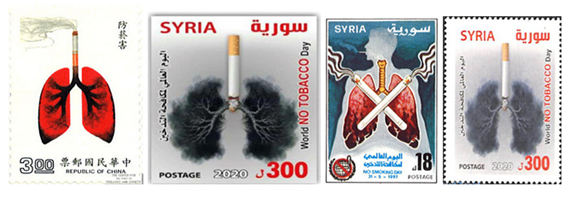
Figure 2: A philatelic collection dedicated to lung cancer and the fight against it
Next, Figure 3 presents a thematic collection dedicated to prostate and testicular cancer. It is more extensive and, first and foremost, also philatelic. These include postage stamps, first-day covers, and Maxi-Cards issued in various countries around the world in various years [3, 12, 42-46]. They are based on the US postage stamp (25 May 1999).
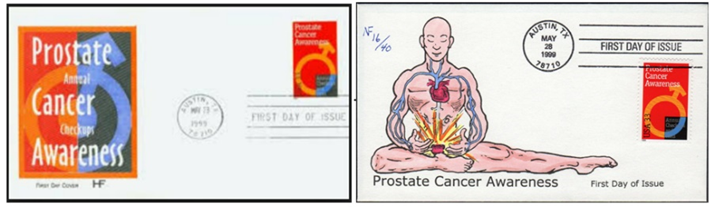


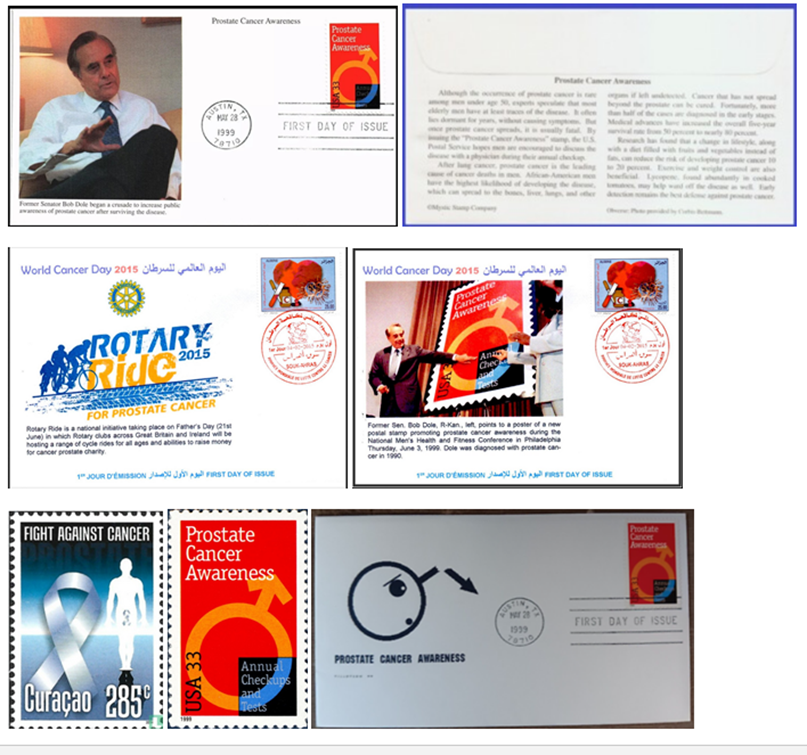
Figure 3: Prostate and testicular cancer as reflected in philatelic media Further, in Figure 4, a small, collectible, philatelic, phaleristic, numismatic and bonistic selection is presented, thematically dedicated to neoplasms of the female reproductive system - uterine cancer (endometrial), ovarian cancer, cervical cancer, the author of the PAP-theta and the Greek scientist, Georgos Papanikolaou - its author, as well as a diagram of the PAP-test [12-32].
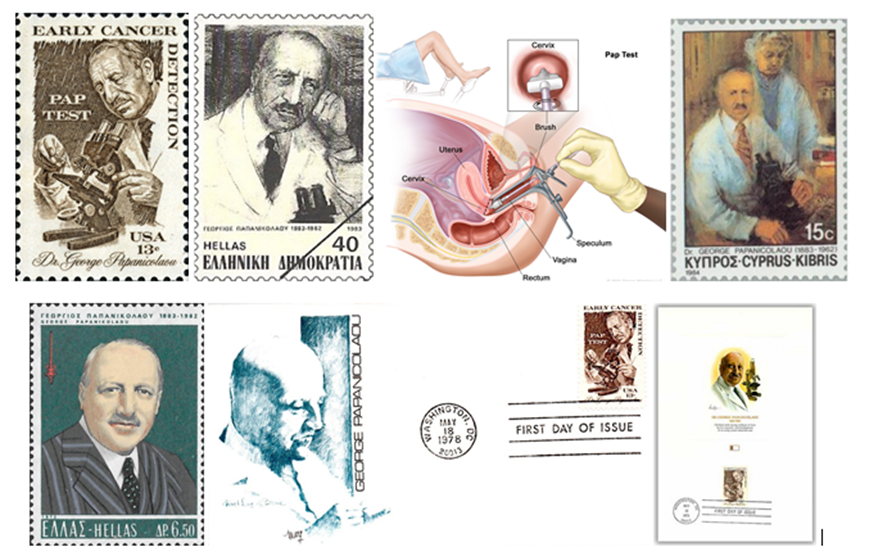
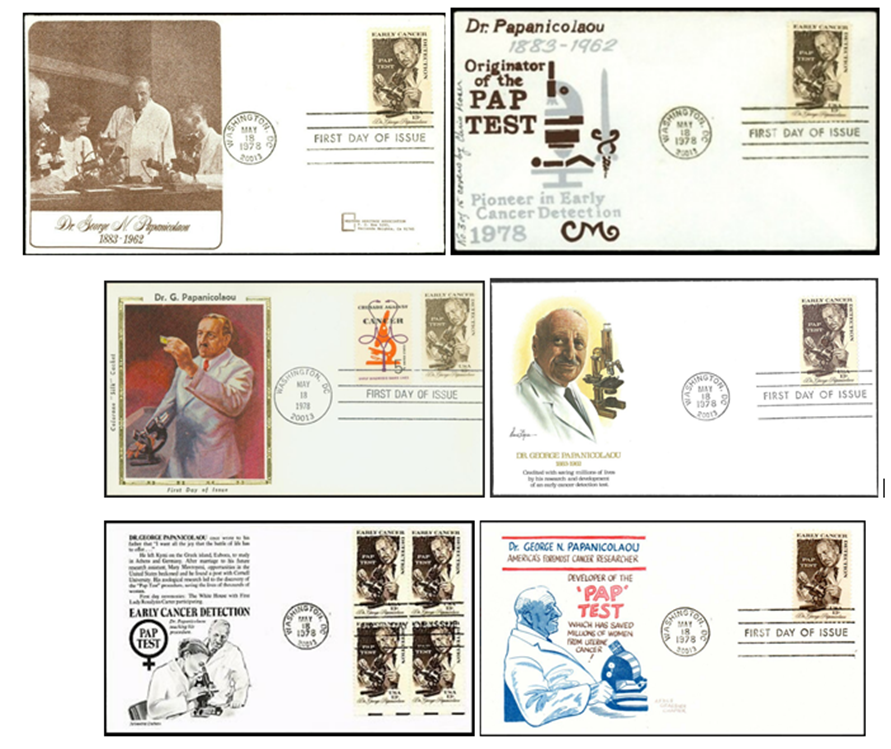
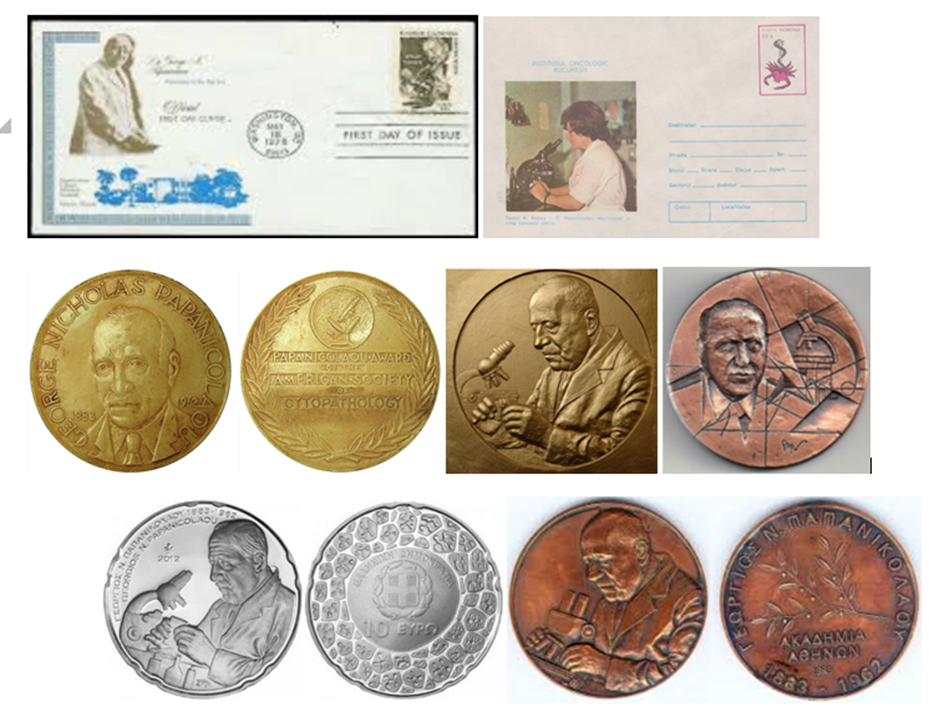
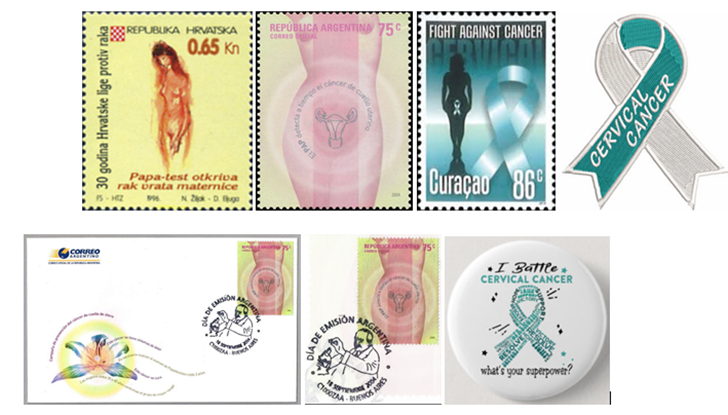
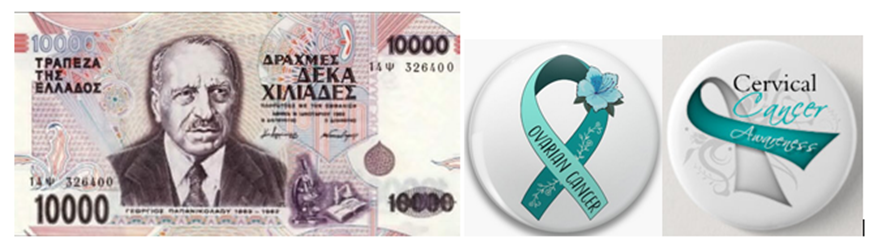

Figure 4: Uterine, cervical and ovarian cancer as reflected in the collection's thematic selection
Figure 5 shows a thematic collection dedicated to other types of human cancer [33-41]. These are philatelic and phaleristic themes dedicated to cancer of the human digestive system: esophagus, stomach, duodenal zone, pancreas, colon/colorectal cancer, cancer of the neck and head, thyroid gland [39], brain, sarcoma, skin cancer, as well as child hood cancer [35-40] and leukemia (cancer of white blood cells) [39-41].



This concludes another research article, thematically devoted to oncological pathology/cancer in various locations. The author is preparing further new materials for publication, which will explore oncology as an important medical science, its history, and its heroes—scientists and practitioners from around the world and throughout history—as reflected in philately, phaleristics, and numismatics in all their diversity.Figure 5. Phaleristic thematic collection dedicated to cancer of various localizations
Results of the study and discussion
In his account of the representation of various types of cancer pathology, the author decided to present each of these types comprehensively, dedicating each to a collection—philatelic, phaleristic, and/or numismatic. The only exception in this list of cancer pathologies is the representation of breast cancer. This type of oncological pathology was already the subject of several of his early research articles. I would not like to repeat the material already presented, especially since it is very extensive [3, 4].

I'd like to begin my discussion with the topic of lung/bronchial cancer. It's worth noting that these are primarily philatelic materials, of which there are very few, and those that do exist are often linked to smoking and its consequences. Figure 2 shows this philatelic collection [5-11].
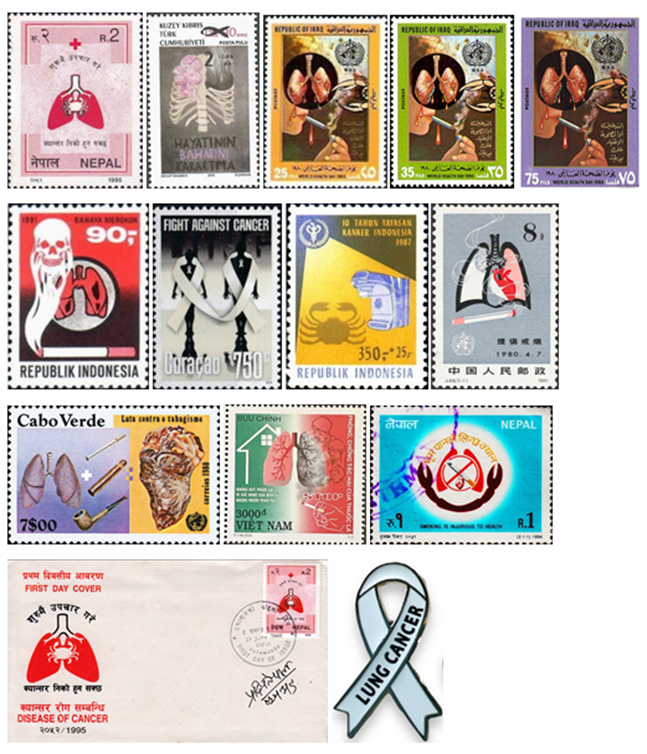

Figure 2: A philatelic collection dedicated to lung cancer and the fight against it
Next, Figure 3 presents a thematic collection dedicated to prostate and testicular cancer. It is more extensive and, first and foremost, also philatelic. These include postage stamps, first-day covers, and Maxi-Cards issued in various countries around the world in various years [3, 12, 42-46]. They are based on the US postage stamp (25 May 1999).
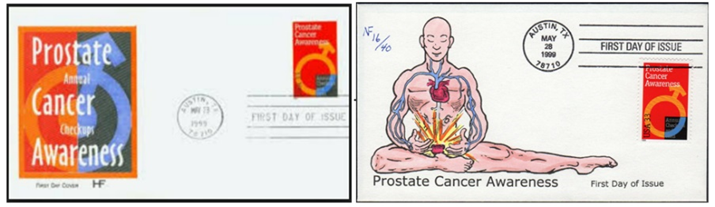


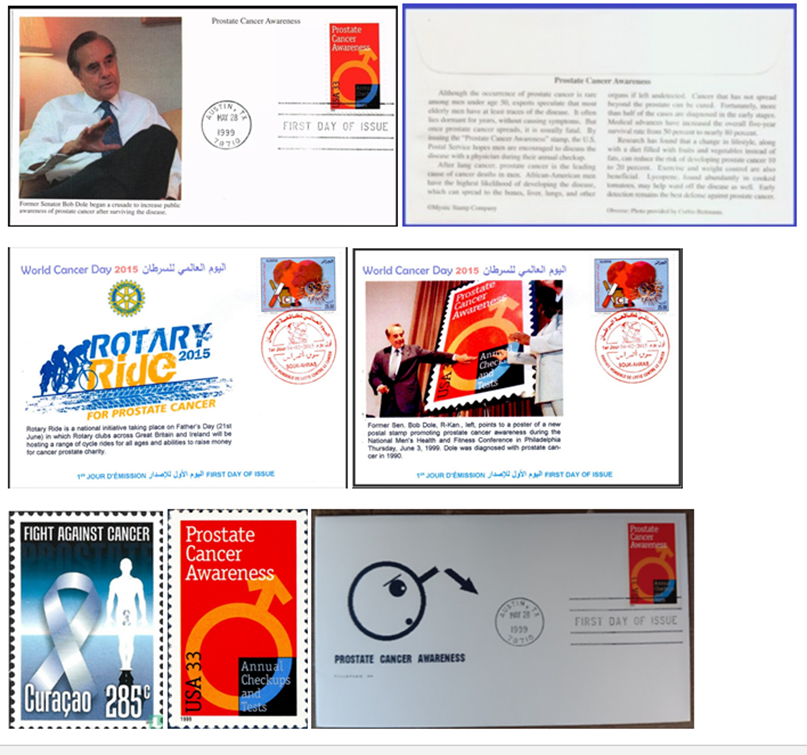
Figure 3: Prostate and testicular cancer as reflected in philatelic media Further, in Figure 4, a small, collectible, philatelic, phaleristic, numismatic and bonistic selection is presented, thematically dedicated to neoplasms of the female reproductive system - uterine cancer (endometrial), ovarian cancer, cervical cancer, the author of the PAP-theta and the Greek scientist, Georgos Papanikolaou - its author, as well as a diagram of the PAP-test [12-32].
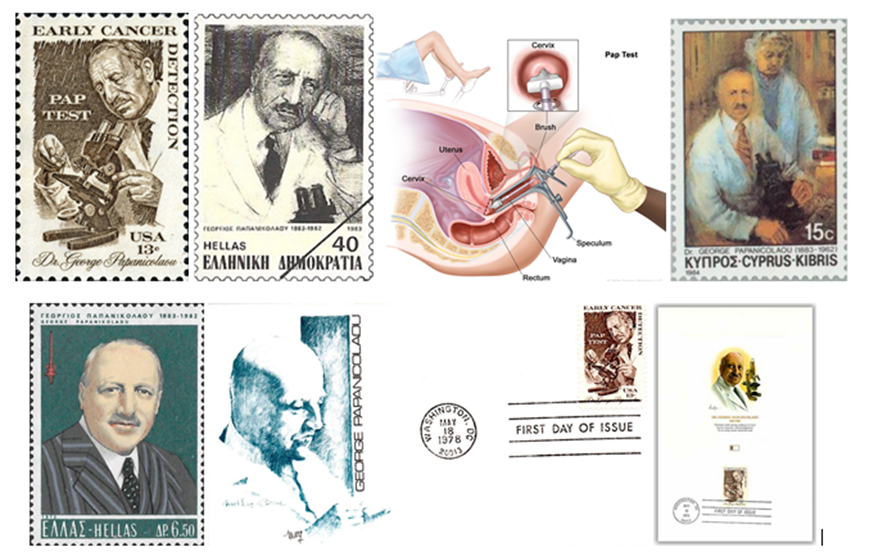
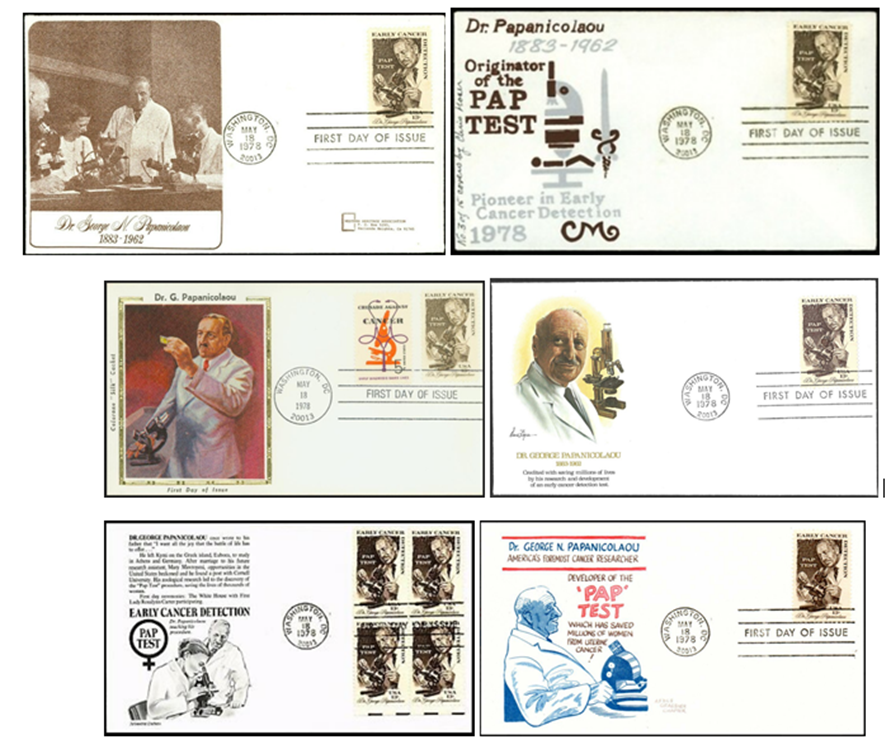

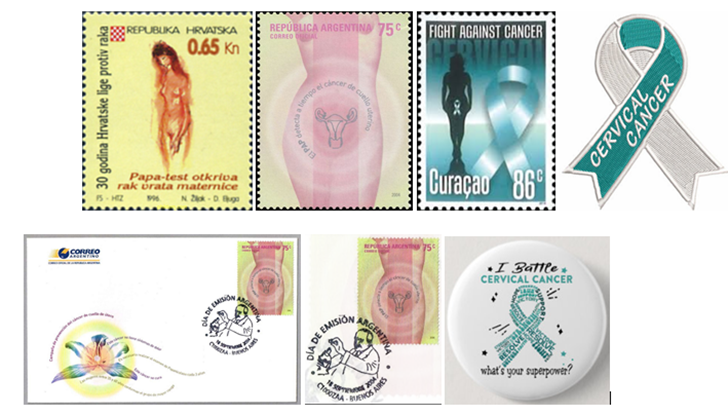


Figure 4: Uterine, cervical and ovarian cancer as reflected in the collection's thematic selection
Figure 5 shows a thematic collection dedicated to other types of human cancer [33-41]. These are philatelic and phaleristic themes dedicated to cancer of the human digestive system: esophagus, stomach, duodenal zone, pancreas, colon/colorectal cancer, cancer of the neck and head, thyroid gland [39], brain, sarcoma, skin cancer, as well as child hood cancer [35-40] and leukemia (cancer of white blood cells) [39-41].


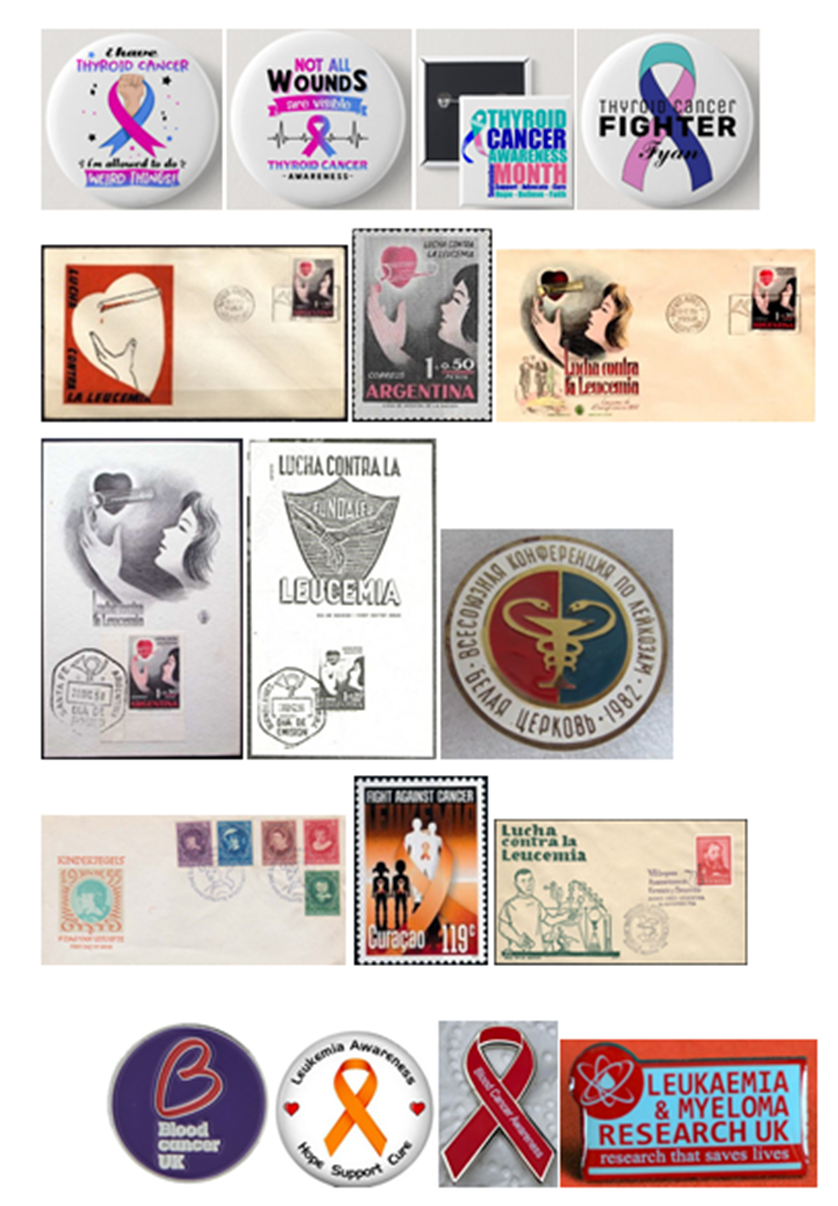
This concludes another research article, thematically devoted to oncological pathology/cancer in various locations. The author is preparing further new materials for publication, which will explore oncology as an important medical science, its history, and its heroes—scientists and practitioners from around the world and throughout history—as reflected in philately, phaleristics, and numismatics in all their diversity.Figure 5. Phaleristic thematic collection dedicated to cancer of various localizations
Conclusions
- The author of this research article provides a comprehensive, engaging, and captivating examination of a rather complex topic: the representation of cancer of various locations in collecting disciplines such as philately, phaleristics, and numismatics.
- The author's screenshots of postage stamps and envelopes, commemorative medals and coins, as well as phaleristic materials (thematic badges and commemorative tokens) clearly and appropriately complement the text of the article and enrich this research.
- Auxiliary scientific and historical disciplines such as philately, phaleristics, and numismatics, as well as a number of other collecting methods and tools, are fully capable of presenting highly interesting information in a vivid, creative, original, and sufficiently comprehensive form for both interested readers and those seriously interested in various collecting disciplines, enriching their knowledge of the topic under study.
- In total, this research article presents: philatelic materials (postage stamps, first day covers and artistic pre-marked envelopes, special cancellation postmarks) - 83 copies of screenshot copies; numismatic materials (commemorative medals) - 5 copies of screenshot copies; phaleristic materials - badges and commemorative signs - 56 copies of screenshot copies; bonistics – 1 of screenshot copies