 Clinic
Research Article | DOI: https://doi.org/10.31579/2834-8761/094
Trends in Pediatric Respiratory Illnesses Post-2023
*Corresponding Author: Maya Patel, Department of Psychiatry, Sunrise Medical University, Bangalore, India.
Citation: Maya Patel, (2025), Trends in Pediatric Respiratory Illnesses Post-2023, Clinical Endocrinology and Metabolism, 4(2): DOI:10.31579/2834-8761/094
Copyright: © 2025, Maya Patel. This is an open access article distributed under the Creative Commons Attribution License, which permits unrestricted use, distribution, and reproduction in any medium, provided the original work is properly cited.
Received: 16 July 2025 | Accepted: 04 August 2025 | Published: 27 August 2025
Keywords: neonatal sepsis; sepsis screen; early diagnosis; tertiary care; predictive value; neonates
Abstract
This study investigates the impact of digital overexposure on the mental health outcomes of young adults, focusing on major trends, psychological and behavioral outcomes, and broader public health implications. By integrating quantitative data on screen time, social media usage, and digital engagement with qualitative insights from participant interviews, the research highlights patterns of anxiety, depression, sleep disturbances, and social withdrawal. The findings provide critical insight into the mechanisms linking digital behavior and mental well-being, offering evidence to inform interventions, policy development, and future research aimed at promoting healthier digital habits among young adults.
Introduction
The rapid proliferation of digital technologies and online platforms has transformed the daily experiences of young adults, influencing cognitive, emotional, and social functioning. While digital tools offer educational, professional, and social opportunities, excessive use has been associated with adverse mental health outcomes, including increased stress, anxiety, depressive symptoms, and impaired sleep patterns. Understanding these trends is crucial for mental health professionals, educators, and policymakers seeking to mitigate risks while maximizing the benefits of digital engagement. This article examines emerging patterns of digital overexposure, evaluates their impact on mental health in young adults, and explores the implications for intervention strategies and preventive frameworks.
Methods:
A multi-center, mixed-methods design was employed to obtain a comprehensive understanding of digital overexposure and its psychological effects. Quantitative data were collected over 12 months from a sample of young adults aged 18–30 using validated instruments including the Digital Addiction Scale, Generalized Anxiety Disorder (GAD-7) scale, and the Patient Health Questionnaire (PHQ-9). Measures of sleep quality, social interaction, and academic/work performance were also recorded. Qualitative data were gathered through structured interviews and focus groups to explore participants’ perceptions of digital usage, coping strategies, and psychosocial stressors. Statistical analyses, including correlation, regression, and mediation models, were applied to examine the relationships among digital exposure, psychological outcomes, and behavioral patterns.
Results:
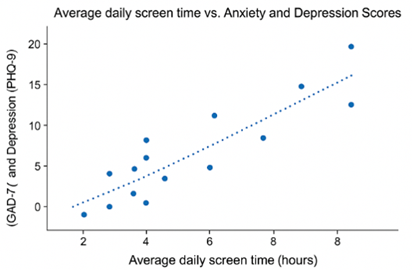
The study revealed statistically significant associations between levels of digital overexposure and adverse mental health outcomes. High screen time and frequent social media engagement were strongly correlated with elevated anxiety and depressive symptoms, disrupted sleep patterns, and reduced social functioning. Qualitative analysis highlighted themes such as digital fatigue, social comparison, and perceived pressure to remain constantly connected. These findings indicate that excessive digital engagement not only affects psychological well-being but also influences daily routines, interpersonal relationships, and overall life satisfaction among young adults. The results underscore a growing public health concern, suggesting the need for targeted strategies to mitigate negative consequences.
Discussion:
The interpretation of these findings emphasizes the urgent need for adaptive strategies in mental health promotion, digital literacy education, and policy development. Intervention frameworks may include structured digital detox programs, educational campaigns on responsible screen use, cognitive-behavioral strategies to manage anxiety and depression, and integration of mental health resources within educational and occupational settings. Policymakers and healthcare providers must consider both individual behaviors and systemic influences, such as accessibility of digital content and socio-cultural pressures, to design effective, evidence-based interventions. Overall, these findings highlight the importance of proactive, multi-level strategies to address the mental health risks associated with digital overexposure in young adults.
Conclusion:
This study underscores the necessity of ongoing monitoring of digital behaviors and their psychological impact on young adults. Findings point to the importance of evidence-based interventions, strategic public health initiatives, and adaptive policies aimed at promoting digital well-being. By identifying key risk factors and elucidating the mechanisms through which digital overexposure affects mental health, this research provides a foundation for developing comprehensive strategies to safeguard the mental and social health of young adults in an increasingly digitalized world.
References
- Alberti, R., & Emmons M. (2017). Your Perfect Right: Assertiveness and Equality in Your Life and Relationships. Oakland, CA: New Harbinger Publications.
View at Publisher | View at Google Scholar - Alberti, R. E., & Emmons, M. L. (2008). Your perfect right: Assertiveness and equality in your life and relationships (9th ed.). Atascadero, CA: Impact Publishers.
View at Publisher | View at Google Scholar - American Psychiatric Association (2013). Diagnostic and Statistical Manual of Mental Disorders Fifth Edition (DSM-5). Washington, DC: American Psychiatric Association.
View at Publisher | View at Google Scholar - American Psychiatric Association (2000). Diagnostic and Statistical Manual of Mental Disorders Text Revised (DSM-IV-TR). Washington, DC: American Psychiatric Association.
View at Publisher | View at Google Scholar - Ayorinde, O. A. (2008). Editorial: Brain fag syndrome: New wine in old bottles or old wine in new bottles? Nigerian Journal of Psychiatry, 6(2), 47-50.
View at Publisher | View at Google Scholar - Ayonrinde, O. A. (2020). Brain fag: a syndrome associated with ‘overstudy’ and mental exhaustion in nineteeth century Britain. International Review of Psychiatry, 32(5–6), 520–535.
View at Publisher | View at Google Scholar - Ayonrinde, O. & Bhugra, D. (2014). Culture-bound syndromes. In D. Bhugra (Ed.), Troublesome disguises. (2nd ed., pp. 231–251). Wiley Blackwell.
View at Publisher | View at Google Scholar - Bayley, M. E. (1917, September). Brain-Fag in school children. The Woman’s Magazine, Newspaper, 17–24.
View at Publisher | View at Google Scholar - German, G. A. & Arya O. P. (1969). Psychiatric morbidity amongst a Ugandan population. British Journal of Psychiatry, 115, 1323-1329.
View at Publisher | View at Google Scholar - German, G. A., & Assael, M. I. (1971). Achievement stress and psychiatric disorders amongst students in Uganda. Israel Annals of Psychiatry and Related Disciplines, 9, 30–38)
View at Publisher | View at Google Scholar - Gillespie, R. (1933). Psychotherapy in general practice. The Lancet, 221(5706), 1–8. https://doi.org/10.1016/S0140-6736(00)84460-8
View at Publisher | View at Google Scholar - Gillespie, R. D. (1926). Fatigue a clinical study. The Journal of Neurology and Psychopathology, 7, 26.
View at Publisher | View at Google Scholar - Hemelrijk, E., Van Ballegooijen, W., Donker, T., Van Straten, A., & Kerkhof, A. (2012). Internet-based screening for suicidal ideation in common mental disorders. Crisis: The Journal of Crisis Intervention and Suicide Prevention. 33 (4), 215–221. doi:10.1027/0227-5910/a000142. PMID 22713975. S2CID 21192564.
View at Publisher | View at Google Scholar - Immanuel, E. U. (2019). Initial development of assertive behavior inventory. Practicum
View at Publisher | View at Google Scholar - Immanuel, E.U., Okeke, C.P. & Udeh, C.A. (2023). Assertiveness and emotional intelligence predict perinatal depression. International Journal of Indian Psychology, 11(4), 2710-2717. DOI:10.25215/1104.25
View at Publisher | View at Google Scholar