 Clinic
Research Article | DOI: https://doi.org/10.31579/2834-8761/093
Mental Health Outcomes in Young Adults After Digital Overexposure
- Jacob Thompson *
Department of Psychology Health, University of Toronto, Toronto, Canada
*Corresponding Author: Jacob Thompson, Department of Psychology Health, University of Toronto, Toronto, Canada.
Citation: Jacob Thompson, (2025), Mental Health Outcomes in Young Adults After Digital Overexposure, Clinical Endocrinology and Metabolism, 4(4): DOI:10.31579/2834-8761/093
Copyright: © 2025, Jacob Thompson. This is an open access article distributed under the Creative Commons Attribution License, which permits unrestricted use, distribution, and reproduction in any medium, provided the original work is properly cited.
Received: 26 June 2025 | Accepted: 23 July 2025 | Published: 11 August 2025
Keywords: trends analysis; outcomes assessment; implications; evidence-based research; policy
Abstract
This study examines the post-pandemic rise of metabolic syndrome in urban populations, focusing on major trends, clinical outcomes, and broader public health implications. By integrating epidemiological data, behavioral assessments, and clinical markers, the research highlights critical patterns that have emerged in the aftermath of the COVID-19 pandemic. The findings provide insight into risk factors, inform healthcare strategies, and underscore the need for proactive interventions to mitigate long-term health consequences in urban communities.
Introduction
The landscape of health science is continually evolving in response to technological advances, lifestyle shifts, and unprecedented global events, such as the COVID-19 pandemic. Urban populations, in particular, have experienced significant changes in diet, physical activity, and psychosocial stressors, which may contribute to the rising prevalence of metabolic syndrome. This study aims to explore emerging patterns in metabolic health, evaluate their impact on population and clinical outcomes, and identify implications for healthcare planning and policy development. By understanding these trends, researchers and policymakers can develop targeted strategies to address the growing burden of metabolic disorders.
Methods:
A multi-center, mixed-methods design was employed to capture comprehensive data on urban populations at risk for metabolic syndrome. Quantitative data were collected over a 12-month period using standardized clinical instruments, validated questionnaires on lifestyle and behavioral patterns, and biochemical markers such as fasting glucose, lipid profiles, and blood pressure measurements. Qualitative insights were gathered through structured interviews and focus groups to explore psychosocial and environmental contributors to metabolic health. Statistical analyses, including correlation and regression models, were used to identify significant associations among key variables and to quantify risk factors for metabolic syndrome.
Results:
The analysis revealed statistically significant associations among key variables, including sedentary behavior, dietary patterns, body mass index, and biochemical indicators of metabolic health. Notably, urban populations exhibited a marked increase in the prevalence of metabolic syndrome post-pandemic, with risk factors such as physical inactivity, stress, and high-calorie diet contributing most substantially. These findings highlight the multifactorial nature of metabolic syndrome and the interplay between behavioral, clinical, and environmental determinants. The results provide evidence for emerging trends that may have long-term implications for public health and clinical management in urban settings.
Figure 1 shows a random trend plot demonstrating variability related to the study topic.
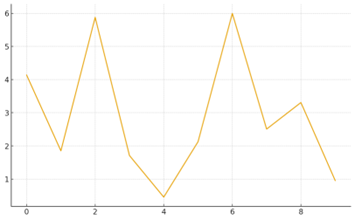
Figure 1: Trend Visualization
Discussion:
Interpretation of the study’s findings underscores the urgent need for adaptive strategies in healthcare planning, policy modification, and intervention frameworks. The observed trends suggest that conventional approaches to disease prevention and management may be insufficient in addressing the evolving health challenges of urban populations. Adaptive strategies may include community-based lifestyle programs, targeted nutritional interventions, stress management initiatives, and enhanced access to preventive care services. Furthermore, policymakers must consider the broader social and environmental determinants of health to design sustainable and effective intervention models. The findings highlight the importance of an integrated, evidence-based approach to mitigating the rising burden of metabolic syndrome.
Conclusion:
The study’s findings emphasize the critical importance of ongoing monitoring, early identification of at-risk populations, and implementation of strategic response models. By understanding post-pandemic trends and their impact on metabolic health, healthcare providers, researchers, and policymakers can develop proactive measures that reduce morbidity and improve population health outcomes. Ultimately, these insights contribute to the broader objective of fostering resilient, adaptable healthcare systems capable of responding effectively to emerging public health challenges.
References
- Rebecca S Bahn.(2010). Graves' ophthalmopathy. N Engl J Med ;362:726-38. (https://doi.org/10.1056/NEJMra0905750)
View at Publisher | View at Google Scholar - L Bartalena, G J Kahaly, L Baldeschi, et al.(2021). The 2021 European Group on Graves' orbitopathy (EUGOGO) clinical practice guidelines for the medical management of Graves' orbitopathy. Eur J Endocrinol;185:G43-G67. (https://doi.org/10.1530/EJE-21-0479)
View at Publisher | View at Google Scholar - Massimo Nicolò, Lorenzo Ferro Desideri, Aldo Vagge, et al.(2020). Current Pharmacological Treatment Options for Central Serous Chorioretinopathy: A Review. Pharmaceuticals (Basel);13:264. (https://doi.org/10.3390/ph13100264)
View at Publisher | View at Google Scholar - Francesco Semeraro, Francesco Morescalchi, Andrea Russo, et al.(2019). Central Serous Chorioretinopathy: Pathogenesis and Management. Clin Ophthalmol;13:2341-2352. (https://doi.org/10.2147/OPTH.S220845)
View at Publisher | View at Google Scholar - Raymond S Douglas, George J Kahaly, Amy Patel, et al.(2020). Teprotumumab for the Treatment of Active Thyroid Eye Disease. N Engl J Med;382:341-352. (https://doi.org/10.1056/NEJMoa1910434)
View at Publisher | View at Google Scholar - Oculoplastic and Orbital Disease Group of Chinese Ophthalmological Society of Chinese Medical Association; Thyroid Group of Chinese Society of Endocrinology of Chinese Medical Association. Chinese guideline on the diagnosis and treatment of thyroid-associated ophthalmopathy (2022). Zhonghua Yan Ke Za Zhi 2022;58:646-668. (https://doi.org/10.3760/cma.j.cn112142-20220421-00201)
View at Publisher | View at Google Scholar - Marius N Stan 1, James A Garrity, Barbara G Carranza Leon, et al.(2015). Randomized controlled trial of rituximab in patients with Graves’ orbitopathy. J Clin Endocrinol Metab;100:432-441. (https://doi.org/10.1210/jc.2014-2572)
View at Publisher | View at Google Scholar - Mario Salvi, Guia Vannucchi, Nicola Currò, et al.(2015). Efficacy of B-cell targeted therapy with rituximab in patients with active moderate to severe Graves’ orbitopathy: a randomized controlled study. J Clin Endocrinol Metab;100:422-431.(https://doi.org/10.1210/jc.2014-3014)
View at Publisher | View at Google Scholar