 Clinic
Research Article | DOI: https://doi.org/10.31579/2835-835X/123
Feedback of Postgraduate trainees about Communication Skills workshop at Rawalpindi Medical University, Pakistan
*Corresponding Author: Rizwana Shahid, Associate Professor Community Medicine, Rawalpindi Medical University.
Citation: Rizwana Shahid, (2025), Feedback of Postgraduate trainees about Communication Skills workshop at Rawalpindi Medical University, Pakistan, Clinical Trials and Case Studies, 5(2); DOI:10.31579/2835-835X/123
Copyright: © 2025, Rizwana Shahid. This is an open-access artic le distributed under the terms of the Creative Commons Attribution License, which permits unrestricted use, distribution, and reproduction in any medium, provided the original author and source are credited.
Received: 12 March 2026 | Accepted: 20 March 2026 | Published: 27 March 2026
Keywords: postgraduate trainees, communication skills, educational environment, competent facilitators
Abstract
Objective: To evaluate the feedback of postgraduate trainees about communication skills workshop organized at Rawalpindi Medical University
Methods: A cross-sectional descriptive study was planned to get the feedback of 48 postgraduate residents who attended a communication skills workshop for 3 days to fulfill their training requirements outlined in the curriculum. The responses were gathered through structured feedback proforma filled by trainees on completion of workshop. The feedback was recorded on 5-point Likert scale. Data was analyzed by using SPSS version 27.0. Descriptive statistics were applied.
Results: Overall means score related to the feedback of communication skills workshop was 4.5 ± 0.53. The highest mean score (4.60 ± 0.49) secured was for clarification of queries in the workshop followed by relevancy of the workshop (4.54 ± 0.50) to the educational needs of the trainees and conduciveness of the educational environment (4.45 ± 0.50). All the trainees appreciated the comprehensive command of the workshop facilitators over the subject and opportunities for meaningful interaction among participants.
Conclusion: Trainees applauded the ample opportunities available to them for interaction in the workshop and competency of the facilitators. They expressed strong agreement regarding fulfillment of their educational needs and provision of supporting learning environment.
Introduction
Clear and productive communication is of paramount significance for effective medical practice. It is deemed necessary for a strong doctor-patient relationship[1]. Coherent communication strengthens patients’ trust in their consultants and hence enhances their satisfaction with their provision of healthcare services[2]. Effective patient-doctor communication is imperative for improving somatic and psychosocial health of the patients as apart from their motivation it ensures their participation in decision making[3].
Communication skills have substantially been acknowledged as a core competency in postgraduate medical training and it is mandatory to be equipped with this competency in order to be certified as a skilled healthcare professional[4]. Communication skills are requisite to accomplish a variety of clinical tasks like history taking, getting informed consent, counseling the clients, briefing treatment options and breaking bad news5. Communication gap between patient and healthcare provider may lead to diagnostic and treatment errors that are mainly attributed to language barriers and unjustified resource distribution [6].
Accreditation Council for Graduate Medical Education (ACGME) has specified interpersonal and communication skills essential for effective patient management and enhancing the healthcare outcomes of the population at large[7]. Cross-sectional data from Low Middle Income Countries (LMICs) emphasized the need for a robust communication skills program of residents and fellow trainees to amplify the patients’ degree of satisfaction with healthcare services[8]. Communication failure drastically impair the quality of healthcare and puts the patients’ safety at risk[9].
Securing the feedback of medical trainees pertaining to communication skills workshop is considerably crucial to do necessary refinement accordingly and to promote patient-centered training[10]. The present study is hence intended to evaluate the feedback of postgraduate residents who are undergoing training at teaching hospitals affiliated with a public sector University. This study would definitely enable to systematically identify the domains needing improvement and to address the growing expectations of our healthcare system.
Subjects & Methods
A cross-sectional descriptive study was done by securing the feedback of 48 postgraduate trainees who attended a 3 days communication skills workshop at Rawalpindi Medical University to fulfill their training requisites as per curriculum. The responses were garnered by getting structured feedback proforma filled at the end of workshop. The feedback was taken on 5-point Likert scale as per institutional policy that is later submitted to Quality Enhancement Cell (QEC) for comprehensive analysis. This study was carried out and reported in accordance with STROBE guidelines specified by Equator Network[11]. Data was analyzed by using SPSS version 27.0. Descriptive statistics were applied.
Results
The feedback was gathered from 48 postgraduate trainees about Communication skills workshop that was carried out for 3 days during November 2024 to fulfill the training requisites. The feedback was collected from the residents who were undergoing training in different specialties as shown below in Table 1.
Sr. # | Training Programs | No (%) of Trainees |
MS Anesthesiology | 7 | |
MS Obstetrics & Gynecology | 7 | |
MS Urology | 4 | |
MD Paediatrics | 4 | |
MD Psychiatry | 4 | |
MD Nephrology | 4 | |
MS General Surgery | 4 | |
MD Internal Medicine | 3 | |
MS Plastic Surgery | 3 | |
MS Orthopedics | 2 | |
MD Cardiology | 1 | |
MD Emergency Medicine | 1 | |
MD Nephrology | 1 | |
MS Otorhinolaryngology (ENT) | 1 | |
MS Ophthalmology | 1 | |
MD Radiology | 1 | |
Total | 48 | |
Table 1: Trainees from different specialties participating in the communication skills workshop
The content covered in this workshop was related to breaking bad news, conflict resolution, enhancing patient-centered and interprofessional communication, fostering a culture of respect and collaboration and managing difficult conversations. Of the 48 trainees, 24 just agreed while rest of the 24 strongly agreed with the achievement of the workshop objectives with higher mean score achieved (4.5 ± 0.50). Trainees found their workshop facilitators quite competent as depicted below in Figure 1.
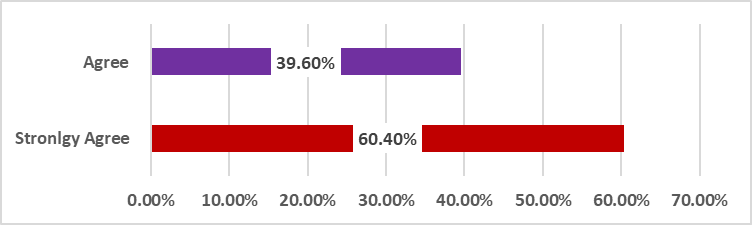
Figure 1: feedback of the trainees about extensive command of facilitators over subject matter
Comprehensive responses of the trainees pertaining to various parameters of the workshop are illustrated below in Table 2.
Parameters of the workshop | Responses | Mean score (mean ± SD) | ||
Strongly Agree | Agree | Neutral | ||
Learning experience was relevant to the objectives | 47% | 51% | 2% | 4.45 ± 0.54 |
Learning session was relevant to their educational needs | 46.9% | 53.1% | ---- | 4.54 ± 0.50 |
The time given to each component of the workshop was appropriate | 49% | 42.9% | 8.1% | 4.43 ± 0.61 |
The environment was conducive to learning | 49% | 44.9% | 6.1% | 4.45 ± 0.50 |
Key points were summarized at the end | 55.1% | 44.9% | ----- | 4.43 ± 0.50 |
Queries were clarified | 61.2% | 38.8% | ----- | 4.60 ± 0.49 |
The reading material provided was relevant to the session | 46.9% | 53.1% | ----- | 4.35 ± 0.66 |
Table 2: Responses of the trainees about different attributes of communication skills workshop (mean ± SD)
• SD- Standard Deviation
Of the 48 trainees, 27 strongly agreed with the provision of adequate opportunities and avenues for interaction in the workshop as shown below in
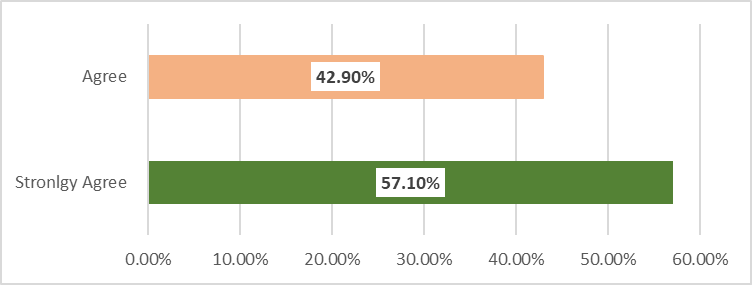
Figure 2: Feedback of trainees regarding provision of ample platforms for interaction in the workshop
Most of the trainees agreed with attainment of learning objectives specified for communication skills workshop. Overall mean score pertaining to this workshop was 4.5 ± 0.53. However, neutral responses regarding timeline of the workshop and conduciveness of learning climate were received from Plastic Surgery and Nephrology trainees.
Discussion
Of the 48 postgraduate trainees who attended the communication skills workshop, 93.9% agreed that the educational environment was encouraging and facilitated their learning (4.45 ± 0.50) as evident from Table 2. This depicts the provision of supportive learning climate that promoted the acquisition of requisite skills. Conducive learning environment is the key element for long term learning of the students. Apart from inducing a sense of achievement, it also escalates the likelihood of academic success[12]. It not only motivates the students for learning but also enhances their emotional well-being[13]. Workshops of the professional fields designed as healthy interactive sessions endorse active and constructive learning. They not only ensure the achievement of the specified learning outcomes but also provide a collaborative learning platform for acquiring practical competencies. Workshop trainers are therefore directed to design the learning session in accordance with ADDIE framework to certify the accomplishment of intended learning objectives[14]. A systematic review by Bylund CL et al revealed that learning session organized for acquisition of communication skills promoted considerable experiential learning that greatly influenced the attitudes and behaviors of Graduate Medical Education (GME) residents[15]. Likewise, a study by Piryani RM et al carried out at an Institute of Medicine at Nepal was illustrative of getting a remarkable feedback from the workshop participants in terms of achieving the learning outcomes, interesting session and its practicality for future exercise[16]. A mixed method sequential study done by among postgraduate residents of public sector tertiary care facilities by using PHEEM questionnaire elucidated that learning climate at their workplace was somewhat compromised that emphasized the need to improve their workplace not only for their enhanced learning but also to augment healthcare of the patients[17]. Conducive learning environment hence are deemed necessary to foster collaborative learning among the participants and promote reflective practice for experiential learning.
About 60.4% of the trainees strongly agreed with the firm command of the workshop facilitators over the content delivered and they effectively helped the trainees grasp the required skills. Facilitators with adequate mastery of the content and expertise not only have enough confidence to execute interactive sessions but also promote the acquisition of requires competencies by the participants[18]. Consistent with our findings, a study among physicians revealed that they strongly agreed with efficient execution of communications skills workshop and perceived their session facilitators highly knowledgeable about the subject matter[19]. Interactive teaching sessions coupled with role plays and reflective practices ensure participants’ engagements and achievement of intended learning objectives[20]. Better communication skills acquired by healthcare providers through interactive training sessions also improved the patients’ satisfaction with healthcare system[21]. Capacity building of the master trainers for effective workshops execution through holistic and meaningful interaction can prove beneficial in acquisition of requisite competencies.
91.9% of the trainees in present study agreed with the time allotted to coverage of each component of communication skills workshop. Communication skills workshop planned for the postgraduate trainees are meant to acquire competencies pertaining to handling of challenging patients’ interaction proficiently and ethically. Apart from breaking bad news sensibly, trainees should be able to identify the communication barriers and able to overcome them intelligently. A study by Baile WF et al elucidated that communication skills workshops of oncologists enabled them to break bad news ethically and to improvise their communication skills at their workplace[22]. A 2-days communication skills workshop planned for healthcare professionals of Qatar received substantial appreciation and its module on breaking bad news was applauded the most[23]. Communicating with the patients and their attendants ethically enable them to cope up with the poor prognosis and to make informed decisions pertaining to their treatment[24]. A national mixed method study by Abdullah MA et al explored that only few clinicians in Pakistan were formally trained for breaking bad news. Moreover, this study emphasized the need for rapport building with the patients and through discussion with patients and attendants regarding disease prognosis and the strategize to normalize the scenario[25]. Although it is very stressful for the physicians to break bad news, but communication skills workshop enables them to remain emotionally stable while fulfilling such responsibilities and promotes patient satisfaction and psychological resilience with poor prognosis.
Conclusion & Recommendations
Postgraduate trainees of public sector teaching hospitals were much satisfied with various attributes of workshop like competent facilitators, achievement of specified learning outcomes and conduciveness of the learning climate. Trainees strongly commended the provision of ample opportunities for interaction in the session through role plays. As feedback was garnered from few postgraduate trainees, securing feedback from more trainees would prove beneficial in gaining the holistic viewpoint about this mandatory training session.
Conflicts Of Interest:
The authors declared no conflict of interest.
Source Of Funding: The author(s) received no financial support for the research, authorship and or publication of this article.
References
- Sharkiya SH. (2023 ) Quality communication can improve patient-centred health outcomes among older patients: a rapid review. BMC Health Serv Res. 23(1):886.
View at Publisher | View at Google Scholar - Chandra S, Ward P, Mohammadnezhad M. et al. (2019). Factors associated with patient satisfaction in outpatient department of Suva Sub-divisional Health Center, Fiji, 2018: a mixed method study. Front Public Health. 7: 183.
View at Publisher | View at Google Scholar - Świątoniowska-Lonc N, Polański J, Tański W, Jankowska-Polańska B. et al. (2020). Impact of satisfaction with physician–patient communication on self-care and adherence in patients with hypertension: cross-sectional study. BMC Health Serv Res 20(1):1046.
View at Publisher | View at Google Scholar - Shahbaz H, Noorali AA, Inam M, Qadeer N, Merchant AAH, et al. (2022). Developing a communication-skills training curriculum for resident-physicians to enhance patient outcomes at an academic medical centre: an ongoing mixed-methods study protocol. BMJ Open 12(8): e056840.
View at Publisher | View at Google Scholar - Subhangi K, George TB, Hetal R. et al . (2022).Positive Outcomes of Communication Skill Training to Medical Resident Doctors. Medical Journal of Dr. D.Y. Patil Vidyapeeth 15(5): 800-803.
View at Publisher | View at Google Scholar - Metersky ML, Hunt DR, Kliman R, Wang Y, Curry M, et al. (2011). Racial disparities in the frequency of patient safety events: results from the National Medicare Patient Safety Monitoring System. Med Care 49(5): 504-510.
View at Publisher | View at Google Scholar - (2020). ACGME. Assessment Guidebook.
View at Publisher | View at Google Scholar - Shaikh NQ, Noorali AA, Merchant AAH, Afzal N, Lakhdir MPA, et al. (2024) Communication skills of residents: are they as good as they think? Med Educ Online. 29(1): 2396165.
View at Publisher | View at Google Scholar - Afzal N, Merchant AAH, Shaikh NQ, Noorali AA, Ahmad R, et al. (2024). Patient-resident physician communication – a qualitative study to assess the current state, challenges and possible solutions. BMC Health Serv Res 24: 917.
View at Publisher | View at Google Scholar - Qureshi AA, Zehra T. (2020).Simulated patient's feedback to improve communication skills of clerkship students. BMC Med Educ 20(1):15.
View at Publisher | View at Google Scholar - Equator Network. Statement: guidelines for reporting observational studies.
View at Publisher | View at Google Scholar - Rusticus SA, Wilson D, Casiro O, Lovato C. et al. (2020). Evaluating the quality of health professions learning environments: development and validation of the health education learning environment survey (HELES). Evaluation & the health professions 43(3): 162–168.
View at Publisher | View at Google Scholar - Tharani A, Husain Y, Warwick I. et al. (2017). Learning environment and emotional well-being: A qualitative study of undergraduate nursing students. Nurse Education Today 59: 82–87.
View at Publisher | View at Google Scholar - Almelhi AM. Et al. (2021). Effectiveness of the ADDIE model within an E-learning environment in developing creative writing in EFL students. English Language Teaching 14(2): 2-36.
View at Publisher | View at Google Scholar - Bylund CL, Vasquez TS, Peterson EB, Ansell M, Bylund KC, et al. (2022). Effect of Experiential Communication Skills Education on Graduate Medical Education Trainees’ Communication Behaviors: A Systematic Review, Academic Medicine 97(12): 1854-1866.
View at Publisher | View at Google Scholar - Piryani RM, Piryani S, Shrestha U, Acharya A, Kanskar S, et al. (2019). Simulation-based education workshop: Perceptions of participants. Advances in Medical Education and Practice 10: 547-554.
View at Publisher | View at Google Scholar - Kahloon LE. et al. (2018). Trainees’ perception of learning environment in public teaching hospitals of Rawalpindi: A mixed method study. Pak Armed Forces Med J 68(2); 404-411.
View at Publisher | View at Google Scholar - Bylund CL, Brown RF, di Ciccone BL, Levin TT, Gueguen JA, et al. (2008). Training faculty to facilitate communication skills training: development and evaluation of a workshop. Patient Educ Couns. 70(3): 430-436.
View at Publisher | View at Google Scholar - Bylund CL, Adams KA, Sinha T, Afana A, Yassin MA, et al. (2020). The impact of a communication skills workshop on doctors’ behavior over time. Advances in Medical Education and Practice 11: 289-294.
View at Publisher | View at Google Scholar - October TW, Dizon ZB, Hamilton MF, Madrigal VN, Arnold RM. Et al, (2019). Communication training for inter-specialty clinicians. Clin Teach. 16(3):242-247.
View at Publisher | View at Google Scholar - Hayat Khan F, Farrukh Khan M, Kafeel S, Ud Din Alvi R, Zaffar M. et al. (2019). Communication skills workshop for doctors, resulting in better healthcare delivery: Communication skills workshop. Pak Armed Forces Med J 67(1): 107-111.
View at Publisher | View at Google Scholar - Baile WF, Kudelka AP, Beale EA, Glober GA, Myers EG, et al. (1999). Communication skills training in oncology. Description and preliminary outcomes of workshops on breaking bad news and managing patient reactions to illness. Cancer. 86(5):887-897.
View at Publisher | View at Google Scholar - Bylung CL, Khalid A, Abdelhamid A, Sheyma A, Mohammed Y, et al. (2017). Satisfaction with 2-day communication skills course culturally tailored for medical specialists in Qatar. Journal of Family and Community Medicine 24(2): 122-127.
View at Publisher | View at Google Scholar - Ishaq S, Saleem T, Khawaja FB, Qidwai W. et al. (2010 ). Breaking bad news: Exploring patient’s perspective and expectations. J Pak Med Assoc 60(5): 407-411.
View at Publisher | View at Google Scholar - Abdullah MA, Shaikh BT, Khan KR, Yasin MA. et al. (2024). Breaking bad news: A mix methods study reporting the need for improving communication skills among doctors in Pakistan. BMC Health Serv Res 24: 588.
View at Publisher | View at Google Scholar