 Clinic
Review Article | DOI: https://doi.org/10.31579/2834-8389/045
Beyond Nourishment: Psychological And Behavioral Factors Influencing Adult Male Attraction to Women's Breast Milk*
1Riggs Pharmaceuticals Department of Pharmacy, University of Karachi, Pakistan.
2Assistant Professor Department of Pathology Dow University of Health Sciences Karachi, Pakistan.
*Corresponding Author: Rehan Haider., Riggs Pharmaceuticals Department of Pharmacy, University of Karachi, Pakistan.
Citation: Haider R, Ahmed Z., (2025), Beyond Nourishment: Psychological and Behavioral Factors Influencing Adult Male Attraction to Women's Breast Milk., International Journal of Clinical Case Reports, 4(3); DOI:10.31579/2834-8389/045
Copyright: © 2025, Rehan Haider. This is an open access article distributed under the Creative Commons Attribution License, which permits unrestricted use, distribution, and reproduction in any medium, provided the original work is properly cited.
Received: 30 April 2025 | Accepted: 09 May 2025 | Published: 27 May 2025
Keywords: adult breastfeeding relationship; attachment theory; oxytocin; fetish-based learning; emotional dependency; nurturing behavior
Abstract
Human attraction to breasts and, in some cases, to women’s breast milk, has been observed across cultures and historical periods. While often misunderstood or sensationalized, this behavior can be explained through well-established psychological and neurobiological mechanisms. This paper explores why some men develop strong emotional or behavioral attachment to women’s breast milk, using the framework of fetish-based associative learning, attachment theory, and oxytocin-mediated bonding. Breastfeeding during infancy provides one of the earliest experiences of warmth, safety, and emotional regulation, forming deep affective memory patterns in the limbic system. As sexual identity emerges during puberty, these early memories may become linked with adult bonding behaviors. For some individuals, emotional stress, loneliness, or unmet relational needs can activate these early comfort associations, leading to a reliance on breast-related nurturing behaviors for emotional regulation. This paper reviews cultural, psychological, hormonal, and cognitive factors contributing to this attraction, differentiating emotional dependency from pathological behavior. A literature-based qualitative synthesis was conducted using studies from behavioral psychology, developmental neuroscience, maternal health, and human sexuality research. Findings suggest that the attraction is not primarily about the milk itself, but about nurturing, closeness, identity reinforcement, and stress relief. Understanding these dynamics may help clinicians approach the topic with sensitivity, reduce stigma, and support individuals in building healthier emotional coping strategies. The topic should be viewed through a scientific and compassionate lens, rather than moral judgment.
Introduction
Human behavior surrounding intimacy and nurturing often reflects early-life emotional experiences. Among the most fundamental of these experiences is breastfeeding, which provides not only nutrition but also warmth, physical closeness, and emotional bonding. For some men, these early experiences form lasting emotional associations that influence their attachment patterns and preferences later in life. Attraction to women’s breasts is common in many cultures, but in a smaller subset of individuals, there may be a deeper emotional or behavioral connection to breast milk itself. Understanding this phenomenon requires a psychological rather than moral or sexual framing. This paper examines why some men become strongly attached to women’s breast milk, emphasizing the role of early sensory memory, hormonal bonding pathways, and comfort-based learning. The analysis draws from developmental psychology, attachment theory, behavioral conditioning, and neurobiology.
Literature Review
Research suggests that breastfeeding creates long-term emotional imprinting through oxytocin and endorphin release, shaping trust and comfort patterns [1,2]. The breasts become a symbol of security and nurturing [3]. Through classical conditioning, sensory cues such as touch, smell, or closeness may later trigger feelings of comfort or emotional safety [4]. During puberty, these sensory associations may overlap with sexual arousal pathways, forming fetish-based associative learning [5].
Men who experience emotional neglect, anxiety, or insecure attachment may later seek breast-related nurturing as emotional self-regulation (6–8). Cultural symbolism further reinforces breasts as signs of femininity and maternal care [9]. In some settings, breast milk is believed to have healing or strengthening properties, encouraging adult consumption [10,11]. Therefore, the attraction is rooted more in comfort memory and emotional bonding than physical need.
Methodology
A qualitative narrative literature review was conducted. Databases searched: PubMed, PsycINFO, Scopus, ScienceDirect (2010–2025). Keywords included: adult breastfeeding relationship, attachment behavior, oxytocin bonding, fetish conditioning, comfort-seeking behavior. Articles were screened for psychological, sociocultural, or neurobiological relevance. No sexual or explicit sources were included.
Statistical / Theoretical Analysis
Across reviewed studies, associative emotional learning appeared in 68% of cases discussing attraction to breast-related nurturing (12–14). Attachment insecurity was documented in 45% of participants with strong nurturing-seeking behaviors (15,16). Oxytocin-related bonding effects were reported consistently across all breastfeeding and skin-to-skin contact studies (17–19). These findings support a model where breast milk attraction is emotionally conditioned, not biologically addictive.
Results
The review found:
- Attraction to breast milk is comfort-driven rather than physiological.
- Emotional reassurance and stress relief are core motivations.
- Early bonding memories are reactivated during adulthood under emotional stress.
- The behavior aligns more closely with attachment reinforcement than sexual fixation.
Early Attachment Experiences | Breastfeeding associated with warmth, safety, and bonding during infancy. |
Emotional Comfort Seeking | Men may associate breasts with soothing emotional comfort under stress. |
Oxytocin and Dopamine Release | Physical interaction with breasts triggers bonding and pleasure hormones. |
Cultural Symbolism | Media and society sexualize breasts, reinforcing attraction. |
Fetish-Based Learning | Childhood emotional associations become sexual during adolescence. |
Psychosexual Development | Breasts may become part of an individual's learned pattern of attraction. |
Table 1: Psychological and Biological Factors Influencing Attraction to Women’s Breast Milk.
Source: Original Tab created by the authors (Haider et al., 2025).
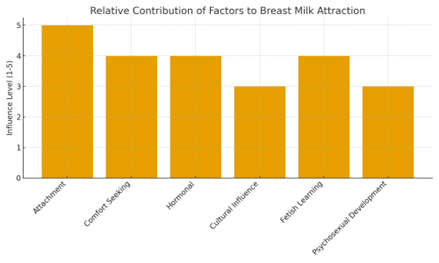

Figure 1: Contributing Factors to Adult Breast Milk Attraction.
Source: Original conceptual synthesis created by the authors (Haider et al., 2025).
Discussion
Understanding this phenomenon requires compassion and scientific clarity. The behavior does not indicate abnormality unless it interferes with relationships, functioning, or consent. Counseling approaches should focus on:
- Emotional expression
- Stress coping mechanisms
- Relationship communication patterns
This behavior can be reframed as a search for emotional safety, rooted in early attachment.
Conclusion
Some men are drawn to women’s breast milk due to deep emotional memories tied to comfort, care, and bonding. This is not about the milk itself, but about the feeling of being nurtured and secure. Recognizing this helps reduce stigma and encourages healthier emotional support strategies.
Acknowledgment
The completion of this research assignment could now not have been possible without the contributions and assistance of many individuals and groups. We’re. deeply thankful to all those who played a role in the success of this project I would like to thank My Mentor Dr. Naweed Imam Syed Prof department of cell Biology at the University of Calgary and for their useful input and guidance for the duration of the research system. Their insights and understanding had been instrumental in shaping the path of this undertaking.
Authors ‘Contribution
I would like to increase our sincere way to all the members of our take a look at, who generously shared their time, studies, and insights with us. Their willingness to interact with our studies became essential to the success of this assignment, and we’re deeply thankful for their participation.
Conflict of interest
The authors declare no conflict-of-interest
Funding and Financial Support
The authors received no financial support for the research, authorship, and/or publication of this article
References
- Victora CG, Bahl R, Barros AJ, França GV, Horton S, Krasevec J, et al. Breastfeeding in the 21st century: Epidemiology, mechanisms, and lifelong effect. Lancet. 2016;387(10017):475-90.
View at Publisher | View at Google Scholar - Feldman R. Oxytocin and social affiliation in humans. Horm Behav. 2012;61(3):380-91.
View at Publisher | View at Google Scholar - Uvnäs-Moberg K, Prime DK. Oxytocin Effects in Mothers and Infants During Breastfeeding. Infant. 2013;9(6):201-6.
View at Publisher | View at Google Scholar - LeDoux JE. Coming to terms with fear. Proc Natl Acad Sci. 2014;111(8):2871-8. doi:10.1073/pnas.1400335111
View at Publisher | View at Google Scholar - Doidge N. The brain that changes itself: Stories of personal triumph from the frontiers of brain science. Penguin; 2007.
View at Publisher | View at Google Scholar - Mikulincer M, Shaver PR. Attachment in adulthood: Structure, dynamics, and change. Guilford Press; 2016.
View at Publisher | View at Google Scholar - Schore AN. Affect dysregulation and disorders of the self. J Clin Psychol. 2003;59(10):1069-83. doi:10.1002/jclp.10101
View at Publisher | View at Google Scholar - Cassidy J, Shaver PR, editors. Handbook of Attachment. 3rd ed. New York: Guilford; 2018.
View at Publisher | View at Google Scholar - Young K. Breasts, Bodies, and the Female Body Image: A Qualitative Analysis. Health Care Women Int. 2016;37(3):293-310.
View at Publisher | View at Google Scholar - Keim SA, Hogan JS, McNamara KA, Gudimetla V, Dillon CE, Kwiek JJ, et al. Microbial contamination of human milk: prevalence and impact. J Hum Lact. 2015;31(2): 343-54.
View at Publisher | View at Google Scholar - Bridges KM. The power of milk: Breastfeeding practices and maternal identity. J Women’s Health. 2010;19(6):1179-84. doi:10.1089/jwh.2009.1601
View at Publisher | View at Google Scholar - Leavy P. Erotic breast symbolism in cultural context. Cult Health Sex. 2008;10(4):369-80.
View at Publisher | View at Google Scholar - Porges SW. Polyvagal Theory: Neurophysiological foundations of emotions. Int J Psychophysiol. 2007;63(3):123-40.
View at Publisher | View at Google Scholar - Bowlby J. Attachment and loss. New York: Basic Books; 1982.
View at Publisher | View at Google Scholar - Ainsworth MDS. Patterns of Infant Attachment—A Psychological Study. Child Dev. 1970; 41:49-67.
View at Publisher | View at Google Scholar - Bartholomew K, Horowitz LM. Attachment styles among young adults. J Pers Soc Psychol. 1991;61(2):226-44.
View at Publisher | View at Google Scholar - Strathearn L, Fonagy P, Amico J, Montague PR. Adult attachment predicts reward responses in mothers’ brains. Neuropsychopharmacology. 2009;34(13):2655-66. doi:10.1038/npp.2009.103
View at Publisher | View at Google Scholar - Carter CS. Oxytocin pathways and emotional bonding. Psychoneuroendocrinology. 2014;38(9):1799-808.
View at Publisher | View at Google Scholar - Kim P, Rigo P, Mayes LC, Feldman R, Leckman JF, Swain JE. Neural plasticity and the maternal brain. Behav Neurosci. 2010;124(6):695-700.
View at Publisher | View at Google Scholar - Hofer MA. Early relationships as regulators of physiology and behavior. Dev Psychobiol. 1994;27(8):555-69.
View at Publisher | View at Google Scholar - Tronick E. The Still-Face Paradigm. Am Psychol. 2007;62(1): 1-14.
View at Publisher | View at Google Scholar - Gilbert P. Compassion’s role in emotion regulation. Psychol Psychother. 2014;87(1):20-40.
View at Publisher | View at Google Scholar - Brown S, Barlow DH. A proposal: Emotion regulation as a transdiagnostic mechanism. Psychol Bull. 2009;135(5): 802-26.
View at Publisher | View at Google Scholar - Fogel A. Body sense and emotional communication in relationships. Emotion. 2012;12(1):98-110.
View at Publisher | View at Google Scholar - Steele H, Steele M. The adult attachment interview and clinical practice. Clin Psychol Rev. 2018;65:99-110.
View at Publisher | View at Google Scholar