 Clinic
Review Article | DOI: https://doi.org/10.31579/2835-7957/157
Agree in Green Analytical Chemistry: from Principles to Practice
- Saidatri Arige *
- Lakshmana Rao Atmakuri
- Rishita Mantada
Department of Pharmaceutical Analysis, V. V. Institute of Pharmaceutical Sciences, Gudlavalleru, Andhra Pradesh, India,
*Corresponding Author: Saidatri Arige, Department of Pharmaceutical Analysis, V. V. Institute of Pharmaceutical Sciences, Gudlavalleru, Andhra Pradesh, India.
Citation: Saidatri Arige, Lakshmana Rao Atmakuri, and Rishita Mantada, (2026), Agree in Green Analytical Chemistry: from Principles to Practice, Clinical Reviews and Case Reports, 5(1); DOI:10.31579/2835-7957/157
Copyright: © 2026, Saidatri Arige. This is an open-access article distributed under the terms of the Creative Commons Attribution License, which permits unrestricted use, distribution, and reproduction in any medium, provided the original author and source are credited.
Received: 22 January 2026 | Accepted: 02 February 2026 | Published: 12 February 2026
Keywords: agree; green analytical chemistry; sustainability metrics; analytical method evaluation; eco-scale; nemi; environmental impact
Abstract
The growing demand for environmentally responsible laboratory practices has accelerated the development of metrics that assess the sustainability of analytical methodologies. Among these, the Analytical GREEnness (AGREE) approach has emerged as a comprehensive and user-friendly tool for evaluating compliance with the 12 principles of Green Analytical Chemistry (GAC). This review critically examines the foundations of the AGREE methodology, compares it with earlier greenness assessment tools such as NEMI and the Analytical Eco-Scale, and highlights its distinctive advantages, including holistic scoring and intuitive visual output. Applications of AGREE across diverse analytical domains—ranging from pharmaceutical quality control and environmental monitoring to food and bioanalysis—are summarized to illustrate its versatility and practical impact. Strengths, limitations, and common challenges in implementation are discussed, particularly in relation to subjectivity in scoring and integration with regulatory frameworks. Finally, perspectives are offered on future directions, including the role of digital automation, hybrid assessment strategies, and the integration of life-cycle analysis with AGREE scoring. This review provides researchers and practitioners with a consolidated reference on the potential and limitations of AGREE, supporting its adoption as a standard for sustainable analytical method evaluation.
Introduction
In recent decades, growing concern over environmental degradation and chemical pollution has driven the development of Green Chemistry, a discipline aimed at designing chemical processes and products to reduce or eliminate the use and generation of hazardous substances. Green Analytical Chemistry (GAC) is a subfield that applies these sustainability principles specifically to analytical procedures, striving to minimize the environmental and health impact of measurement methods, reagents, solvents, energy use, and waste generation [1]. The imperative for greener analytical techniques arises from the fact that many conventional methods rely on large volumes of potentially toxic solvents or reagents, generate significant waste, and demand high energy input or complex sample pre-treatment steps. Without deliberate design, analytical routines can contribute substantially to environmental burdens and occupational hazards [2]. To guide the design and evaluation of sustainable analytical methods, the community has proposed the twelve principles of Green Analytical Chemistry, which extend the general green chemistry concepts to the context of analytical measurement [3]. These principles emphasize waste prevention, minimal reagent use, safer solvents, energy efficiency, miniaturization, automation, and on-line measurements. However, implementing GAC in practice requires quantitative tools to assess how “green” a given analytical method actually is. Over time, multiple greenness metrics have been developed, including the National Environmental Methods Index (NEMI), Analytical Eco-Scale, Green Analytical Procedure Index (GAPI), and most recently the AGREE (Analytical GREEnness) metric [4]. The AGREE approach was introduced in 2020 as a flexible and visually intuitive metric that consolidates the 12 GAC principles into a unified greenness score (0–1) and pictogram output [5]. It incorporates weighting flexibility and provides both modular and overall assessments. Since its release, AGREE has been applied in various domains including pharmaceutical analysis, environmental monitoring, and food chemistry enabling systematic comparisons between methods with respect to sustainability [6]. Despite its growing adoption, challenges remain. These include subjectivity of scoring, selection of weightings, integration with regulatory frameworks, and reconciliation between greenness and analytical performance (e.g., sensitivity, precision, detection limits). Moreover, as new greenness tools (such as AGREE prep for sample preparation) and hybrid frameworks (e.g., integration with life-cycle assessment) emerge, a critical, consolidated review is timely [7]. This review addresses that gap. We present the AGREE methodology, compare it with other greenness metrics, summarize applications, highlight limitations, and outline perspectives for its evolution and standardization.
AGREE Methodology and Principles of Green Analytical Chemistry
The Analytical GREEnness (AGREE) metric represents one of the most advanced and comprehensive tools for evaluating the environmental sustainability of analytical methods. It was developed to address the limitations of earlier greenness assessment frameworks, such as the National Environmental Methods Index (NEMI) and the Analytical Eco-Scale, which were useful but often restricted to selected parameters of sustainability [8,9]. In contrast, AGREE incorporates all twelve principles of Green Analytical Chemistry (GAC) into a single evaluative system, thereby providing a holistic and standardized framework for measuring the greenness of analytical practices [10].
Principles of AGREE
The conceptual foundation of AGREE lies in the twelve principles of GAC proposed by Gałuszka and colleagues,11 which extend the philosophy of Green Chemistry into the analytical sciences. These principles include minimizing sample preparation, reducing sample size and number, encouraging direct and in situ measurements, integrating multiple analytical steps, applying automation and miniaturization, using safer solvents and reagents, improving energy efficiency, reducing waste, performing multi-analyte or multi-target analyses, avoiding derivatization, ensuring quality by design, and promoting awareness and education of sustainable practices.12,13 Collectively, these principles encourage analysts to balance method performance with environmental impact, ensuring that greener practices do not compromise analytical quality.
A concise summary of these principles and their evaluation within the AGREE framework is provided in Table 1.
Principle of Green Analytical Chemistry | Focus | Evaluation in AGREE |
Direct analytical techniques | Avoid sample preparation where possible | Compliance scored based on use of direct, in situ measurements |
Minimal sample size and number | Reduce consumption of material | Scored by sample amount required for analysis |
Minimal energy consumption | Promote low-energy processes | Considers energy use of instruments and procedures |
Safer solvents and reagents | Avoid toxic/hazardous substances | Scored on choice of solvent/reagent safety |
Generation of minimal waste | Reduce waste volumes and toxicity | Evaluates overall waste generated per analysis |
Multi-analyte or multi-parameter methods | Maximize information per analysis | Higher scores for multiplexed or combined methods |
Integration of analytical steps | Fewer steps, higher efficiency | Rewards streamlined or automated workflows |
Automation and miniaturization | Reduce scale and increase efficiency | Scores methods employing microtechniques or robotics |
Avoid derivatization | Prevent unnecessary chemical steps | Deduction if derivatization is used |
Real-time monitoring | Enable continuous and on-site analysis | Higher scores for real-time or portable methods |
Quality by design | Incorporate greenness into method development | Rewards proactive design strategies |
Education and awareness | Promote sustainability in training | Evaluates contribution to awareness and education |
Table 1: Twelve principles of Green Analytical Chemistry and their evaluation in the AGREE framework
Scoring and Weighting in AGREE
The AGREE methodology relies on a semi-quantitative scoring system, where each of the twelve principles is assessed on a scale from 0 (no compliance) to 1 (full compliance) [14]. In some applications, weighting factors can be introduced to reflect the relative importance of individual principles depending on the analytical context (e.g., solvent use may be weighted more heavily in pharmaceutical analysis, while waste generation might be prioritized in environmental monitoring) [15]. Once scoring and weighting are completed, the AGREE software calculates an overall greenness score (between 0 and 1) and generates a circular pictogram. This visual representation divides the circle into twelve colored segments, each corresponding to one principle. The color intensity reflects the degree of compliance, with deeper green shades indicating higher sustainability. The pictogram offers an immediate and intuitive way to compare different methods and identify areas for improvement. An example of the AGREE pictogram is shown in Figure 1.
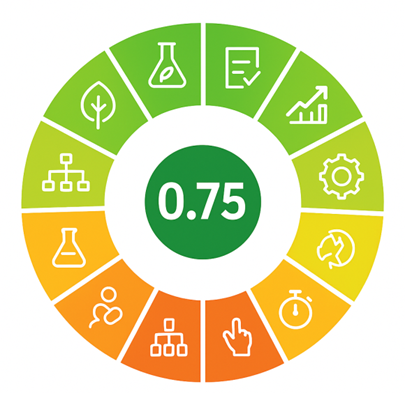
Figure 1: Example of an AGREE pictogram showing compliance levels across the twelve principles of Green Analytical Chemistry
Advantages of AGREE
The adoption of AGREE has been rapid due to several significant advantages. First, it is comprehensive, covering all twelve GAC principles rather than focusing on selected aspects such as waste or solvent hazards. Second, it offers flexibility, allowing users to adjust weightings and tailor evaluations to specific fields of application.16 Third, the visual output enhances clarity and facilitates communication of sustainability outcomes not only among researchers but also to stakeholders and regulatory bodies [17]. These features have led to successful applications of AGREE in pharmaceutical quality control, environmental monitoring, food safety, and bioanalytical research [18].
Limitations and Challenges
Despite its strengths, the AGREE framework is not without limitations. The semi-quantitative nature of scoring introduces a degree of subjectivity, especially for principles such as “educational impact” or “integration of analytical steps” [19]. Furthermore, reliable evaluation requires detailed methodological information (e.g., solvent volumes, energy consumption, waste generation), which may not always be fully reported in the literature [20]. Another challenge lies in the integration of AGREE within regulatory frameworks, as current validation protocols often prioritize analytical performance metrics such as accuracy, sensitivity, and precision over environmental considerations [21]. Finally, achieving a balance between analytical efficiency and sustainability often involves trade-offs that must be carefully considered during method development [22].
Comparison with Other Greenness Metrics
Compared with tools such as NEMI, Eco-Scale, and the Green Analytical Procedure Index (GAPI), AGREE provides a more holistic, flexible, and user-friendly evaluation system. While NEMI offers a quick and simple screening approach, and Eco-Scale provides a straightforward numerical score, both lack the breadth of evaluation offered by AGREE. Similarly, while GAPI uses a multi-criteria visual representation, its outputs are less quantitative and not as intuitive as the AGREE pictogram. A comparative summary of these approaches is presented in Table 2.
Metric/Tool | Format of Output | Criteria Considered | Strengths | Limitations |
NEMI (National Environmental Methods Index) | Simple pictogram (circle with 4 quadrants) | Use of PBT chemicals, hazardous waste, waste generation, energy use | Easy and fast screening | Very limited scope; binary (yes/no) outcomes |
Analytical Eco-Scale | Numerical score (0–100, with penalties) | Solvent/reagent hazards, waste, occupational risks, energy | Quantitative, easy to calculate | Does not cover all GAC principles; penalty values partly subjective |
GAPI (Green Analytical Procedure Index) | Colored pentagram pictogram | Sample preparation, reagent use, instrumentation, energy, waste | Multi-criteria visual summary; broad coverage | No unified scoring; qualitative rather than quantitative |
AGREE (Analytical GREEnness) | Circular pictogram + numerical score (0–1) | All 12 principles of Green Analytical Chemistry | Holistic, flexible, standardized, visually intuitive | Some subjectivity in scoring; requires detailed method reporting |
Table 2: Comparison of major greenness assessment tools in analytical chemistry
Applications of AGREE in Analytical Chemistry
The AGREE metric has been increasingly adopted across a wide spectrum of analytical fields, demonstrating its flexibility and applicability to diverse methodological challenges. Its use extends from pharmaceutical quality control to environmental monitoring, food analysis, and bioanalytical research, providing an objective and standardized assessment of method sustainability [23].
Pharmaceutical Analysis
Pharmaceutical research and quality control generate significant solvent and reagent consumption, often leading to high environmental footprints. AGREE has been applied to evaluate the greenness of chromatographic, spectroscopic, and hyphenated techniques in drug analysis [24,25]. For instance, assessments of liquid chromatography methods for active pharmaceutical ingredients (APIs) revealed that miniaturized and solvent-free approaches scored significantly higher on AGREE scales than conventional methods [26]. Furthermore, AGREE has been used to benchmark greener alternatives in analytical quality by design (AQbD), emphasizing its potential integration into regulatory frameworks [27].
Environmental Monitoring
Environmental analytical chemistry often requires detection of pollutants at trace levels, which traditionally involves intensive sample preparation and the use of toxic solvents. Applications of AGREE in environmental monitoring have shown that direct sampling, microextraction techniques, and portable instrumentation markedly improve greenness scores [28,29]. For example, field-deployable sensors and solvent-minimized pre- concentration techniques demonstrated superior sustainability profiles compared to conventional laboratory-based protocols [30]. These results highlight the potential of AGREE to encourage on-site, real-time measurements that reduce environmental impact while maintaining analytical performance.
Food and Agricultural Analysis
The food sector demands routine analysis of contaminants, additives, and nutritional components, creating opportunities to implement greener analytical practices. AGREE has been successfully applied in food chemistry to evaluate spectroscopic, chromatographic, and electrophoretic methods [31,32]. Techniques such as near-infrared spectroscopy (NIR) and portable Raman spectroscopy scored highly in AGREE assessments due to their minimal sample preparation and elimination of chemical reagents [33]. Additionally, applications in agricultural residue monitoring have demonstrated that green sample preparation strategies (e.g., QuEChERS modifications) enhance both efficiency and sustainability [34].
Bioanalytical Applications
Bioanalysis, especially in clinical and pharmacokinetic studies, typically involves sensitive determinations in complex biological matrices. AGREE-based assessments in bioanalysis have emphasized miniaturized liquid-phase microextraction, paper-based assays, and lab-on-a-chip technologies [35,36]. These methods achieved high greenness scores by minimizing sample volume, reducing waste, and enabling automation. Moreover, AGREE has been used as an educational tool in academic laboratories to raise awareness of sustainability among students and early-career researchers [37].
Comparative Insights
The widespread application of AGREE across sectors demonstrates its versatility, but also reveals domain-specific challenges. Pharmaceutical methods, for example, often struggle with solvent dependency, whereas environmental methods face difficulties with ultra-trace quantification without extensive sample preparation. ^[29,38] These differences underline the importance of context-dependent weighting in AGREE evaluations and suggest that hybrid approaches combining AGREE with life cycle assessment (LCA) may provide deeper insights into analytical sustainability [39].
Limitations and Future Perspectives of AGREE
Although AGREE has rapidly established itself as one of the most comprehensive tools for assessing analytical sustainability, certain limitations remain that restrict its universal application. These challenges highlight areas for improvement and provide opportunities for the development of future directions in greenness assessment.
Methodological Limitations
One of the most significant concerns associated with AGREE is the semi-quantitative nature of scoring, which introduces subjectivity into the evaluation process [40]. For instance, while solvent volumes or waste quantities can be quantified relatively easily, principles such as “promotion of education” or “integration of analytical steps” are harder to standardize [41]. Consequently, reproducibility across evaluators may vary, potentially undermining consistency.
Another limitation is the dependence on detailed methodological reporting. Many published analytical methods lack sufficient information on solvent consumption, energy requirements, or waste generation, complicating the evaluation process and leading to incomplete or biased AGREE scores [42].
Regulatory and Validation Challenges
A further barrier lies in the integration of AGREE into regulatory frameworks. Current validation protocols—such as those recommended by the International Council for Harmonisation (ICH)—prioritize analytical performance parameters, including precision, sensitivity, and robustness, with little consideration of environmental impact [43]. Efforts to reconcile AGREE with quality assurance and regulatory requirements are ongoing but remain at an early stage [44].
Context-Dependent Constraints
The performance of AGREE evaluations is often domain-specific. In pharmaceutical analysis, for example, high reliance on organic solvents presents challenges that lower greenness scores, while environmental analysis struggles with trace-level quantification without extensive pre-concentration steps [45]. These examples illustrate that trade-offs between analytical performance and sustainability are often inevitable [46].
Integration with Digital and Hybrid Tools
Emerging trends suggest that the future of AGREE lies in integration with digital platforms and hybrid assessment models. Automated data extraction and artificial intelligence may reduce subjectivity in scoring, while linking AGREE with Life Cycle Assessment (LCA) could provide a more holistic evaluation of method sustainability, capturing impacts beyond the laboratory level [47,48]. Additionally, efforts are underway to develop domain-specific AGREE modules that consider the unique requirements of pharmaceutical, food, or environmental applications [49].
Educational and Outreach Potential
Beyond its methodological applications, AGREE also has significant potential as an educational tool. By visualizing greenness through intuitive pictograms, AGREE can foster awareness of sustainable practices among students and early-career researchers [50]. Its use in academic laboratories and training programs highlights its role not only as an evaluative framework but also as a pedagogical resource for shaping the next generation of green chemists [51]
Outlook
Looking ahead, AGREE is expected to evolve into a next-generation sustainability tool through greater automation, integration with regulatory guidelines, and alignment with broader environmental policies. Combining AGREE with multi-criteria decision-making frameworks and life cycle approaches may further strengthen its role as a global standard for greenness assessment in analytical chemistry [52].
Conclusion
The Analytical GREEnness (AGREE) metric has rapidly become a cornerstone in sustainable analytical chemistry, providing a comprehensive and intuitive framework to evaluate compliance with the twelve principles of Green Analytical Chemistry. Compared with earlier greenness assessment tools, AGREE offers breadth, flexibility, and clarity, making it suitable for diverse domains such as pharmaceuticals, environmental monitoring, food analysis, and bioanalysis. While challenges remain such as subjectivity in scoring, dependence on detailed methodological reporting, and integration with regulatory frameworks AGREE has demonstrated remarkable potential to guide both research and practice. Its role as an educational and awareness-raising tool further strengthens its relevance beyond laboratories, preparing future generations of chemists to embrace sustainability. Looking ahead, continued refinement, digital innovation, and broader adoption will enhance AGREE’s value as a global benchmark for greenness evaluation. By aligning scientific innovation with environmental responsibility, AGREE is poised to play a critical role in shaping the future of analytical chemistry.
References
- Anastas PT, Warner JC. (1998). Green Chemistry: Theory and Practice. Oxford University Press, New York.
View at Publisher | View at Google Scholar - Gałuszka A, Migaszewski Z, Namieśnik J. The 12 principles of green analytical chemistry and the SIGNIFICANCE mnemonic of green analytical practices. TrAC Trends Anal Chem. 2013;50:78–84.
View at Publisher | View at Google Scholar - Armenta S, Garrigues S, de la Guardia M. (2008). Green analytical chemistry. TrAC Trends Anal Chem. 27(6):497–511.
View at Publisher | View at Google Scholar - Gałuszka A, Migaszewski Z, Konieczka P, Namieśnik J. (2012). Analytical Eco-Scale for assessing the greenness of analytical procedures. TrAC Trends Anal Chem. 37:61–72.
View at Publisher | View at Google Scholar - Pena-Pereira F, Wojnowski W, Tobiszewski M. (2020). AGREE-Analytical GREEnness metric approach and software. Anal Chem. 92(14):10076–10082.
View at Publisher | View at Google Scholar - Tobiszewski M. (2016). Metrics for green analytical chemistry. Anal Methods.8:2993-2999.
View at Publisher | View at Google Scholar - Nowak PM, Kościelniak P. (2019). What color is your method? Adaptation of the RGB additive color model to analytical method evaluation. Anal Chem. 91(17):10343–10352.
View at Publisher | View at Google Scholar - Pena-Pereira F, Wojnowski W, Tobiszewski M. (2020). AGREE—Analytical GREEnness metric approach and software. Anal Chem. 92(14):10076–10082.
View at Publisher | View at Google Scholar - Tobiszewski M. Metrics for green analytical chemistry. Anal Methods. 2016;8:2993–2999.
View at Publisher | View at Google Scholar - Armenta S, Garrigues S, de la Guardia M. (2008). Green analytical chemistry. TrAC Trends Anal Chem;27(6):497–511.
View at Publisher | View at Google Scholar - Gałuszka A, Migaszewski Z, Namieśnik J. (2013). The 12 principles of green analytical chemistry and the SIGNIFICANCE mnemonic of green analytical practices. TrAC Trends Anal Chem. 50:78–84.
View at Publisher | View at Google Scholar - Gałuszka A, Migaszewski Z, Konieczka P, Namieśnik J. (2012). Analytical Eco-Scale for assessing the greenness of analytical procedures. TrAC Trends Anal Chem. 37:61–72.
View at Publisher | View at Google Scholar - Nowak PM, Kościelniak P. (2019). What color is your method? Adaptation of the RGB additive color model to analytical method evaluation. Anal Chem. 91(17):10343–10352.
View at Publisher | View at Google Scholar - Pena-Pereira F. (2021). Application of AGREE in pharmaceutical analysis: Challenges and perspectives. Anal Chim Acta. 1178:338679.
View at Publisher | View at Google Scholar - Pena-Pereira F, Wojnowski W. (2021). Weighting flexibility and limitations in AGREE scoring. Anal Bioanal Chem. 413:3859–3869.
View at Publisher | View at Google Scholar - Gałuszka A, Migaszewski Z, Konieczka P. (2020). Greenness assessment in environmental analytical chemistry. J Environ Chem Eng. 8:104256.
View at Publisher | View at Google Scholar - Tobiszewski M, Pena-Pereira F. (2021). Greenness metrics in food and bioanalysis. Food Chem. 348:129100.
View at Publisher | View at Google Scholar - Pena-Pereira F, Tobiszewski M. (2021). Application of AGREE in bioanalytical research: Case studies. Microchem J. 168:106504.
View at Publisher | View at Google Scholar - Tobiszewski M. Limitations of greenness metrics: Subjectivity and reproducibility. Curr Opin Green Sustain Chem. 2020;21:7–214.
View at Publisher | View at Google Scholar - Armenta S, de la Guardia M. (2022). Opportunities and challenges in applying GAC metrics. Anal Bioanal Chem. 414:3029–3040.
View at Publisher | View at Google Scholar - Tobiszewski M, Pena-Pereira F. (2022). Integration of AGREE with method validation and regulatory frameworks. Talanta. 242:123328.
View at Publisher | View at Google Scholar - Gałuszka A, Migaszewski Z. (2021). Practical challenges in balancing greenness and performance in analytical methods. ;168:106504.
View at Publisher | View at Google Scholar - Pena-Pereira F, Tobiszewski M. (2021). The AGREE metric as a universal tool in green analytical chemistry. Curr Opin Green Sustain Chem. 29:100451.
View at Publisher | View at Google Scholar - Pena-Pereira F, et al. (2021). Greenness assessment of chromatographic methods in pharmaceutical analysis using AGREE. Anal Chim Acta. 1178:338679.
View at Publisher | View at Google Scholar - Tobiszewski M. (2021). Sustainable drug analysis: Integration of AGREE in pharmaceutical quality control. J Pharm Biomed Anal. 205:114320.
View at Publisher | View at Google Scholar - Gałuszka A, et al. (2020). Miniaturized methods in pharmaceutical analysis: Greenness evaluation with AGREE. Microchem J. 159:105446.
View at Publisher | View at Google Scholar - Pena-Pereira F, Wojnowski W. (2022). Analytical quality by design (AQbD) and AGREE: Towards regulatory acceptance. TrAC Trends Anal Chem. 145:116464.
View at Publisher | View at Google Scholar - Gałuszka A, Migaszewski Z. (2020). Green analytical chemistry in environmental monitoring: AGREE as an assessment tool. J Environ Chem Eng. 8:104256.
View at Publisher | View at Google Scholar - Tobiszewski M. (2021). Portable methods and AGREE evaluation in trace environmental analysis. Anal Methods. 13:1234–1243.
View at Publisher | View at Google Scholar - Nowak PM, Kościelniak P. (2021). Field-deployable sensors and AGREE-based greenness evaluation. Talanta. 234:122671.
View at Publisher | View at Google Scholar - Tobiszewski M, Pena-Pereira F. (2021). Greenness metrics in food chemistry: AGREE case studies. Food Chem. 348:129100.
View at Publisher | View at Google Scholar - Pena-Pereira F. (2021). Electrophoretic and chromatographic food analysis methods evaluated with AGREE. Electrophoresis. 42:1380–1390.
View at Publisher | View at Google Scholar - Nowak PM, et al. (2022). Portable Raman and NIR techniques in food analysis: AGREE evaluation. Food Control. 131:108410.
View at Publisher | View at Google Scholar - Gałuszka A, et al. (2021). Sustainable pesticide residue analysis in agriculture: Application of AGREE. Anal Bioanal Chem. 413:4567–4578.
View at Publisher | View at Google Scholar - Nowak PM, Kościelniak P. (2020). Miniaturized bioanalytical methods and AGREE evaluation. Anal Chem. 92(18):12512–12520.
View at Publisher | View at Google Scholar - Pena-Pereira F. (2021). Lab-on-a-chip technologies in bioanalysis: AGREE perspective. BiosensBioelectron. 177:112995.
View at Publisher | View at Google Scholar - Tobiszewski M. (2021). AGREE as an educational tool in green bioanalysis. Chem Educ Res Pract. 22:1115–1126.
View at Publisher | View at Google Scholar - Armenta S, de la Guardia M. (2022). Domain-specific challenges in applying AGREE: Pharmaceuticals vs. environment. Anal Bioanal Chem. 414:3029–3040.
View at Publisher | View at Google Scholar - Pena-Pereira F, Tobiszewski M. (2022). Combining AGREE and life cycle assessment for holistic sustainability. Green Chem. 24:1231–1243.
View at Publisher | View at Google Scholar - Tobiszewski M. (2020). Limitations of greenness metrics: Subjectivity and reproducibility. Curr Opin Green Sustain Chem. 21:7–14.
View at Publisher | View at Google Scholar - Pena-Pereira F, Wojnowski W. (2021). Weighting flexibility and limitations in AGREE scoring. Anal Bioanal Chem. 413:3859–3869.
View at Publisher | View at Google Scholar - Gałuszka A, Migaszewski Z, Konieczka P. (2021). Reporting gaps in sustainability assessment of analytical methods. J Environ Chem Eng. 9:105672.
View at Publisher | View at Google Scholar - (2005). ICH. Validation of analytical procedures: Text and methodology Q2(R1). International Council for Harmonisation of Technical Requirements for Pharmaceuticals for Human Use.
View at Publisher | View at Google Scholar - Pena-Pereira F, Tobiszewski M. (2022). Greenness evaluation and regulatory challenges in pharmaceutical analysis. TrAC Trends Anal Chem. 145:116464.
View at Publisher | View at Google Scholar - Armenta S, Garrigues S, de la Guardia M. (2022). Trade-offs between performance and sustainability in analytical chemistry. Anal Bioanal Chem. 414:3029–3040.
View at Publisher | View at Google Scholar - Tobiszewski M, Pena-Pereira F. (2021). Balancing efficiency and greenness in analytical method development. Talanta. 234:122671.
View at Publisher | View at Google Scholar - Pena-Pereira F, et al. (2022). Combining AGREE with life cycle assessment: Towards holistic sustainability metrics. Green Chem. 24:1231–1243.
View at Publisher | View at Google Scholar - Wojnowski W, Pena-Pereira F. (2022). Artificial intelligence in greenness evaluation: The future of AGREE. Anal Methods. 14:1448–1459.
View at Publisher | View at Google Scholar - Gałuszka A, et al. (2022). Domain-specific adaptations of AGREE for pharmaceuticals, food, and environment. Microchem J.178:107385.
View at Publisher | View at Google Scholar - Tobiszewski M. (2021). AGREE as an educational framework in green chemistry teaching. Chem Educ Res Pract. 22:1115–1126.
View at Publisher | View at Google Scholar - Pena-Pereira F. (2022). Pedagogical applications of greenness metrics in analytical training. J Chem Educ. 99(3):1254–1262.
View at Publisher | View at Google Scholar - Armenta S, de la Guardia M. (2022). Future perspectives in green analytical chemistry metrics. TrAC Trends Anal Chem.146:116497.
View at Publisher | View at Google Scholar