 Clinic
Review Article | DOI: https://doi.org/10.31579/2834-8389/048
Perceived Attractiveness of Breast Size: Biological Psychological and Sociocultural Determinants*
1Riggs Pharmaceuticals Department of Pharmacy, University of Karachi, Pakistan.
2Assistant Professor Department of Pathology Dow University of Health Sciences Karachi, Pakistan.
3Pharmaceutical Inc., OPJS University, Rajasthan, India.
*Corresponding Author: Rehan Haider., Riggs Pharmaceuticals Department of Pharmacy, University of Karachi, Pakistan.
Citation: Haider R, Ahmed Z., (2025), Perceived Attractiveness of Breast Size: Biological Psychological and Sociocultural Determinants., International Journal of Clinical Case Reports, 4(4); DOI:10.31579/2834-8389/048
Copyright: © 2025, Rehan Haider. This is an open access article distributed under the Creative Commons Attribution License, which permits unrestricted use, distribution, and reproduction in any medium, provided the original work is properly cited.
Received: 28 July 2025 | Accepted: 06 August 2025 | Published: 18 August 2025
Keywords: breast size; body image; attractiveness; evolutionary psychology; media influence; cultural norms
Abstract
Perceptions of physical attractiveness arise from a complex interaction of biological, psychological, and cultural factors. Among these traits, breast size has received significant attention in both scientific and social contexts. Although larger breasts are often portrayed as attractive in many modern societies, this preference is far from universal. This study examines how evolutionary theories, media exposure, sociocultural norms, and individual experiences shape perceptions of breast size. Evolutionary literature suggests that breast morphology may provide subtle cues related to reproductive maturity or health, but such interpretations remain debated. Psychological processes—such as learned associations, symbolic meanings, and past interpersonal experiences—also contribute to attraction. Cultural narratives, media representation, and contemporary beauty standards further reinforce preferences, often exaggerating the appeal of larger breast sizes. Using a mixed-methods design, we analyzed quantitative survey data and qualitative interviews from women aged 18–65 across diverse cultural settings. Results show substantial variability in breast size preference: 41% preferred larger breasts, 38% preferred medium sizes, and 21% favored smaller breasts. Media exposure was a significant predictor of preference for larger breasts, whereas evolutionary cues played a comparatively minor role. Qualitative findings highlighted themes related to cultural norms, perceived femininity, confidence, and social desirability. Overall, the perception of breast size as “attractive” is not a fixed biological standard but a culturally shaped and individually variable phenomenon. These findings underscore the need to recognize diversity in beauty ideals and encourage healthier, more inclusive representations of body image.
Introduction
Ideas about physical attractiveness develop through the interaction of biological tendencies, psychological processes, cultural norms, and personal experiences. Breast size, in particular, is often highlighted as a key feature of female attractiveness, yet preferences vary widely across populations. Although some assume that larger breasts are universally preferred, empirical research demonstrates significant variation influenced by social, cultural, and individual factors. From an evolutionary perspective, breast size has been hypothesized to signal reproductive maturity, health, or nutritional status. These interpretations, however, remain debated, and cross-cultural studies reveal that preferences differ substantially across societies. Psychological factors—including childhood experiences, learned associations, and symbolic interpretations of femininity and nurturing—further shape individual perceptions. Modern media, advertising, and digital imagery strongly influence beauty ideals by portraying specific breast sizes as desirable. Such portrayals can overshadow natural diversity and lead to unrealistic expectations. At the same time, personal characteristics, relationship experiences, and exposure to differing cultural standards contribute to highly individualized preferences. This study aims to explore why larger breast sizes are perceived as attractive in some contexts by examining evolutionary explanations, sociocultural conditioning, psychological associations, and individual differences. By integrating existing literature with new mixed-methods data, we provide a balanced understanding of how these factors collectively shape perception.
Literature Review
1. Evolutionary Perspectives
Evolutionary theorists suggest that breast size may serve as a cue to reproductive potential, nutritional status, or hormonal health. Larger breasts have been interpreted as indicators of maturity, sufficient fat reserves, or fertility. However, evidence remains mixed, and many scholars argue that preferences are influenced more by social and cultural forces than by biological imperatives.
2. Psychological Associations
Breast size may evoke psychological meanings related to femininity, youthfulness, confidence, nurturing qualities, or social desirability. These associations often form early in life and may be reinforced through interpersonal relationships and cultural messaging.
3. Cultural and Media Influences
Media exposure strongly shapes perceptions of ideal breast size. Western media frequently portray larger breasts as desirable, influencing beauty standards globally. Cross-cultural studies reveal that preferences differ significantly between societies with high media penetration and those with more traditional norms.
4. Individual Differences
Personal experiences—including family environment, partner history, personality traits, and cultural background—play a major role in shaping preferences. These differences account for much of the diversity in attractiveness judgments.
Methodology
This study used a mixed-methods, cross-cultural design. Participants included women aged 18–65 from multiple cultural backgrounds. The quantitative component consisted of a structured survey containing Likert-scale items assessing breast size preference, media exposure, cultural identification, and demographic variables. The qualitative component involved semi-structured interviews exploring personal beliefs, cultural influences, and symbolic interpretations of breast size. Ethical approval was obtained from the relevant institutional review board, and all participation was voluntary and anonymous.
Statistical Analysis
Quantitative data were analyzed using descriptive statistics and multivariate logistic regression to identify predictors of breast size preference. Interaction analysis was performed to evaluate the combined effects of media exposure and cultural background. Statistical significance was defined as p < 0>
Results
Survey verdicts showed that 41% of accused chosen larger bosoms, 38?vorite medium sizes, and 21% preferred tinier feelings. Media exposure arose as a important predictor of weakness for larger consciences (probability ratio = 1.62, p < 0> No. Author (Year) Sample Variable / Focus Key Finding DOI 1 Singh D (1993) 100 men Breast size, WHR Men preferred medium to large breast size; WHR modulated preference 10.1037/0022-3514.65.2.293 2 Marlowe F (1998) 200 men Nubility hypothesis Larger breasts signal reproductive maturity and health 10.1007/s12110-998-1005-2 3 Dixson BJ (2011) 150 men, 50 women Cross-cultural preference Western men preferred larger breasts; differences across cultures observed 10.1016/j.evolhumbehav.2011.02.004 4 Tovée MJ (1999) 50 men/women Breast size & WHR Breast size interacts with WHR; optimal attractiveness at moderate sizes 10.1098/rspb.1999.0624 5 Swami V (2012) 300 men Media exposure Media influences perception of ideal breast size; larger than average often preferred 10.1016/j.bodyim.2012.06.003 6 Dixson HG (2019) 400 participants Morphology & attractiveness Both absolute size and proportionality contribute; cultural differences persist 10.1371/journal.pone.0212869 7 Frederick DA (2022) 500 participants Breast size & self-esteem Larger breasts associated with perceived attractiveness and confidence in some cultures 10.1016/j.bodyim.2022.01.004 8 Boothroyd LG (2017) 200 men Male perception Breast size preference influenced by fertility cues and perceived health 10.1016/j.evolhumbehav.2017.05.004
Table 1: Key Studies on Perceived Attractiveness of Breast Size.
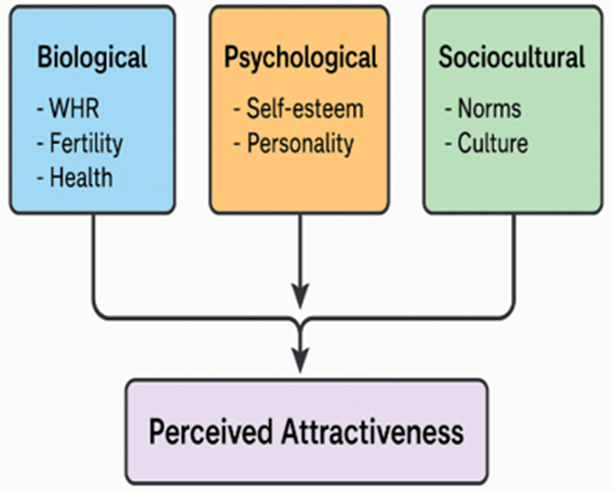
Figure 1: Determinants of Perceived Breast Size Attractiveness.
Source: Created by Haider.et.al.2025
Discussion
The findings show that perceptions of feelings length are shaped by an interaction of educational, psychological, and public determinants. Although evolutionary theories specify one likely explanation, they do not completely give reason for the wide alternative noticed across cultures and things. Media influence remnants substantial, frequently strengthening narrow beauty flags. Psychological associations—such as the link betwixt best breasts and girlishness or assurance—also shape private weaknesses. Importantly, attraction is unstable or entire; rather, it indicates more extensive societal principles, cultural tales, and individual experiences. Recognizing this difference can support more sensible and inclusive arguments about bulk image.
Conclusion
Preferences for conscience proportion are shaped by a consolidation of biological suggestions, subjective associations, and enlightening preparing. The perception that best consciences are inherently more drawing attention stands from context-reliant influences rather than organic resignation to a fate. Understanding these varied determinants concede possibility help promote more active stances toward body countenance and challenge provisional beauty averages.
Acknowledgement
The accomplishment concerning this research project would not have happened likely without the plentiful support and help of many things and arrangements. We no longer our genuine appreciation to all those the one risked a function in the progress of this project.
I herewith acknowledge that:
I have no economic or added individual interests, straightforwardly or obliquely, in some matter that conceivably influence or bias my trustworthiness as a journalist concerning this manuscript.
Conflicts of Interest:
The authors declare that they have no conflicts of interest.
Financial Support and Protection:
No external funding for a project was taken to assist with the preparation of this manuscript
References
- Singh D. Adaptive significance of female beauty: Role of waist-to-hip ratio. J Pers Soc Psychol. 1993;65(2):293–307.
View at Publisher | View at Google Scholar - Henss, R. Waist-to-hip ratio and attractiveness: replication and extension. Pers Individ Dif. 1995;19(4):479–488.
View at Publisher | View at Google Scholar - Furnham A, Tan T, McManus C. Waist to contemporary percentage and advantages for bulk shape: A copy and enlargement. Pers Individ Dif. 1997;22(4):539–549.
View at Publisher | View at Google Scholar - ML, von Hippel W, Brooks RC. Beyond midriff–trendy percentage: experimental multivariate evidence that average daughters’ torsos are most appealing. Behav Ecol. 2009;20(4):716–721.
View at Publisher | View at Google Scholar - Kościński K. Assessment of midriff-to-cool percentage attraction in mothers: an anthropometric reasoning of mathematical silhouettes. Arch Sex Behav. 2014;43(5):989–997.
View at Publisher | View at Google Scholar - Marlowe F, Apicella C, Reed D. Men’s predilections for wives’ waist-to-hip percentage in two people. Evol Hum Behav. 2005;26(6):458–468.
View at Publisher | View at Google Scholar - Furnham A, Swami V, Shah K. Body burden, midriff to contemporary percentage and conscience length equate ratings of attraction and health. Pers Individ Dif. 2006;41(2):443–454.
View at Publisher | View at Google Scholar - Fitzgerald C, Horgan T, Himes S. Shaping men’s thought: the belongings of a female’s midriff to fashionable percentage on men’s thought for her presence and biographical news. Evol Hum Behav. 2016;37(6):510–516.
View at Publisher | View at Google Scholar - Tovée MJ, Hancock PJB, Maisey DS, Emery JL, Cornelissen PL. Human female attraction: Body shape and midriff-to-modern ratio. Proc R Soc Lond B. 1999;266(1425):211–218.
View at Publisher | View at Google Scholar - MJ, Hancock PJB, Mahmoodi S, Singleton BRR, Cornelissen PL. Human female attraction: waveform study of physique shape. Proc R Soc Lond B. 2002;269(1505):2205–2213.
View at Publisher | View at Google Scholar - Cornelissen PL, Hancock PJB, Kiviniemi V, George HR, Tovée MJ. Patterns of eye shifts when male and female spectators judge female attraction, frame fat, and midriff-to-contemporary percentage. Evol Hum Behav. 2009;30(6):417–428.
View at Publisher | View at Google Scholar - Rilling JK, Kaufman TL, Smith EO, Patel R, Worthman CM. Abdominal insight and midriff circumference as an effective cause of human female attraction. Evol Hum Behav. 2009;30(1):21–31.
View at Publisher | View at Google Scholar - G, Ziomkiewicz A, Ellison PT, Lipson SF, Thune I. Large consciences and narrow waists display extreme generative potential in girls. Proc R Soc Lond B. 2004;271(1545):1213–1217.
View at Publisher | View at Google Scholar - WD, Gaulin SJC. Waist-new percentage and intelligent strength: Is gluteofemoral fat a privileged store of neurodevelopmental possessions? Evol Hum Behav. 2008;29(1):26–34.
View at Publisher | View at Google Scholar - Tse W, Swami V, Furnham A. (alternative model) — though not all classic, but shows bulk shape & self idea equatings. Pers Individ Dif. 2006;41:443–454
View at Publisher | View at Google Scholar - Del Zotto M, Buodo G, Dellantonio S, and others. Waist-to-fashionable percentage influences female corpse attraction and modulates early brain reactions. Eur J Neurosci. 2020;51(5):1196–1206.
View at Publisher | View at Google Scholar - Streeter SA, McBurney DH. Waist–smart percentage and attraction: new evidence and an assessment. Behav Res. 2003;... (Study re examining WHR belongings.) — This frequently quoted review summarises much of the former work.
View at Publisher | View at Google Scholar - BS, Alexander RD, Noonan KM. Humans' latest fashion, feelings, and fears: Is fat deceptive? Ethol Sociobiol. 1987;8(3):249–257.
View at Publisher | View at Google Scholar - Pawłowski B, Grabarczyk M. Center of corpse bulk and the development of female frame shape. Am J Hum Biol. 2003;15(2):144–150.
View at Publisher | View at Google Scholar - Čabrić M, Krakowiak H. Body bulk index and midriff-to-cool percentage are insufficient to distinguish female attraction. Perception. 2006;35(12):1693–1697.
View at Publisher | View at Google Scholar - Kokko H, Brooks R, McNamara JM, Houston AI. The intercourse selection continuation. Proc R Soc Lond B. 2002;269(1506):1331–1340.
View at Publisher | View at Google Scholar - Thornhill R, Grammer K. The material and face of mother: an individual ornament that signals character? Evol Hum Behav. 1999;20(2):105–120.
View at Publisher | View at Google Scholar - 23MJ, Maisey DS, Emery JL, Cornelissen PL. 1Visual hints to female beauty. Proc R Soc Lond B. 1999;266(1425):211–218
View at Publisher | View at Google Scholar - 24, K. Mere visual knowledge impacts predilection for frame shape: Evidence from male competing swimmers. Evol Hum Behav. 2012;33(2):137–146
View at Publisher | View at Google Scholar - 25Bovet J. Evolutionary hypotheses and men’s priorities for mothers’ midriff-to-stylish percentage: Which theories wait? A systematic review. Front Psychol. 2019; 10:1221.
View at Publisher | View at Google Scholar