 Clinic
Research Article | DOI: https://doi.org/10.31579/2835-7957/156
Leveraging the FIKR (facet, insight, knowledge, and resilience) Profiling Assessment Tool via Cloud-Based Data Intelligence for Sci-Tech Researchers and Bio-Engineers Talent Acquisition in the AI Era
1Department of Biology, Faculty of Science, Universiti Putra Malaysia, 43400 UPM Serdang, Selangor, Malaysia.
2Humanology Sdn Bhd, 73-3 Amber Business Plaza, Jalan Jelawat 1, 56000 Kuala Lumpur, Malaysia.
*Corresponding Author: Chee Seng Leow, Humanology Sdn Bhd, 73-3 Amber Business Plaza, Jalan Jelawat 1, 56000 Kuala Lumpur, Malaysia.
Citation: Chee K. Yap, Chee S. Leow, Wing Sum Vincent Leong, (2026), Leveraging the FIKR (facet, insight, knowledge, and resilience) Profiling Assessment Tool via Cloud-Based Data Intelligence for Sci-Tech Researchers and Bio-Engineers Talent Acquisition in the AI Era, Clinical Reviews and Case Reports, 5(1); DOI:10.31579/2835-7957/156
Copyright: © 2026, Chee Seng Leow. This is an open-access article distributed under the terms of the Creative Commons Attribution License, which permits unrestricted use, distribution, and reproduction in any medium, provided the original author and source are credited.
Received: 15 December 2025 | Accepted: 31 December 2025 | Published: 05 January 2026
Keywords: sustainable bioeconomy; personality traits; sci-tech research, bio-engineering; ai era
Abstract
The objective of this study is to assess the alignment of personality traits with the specific demands of Sci-Tech research and bio-engineering roles within the sustainable bioeconomy by analyzing Holland’s RIASEC scores using the FIKR (facet, insight, knowledge, and resilience) profiling assessment tool (PAT). This study investigates the alignment of personality traits with the demands of Sci-Tech research and bio-engineering roles in the sustainable bioeconomy, using the FIKR PAT to analyze 100 respondents. The results reveal that 60% of respondents possess high Investigative and Realistic traits, indicating a strong aptitude for research and engineering tasks requiring analytical thinking and practical skills. However, only 15% demonstrate the necessary Conventional traits, suggesting that while many are technically proficient, fewer are suited for structured and process-driven roles essential in bio-engineering. Additionally, 25% exhibit strong Enterprising traits, highlighting a subset of individuals well-suited for leadership and innovation within the AI-driven bioeconomy. These findings emphasize the need for targeted talent acquisition and development strategies that consider both technical abilities and the adaptability required in the rapidly evolving AI landscape.
1.Introduction
The exponential progress of artificial intelligence (AI) and cloud computing has fundamentally reshaped the modern bioeconomy by accelerating the transformation of renewable biological resources into food, bio-based products, and sustainable energy solutions [1]. In particular, AI-driven tools and data-intensive platforms have enabled bioengineering and bio-manufacturing systems to operate with unprecedented precision and efficiency. These shifts underscore a critical need for a new generation of Sci-Tech researchers and bio-engineers who are not only technically proficient but also adaptable, innovative, and resilient in the face of a rapidly evolving digital and ecological landscape [2-3]. Academic explorations into AI applications in sustainable agriculture and the broader bioeconomy—especially in developing contexts such as Africa—have highlighted the dual promise and peril of these technologies. Studies have investigated their potential for improving precision agriculture, real-time crop monitoring, and climate-smart practices [4]. However, these benefits must be weighed against concerns related to data privacy, algorithmic bias, and inequitable access to digital tools [5-6]. Responsible implementation, therefore, hinges on ethical design, robust policy frameworks, and talent equipped with both domain-specific knowledge and digital intelligence. The integration of cloud-based AI systems into bioengineering pipelines has led to a paradigm shift where machine learning algorithms optimize bio-manufacturing, predict ecological outcomes, and drive innovation at scale [4,7]. Yet, realizing these benefits fully demands cross-disciplinary collaboration, continual model refinement, and the advancement of explainable AI in real-world applications [8]. The success of such innovations lies not only in technological capability but also in the recruitment and development of human capital with the right personality attributes and cognitive orientations. To this end, Humanology Sdn. Bhd has developed and implemented the FIKR (Facet, Insight, Knowledge, and Resilience) Profiling Assessment Tool (PAT)—a cloud-deployable psychometric instrument designed to evaluate the alignment between personality profiles and occupational demands. This study leverages the FIKR PAT, integrated with Holland’s RIASEC model, to analyze the personality congruence of 300 prospective candidates for Sci-Tech and bio-engineering roles in the sustainable bioeconomy. By combining cloud computing, data science, and psychometric profiling, the study aims to inform AI-driven, data-centric talent acquisition strategies critical for driving innovation and sustainability in the bio-based industries.
2. Methodology
Our study was conducted with independent samples of 100 genuine individuals given by Humanology Sdn Bhd. Every participant submitted a complete set of item responses on a panel consisting of 200 items. Intended for usage across a diverse array of professional categories. The questionnaire is a quantitative survey format using a binary survey scale, consisting of Yes (1) or No (0) questions. This feature enables the participants to offer prompt and direct responses by selecting between the two available choices. Holland's codes were assessed using a 200-item questionnaire that included the following personality traits: Endurance, Variety, and Aggressive; Self-criticism, Analytical, and Intellectual; Intuition, Emotional, and Perceiver; Dependent, Nurturance, and Extrovert; Extrovert, Achievement, and Control; and Support, Structure, Self-conceptual, and Autonomy. This study utilised Holland's RIASEC model and the FIKR PAT to examine the characteristics of 100 participants. The objective was to determine their appropriateness for different positions in the green energy bioeconomy. The FIKR PAT was selected based on its thorough methodology for evaluating personality characteristics. The Holland RIASEC model also offered a structured framework for classifying these characteristics into six distinct dimensions: Realistic (R), Investigative (I), Artistic (A), Social (S), Enterprising (E), and Conventional (C).
3. Results
Table 1 summarizes the results of the 100 respondents based on the FIKR PAT across the six Holland RIASEC dimensions. Analyzing the 100 respondents using the FIKR PAT provides valuable insights into their alignment with the skills and traits necessary for success in the sustainable bioeconomy. The results reveal a varied distribution across the six Holland RIASEC dimensions, highlighting the respondents' strengths and potential career paths.
Dimension | Average Score | Score Range | Key Traits Identified | Potential Roles |
| Realistic (R) | 22.5 | 11 to 30 | Practical, hands-on tasks, technical skills | Bio-engineering, Sustainable Agriculture, Technical Professions |
| Investigative (I) | 18.9 | 4 to 28 | Analytical, problem-solving, research-oriented | Scientific Research, Bioinformatics, Innovation Roles |
| Artistic (A) | 16.4 | 7 to 29 | Creativity, novel expression, artistic capabilities | Creative Professions, Design, Media |
| Social (S) | 21.5 | 9 to 28 | Interpersonal skills, community-focused, teamwork | Education, Community Outreach, Social Work |
| Enterprising (E) | 20.4 | 12 to 28 | Leadership, entrepreneurial, initiative-taking | Business Development, Project Management, Executive Leadership |
| Conventional (C) | 29.6 | 20 to 36 | Structured, organized, attention to detail | Regulatory Compliance, Quality Assurance, Process Optimization |
Table 1: A summary of the results of the 100 respondents based on the FIKR Profiling Assessment Tool across the six Holland RIASEC dimensions:
3.1 Realistic (R) Dimension
The R dimension showed an average score of 22.5, with a range from 11 to 30. This suggests that a significant portion of the respondents are inclined towards practical, hands-on tasks. The higher scores indicate that many individuals strongly prefer working in environments that require technical skills, physical labour, or direct interaction with machinery and tools. These traits are essential for roles in bio-engineering, sustainable agriculture, and other technical professions where practical application of knowledge is critical.
3.2 Investigative (I) Dimension
The I dimension had an average score of 18.9, ranging from 4 to 28. This dimension reflects the respondents' analytical and problem-solving abilities. Higher scores in this dimension indicate a strong preference for research, inquiry, and understanding complex systems. These traits align well with roles in scientific research, bioinformatics, and other areas where innovation and data analysis are key. Individuals above 21 in this dimension will likely excel in roles requiring high cognitive engagement and methodical problem-solving.
3.3 Artistic (A) Dimension
The A dimension averaged 16.4, with scores ranging from 7 to 29. This dimension measures creativity and the ability to express oneself in novel ways. The results suggest moderate creativity among the respondents, with those scoring above 22 demonstrating a stronger inclination towards A professions. However, the lower average score indicates that creativity is not the most dominant trait in this group, suggesting that while some respondents may excel in creative roles, the majority may be more suited to structured tasks that do not heavily rely on A expression.
3.4 Social (S) Dimension
The S dimension showed an average score of 21.5, ranging from 9 to 28. This dimension reflects the respondents' ability to engage in interpersonal interactions and community-focused roles. Higher scores in this dimension suggest a strong capability for teamwork, communication, and helping others. Individuals scoring high in the S dimension are well-suited for roles in education, community outreach, and social work within the bioeconomy, where collaboration and empathy are crucial.
3.5 Enterprising (E) Dimension
The E dimension had an average score of 20.4, ranging from 12 to 28. This dimension measures the respondents' leadership and entrepreneurial capabilities. Higher scores indicate a propensity for taking initiative, managing projects, and leading teams. These traits are essential for business development, project management, and executive leadership within the bioeconomy. Respondents with high E scores are likely to thrive in positions requiring strategic planning and the commercialization of bio-based technologies.
3.6 Conventional (C) Dimension
The C dimension showed the highest average score at 29.6, ranging from 20 to 36. This dimension reflects a preference for structure, organization, and adherence to established procedures. The high scores suggest that many respondents are well-suited for roles that require meticulous attention to detail, such as regulatory compliance, quality assurance, and process optimization. In the bioeconomy, these traits are essential for ensuring that bio-based innovations are implemented effectively and sustainably. Overall, the results highlight the diverse range of traits among the respondents, providing a comprehensive understanding of their potential alignment with various roles in the bioeconomy. The data suggests that while some individuals may excel in highly technical or research-oriented roles, others may be better suited for creative, social, or leadership positions. This diversity of traits underscores the importance of a multidisciplinary approach to talent acquisition in the sustainable bioeconomy.
4. Discussion
The findings derived from the FIKR PAT, when deployed within a cloud-based data intelligence framework, yield meaningful insights into the alignment of personality traits with the demands of Sci-Tech research and bio-engineering roles in the AI-driven sustainable bioeconomy. This discussion is organized into three interrelated domains: Sci-Tech Research, Bio-Engineering, and the Role of AI and Cloud-Based Technologies in Talent Acquisition and Workforce Development.
4.1. Sci-Tech Research: Aligning Investigative (I) and Realistic (R) Traits through Data-Driven Profiling
Figure 1 shows the overall idea of aligning Investigative (I) and Realistic (R) traits through data-driven profiling in Sci-tech research. In the realm of scientific and technological research, success increasingly depends on the synergy between theoretical analysis and practical application. The alignment of I and R personality traits, as captured by the FIKR PAT, emerges as a strong predictor of success in these interdisciplinary environments [9-10]. Individuals with high I traits are predisposed to critical thinking, analytical problem-solving, and conceptual innovation—qualities essential in data-heavy domains such as molecular modelling, bioinformatics, and environmental analytics [11].
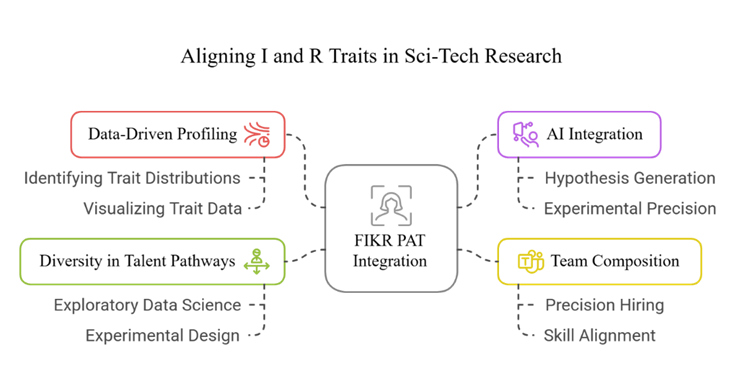
Figure 1: The overall idea of aligning Investigative (I) and Realistic (R) traits through data-driven profiling in Sci-tech research.
Meanwhile, those who score highly in the R dimension are particularly suited to the practical and experimental aspects of Sci-Tech research, including laboratory procedures, instrumentation, prototype development, and applied fieldwork [12-13]. These individuals thrive in hands-on settings, translating theoretical models into workable technological solutions—an indispensable asset in research areas that demand iterative design and empirical validation [14]. The FIKR PAT, when integrated into cloud-hosted platforms, allows for large-scale identification and visualization of such trait distributions. Cloud-based dashboards and machine learning algorithms can dynamically analyze personality data, providing decision-makers with tailored insights on how to deploy individual strengths across different stages of the research pipeline [15]. This not only supports precision hiring and team composition but also aligns human capital with project-specific technical demands.
Moreover, the diversity observed within the spectrum of I and R scores indicates the potential for differentiated talent pathways. Some individuals are naturally inclined toward exploratory data science and hypothesis-driven research, while others exhibit a strong fit for experimental design and process optimization. AI-enabled profiling and cloud-based clustering tools can support this segmentation, enabling educational institutions and organizations to offer more customized career trajectories and upskilling
strategies [16]. Incorporating AI into Sci-Tech research further amplifies the value of these traits. For instance, those with strong I inclinations can benefit from AI-assisted hypothesis generation and data mining, while R-oriented individuals can use robotics, automation, and IoT interfaces to enhance experimental precision [17]. Through cloud-based integration of the FIKR PAT, organizations can now streamline the recruitment and development of Sci-Tech talent with a level of personalization and scalability previously unattainable.
4.2. Bio-Engineering: Leveraging Realistic (R) and Conventional (C) Traits through Cloud-Based Talent Profiling
Figure 2 shows the overall idea of talent profiling in bio-engineering. Bio-engineering represents a convergence of engineering precision and biological complexity, making it an ideal domain for individuals who exhibit strong R and C personality traits [18-19]. The FIKR PAT, when deployed through a cloud-based framework, reveals that many respondents align naturally with the competencies required in this field. Specifically, high R scores point to hands-on proficiency, while high C scores signal a preference for structured, rule-based environments—both critical attributes in bioprocess engineering, synthetic biology, and environmental biotechnology [20-21].
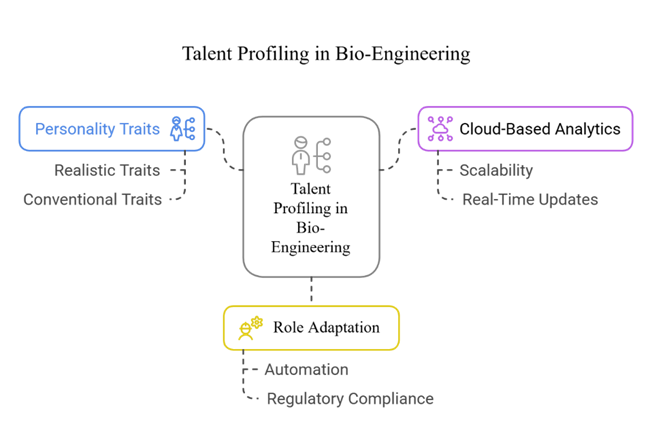
Figure 2: The overall idea of talent profiling in Bio-engineering.
In cloud-integrated HR and workforce analytics platforms, the ability to analyze such traits at scale enables research organizations and biotech firms to match individuals to highly specialized bio-engineering roles with greater precision. Those with R strengths are adept at working with physical systems, including maintaining bioreactors, conducting experimental setups, and managing technical workflows [19]. At the same time, their C counterparts thrive in ensuring standard operating procedures, regulatory compliance, and quality control—tasks essential for upholding the integrity and scalability of bio-based innovations [22]. The relevance of C traits becomes particularly pronounced as bio-engineering adapts to stricter environmental regulations, traceability requirements, and process standardization in the AI-driven industrial landscape. Individuals scoring high in this domain bring essential strengths in documentation, systems integration, and policy adherence—traits that are vital for operational excellence and sustainable scaling [19-20]. Moreover, as bio-engineering processes become increasingly automated and digitized through the integration of IoT, machine learning, and AI-enhanced simulation tools, the synergy of R and C traits positions individuals to serve as effective operators, managers, and designers of intelligent biomanufacturing systems. These roles require comfort with both the physical and digital
dimensions of engineering practice—an area where cloud-connected FIKR PAT can identify latent capabilities and inform training roadmaps [23]. By hosting the FIKR PAT on scalable cloud infrastructures, organizations can continuously update, visualize, and refine their talent analytics, aligning human resources with real-time shifts in bioengineering technologies. This dynamic profiling capability enables proactive workforce development, ensuring that bio-based industries remain agile, compliant, and innovation-driven in the face of emerging sustainability challenges.
4.3. The Role of AI and Cloud Intelligence in Enhancing Sci-Tech Research and Bio-Engineering
Figure 3 shows the overall idea of AI and cloud intelligence in Sci-tech research. The integration of artificial intelligence (AI) and cloud-based data intelligence into science, technology, and bio-engineering represents a transformative shift in how innovation, experimentation, and process optimization are approached [24]. While AI enhances the scalability, efficiency, and predictive capacity of scientific research and engineering processes, the effectiveness of these advancements hinges on a workforce that is not only technically skilled but also adaptable, cognitively agile, and ethically attuned [25].
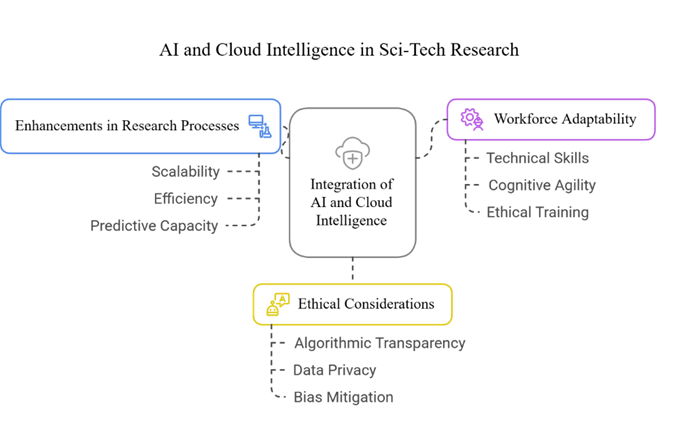
Figure 3: The overall idea of AI and cloud intelligence in Sci-tech research.
Respondents profiled using the FIKR PAT exhibit strong I and R traits, making them well-suited for roles in AI-integrated environments. These individuals are likely to benefit from AI-driven automation of routine tasks, allowing them to allocate more cognitive bandwidth to strategic problem-solving, hypothesis testing, and the development of novel research methodologies [25]. For instance, I type can leverage AI-enabled data analytics and pattern recognition tools to drive discoveries in genomics, materials science, or climate modelling, while R individuals may thrive in smart labs powered by robotics, digital twins, and IoT systems. However, those with high C scores may face transitional challenges in adapting to the dynamic and often non-linear nature of AI-driven workflows [17]. Traditional rules-based mindsets may need to evolve to embrace greater uncertainty, experimentation, and algorithm-guided decision-making. Cloud-based training platforms and AI-powered learning management systems (LMS) can support this transition by offering continuous, personalized skill development tailored to individual cognitive profiles—making professional upskilling more responsive and data-driven. Moreover, as AI becomes embedded into core research and production systems, issues such as algorithmic transparency, data privacy, and bias mitigation become increasingly critical [26]. The ethical use of AI in the sustainable bioeconomy demands that talent be not only tech-savvy but also trained in digital ethics and responsible innovation. Cloud infrastructure facilitates this by hosting decentralized ethics monitoring tools, audit trails, and collaborative platforms for transparency and accountability [27-28]. To remain competitive and resilient in this evolving ecosystem, organizations must adopt a dual-pronged approach: using AI and cloud technologies to optimize scientific and engineering workflows, while also leveraging psychometric and personality assessments such as FIKR PAT to guide strategic talent acquisition and development. The alignment observed in this study—particularly in I, R, and C traits—suggests that the current talent pool holds promising potential to thrive in AI-enhanced environments. Yet, to fully capitalize on this potential, ongoing training, digital fluency programs, and supportive ecosystems will be essential. In summary, the successful integration of AI and cloud-based intelligence into Sci-Tech research and bio-engineering requires more than just technological capability; it demands a workforce aligned in both personality and purpose. The FIKR PAT provides a scalable, data-informed framework to identify and develop such talent—ensuring that the human capital driving the sustainable bioeconomy remains innovative, adaptive, and ethically grounded in the AI era.
5. Conclusion
The integration of Sci-Tech research and bio-engineering into the sustainable bioeconomy—particularly in the context of rapid AI advancement and cloud-enabled systems—presents both transformative opportunities and operational challenges. The findings of this study using the FIKR PAT stresses the critical importance of aligning individual personality traits with the evolving demands of high-impact roles in these fields. The predominance of I and R traits among respondents suggests a strong readiness to engage in analytical, experimental, and innovation-driven environments. These cognitive orientations are foundational to advancing breakthroughs in areas such as synthetic biology, environmental monitoring, and AI-assisted experimentation, which are central to addressing contemporary sustainability challenges. Moreover, the prominence of C traits among respondents further reinforces their suitability for roles requiring compliance, precision, and adherence to standard operating procedures—particularly in regulated and scalable bio-engineering applications. As AI technologies and data-driven infrastructures continue to redefine workflows, individuals who can blend structure with adaptability will be especially valuable. The cloud-based deployment of the FIKR PAT offers a scalable, data-intelligent approach to identifying such talent and guiding their development. To maximize the benefits of this alignment, continuous professional development, ethical AI literacy, and dynamic training ecosystems will be essential. Together, these strategies ensure that human capital remains future-ready, ethically grounded, and capable of sustaining innovation in the bio-based industries of the AI era.
References
- Vindman, C., Trump, B. D., Cummings, C., Smith, M. A., Linkov, K. A. et al. (2021).
View at Publisher | View at Google Scholar - Pascoli, D. U., Aui, A., Frank, J., Therasme, O., Dixon, K. et al. (2021).
View at Publisher | View at Google Scholar - Arcelay, I., Goti, A., Oyarbide-Zubillaga, A., Akyazi, T., Celaya, E. A. et al. (2021).
View at Publisher | View at Google Scholar - Gikunda, K. (20240.
View at Publisher | View at Google Scholar - Chowdhury, H., Argha, D. B. P., & Ahmed, M. A. (2023).
View at Publisher | View at Google Scholar - Gwagwa, A., Kazim, E., Kachidza, P., Hilliard, A., Siminyu, K. (2021).
View at Publisher | View at Google Scholar - Peters, D. P. C., Rivers, A. R., Hatfield, J. L., Lemay, D. G., Liu, S. et al. (2020).
View at Publisher | View at Google Scholar - Ryan, M., Nuhoff-Isakhanyan, G., & Tekinerdogan, B. (2023).
View at Publisher | View at Google Scholar - Hassani, H. (2017).
View at Publisher | View at Google Scholar - Soliemanifar, O., Soleymanifar, A., & Afrisham, R. (2018).
View at Publisher | View at Google Scholar - Bennett, L., & Gadlin, H. (2012).
View at Publisher | View at Google Scholar - Dignum, V., Casey, D., Pargman, T. C., Dignum, F., Fantasia, V. (2023).
View at Publisher | View at Google Scholar - Cheng, T. (2022).
View at Publisher | View at Google Scholar - Judge, P. K., Buxton, J. A., Sheahan, T. C., Phetteplace, E. R., Kriebel, D. L. et al. (2020).
View at Publisher | View at Google Scholar - Wynn, C. M. (2015).
View at Publisher | View at Google Scholar - Shneiderman, B. (2013).
View at Publisher | View at Google Scholar - Kaya, F., Aydın, F., Schepman, A., Rodway, P., Yeti̇şensoy, O. et al. (2022).
View at Publisher | View at Google Scholar - Sadiku, T. J. A. M. (2019).
View at Publisher | View at Google Scholar - Shoureshi, R. (2005).
View at Publisher | View at Google Scholar - Rajajeyakumar, M. (2015).
View at Publisher | View at Google Scholar - Friedman, M. H. (2001).
View at Publisher | View at Google Scholar - Özaltin, N., Besterfield‐Sacre, M., Kremer, G. E. O., & Shuman, L. J. (2015).
View at Publisher | View at Google Scholar - Sambamurthy, N., & Cox, M. (2016).
View at Publisher | View at Google Scholar - Chen, D., & Tian, Y. (2022).
View at Publisher | View at Google Scholar - Arslan, A., Cooper, C. L., Khan, Z., Gölgeci, İ., & Ali, I. (2021).
View at Publisher | View at Google Scholar - Gabriel, I. (2020).
View at Publisher | View at Google Scholar - Kusters, R., Misevic, D., Berry, H., Cully, A., Cunff, Y. L. (2020).
View at Publisher | View at Google Scholar - Santana, M., & Díaz-Fernández, M. (2022).
View at Publisher | View at Google Scholar